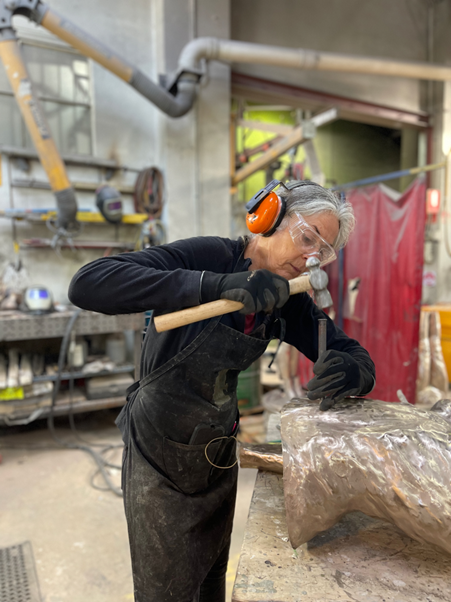
Margot Stephens Sculpture
Can you expand on how you have been working in clay since a young age?
It was an enthusiastic art teacher in Year 9 High School that decided to teach the art class how to throw pots on a wheel using the local clay that began my career.
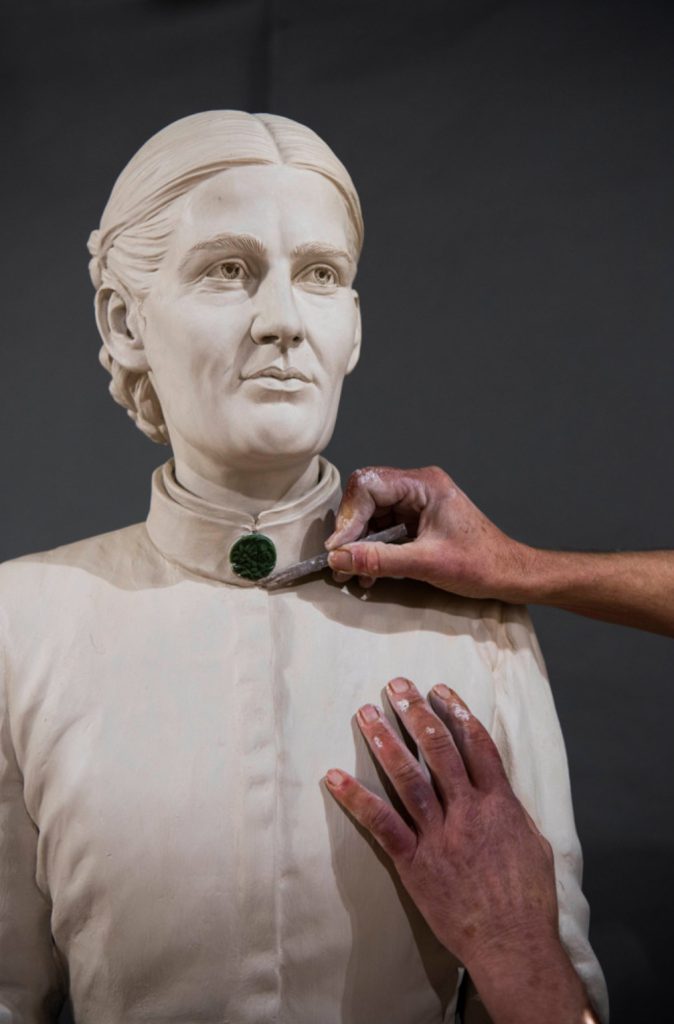 Louisa
How influential was your father in your career choice?
By 16 I had a modest income through my clay work & my father offered to help to buy a kiln of my own, if I could raise half the money. By year 12 Dad had built a studio. I applied to go to art school in Sydney.
What led you to specialize in figurative sculpture?
I spent three years majoring in life drawing & anatomical studies at City Art Institute. During time In the first year the at University of Sydney offered a 6 week study tour of Italy, studying early renaissance art. The professor conducting the tour kindly pointed out where I could find sculptures by Michelangelo, Bernini & others visited as extra-curricular study. It wasn’t until later I found out dad had extended the mortgage on the farm so I could attend. The experience of studying in Italy was life changing. Returning to Italy at the completion of the BA I settled in In Deruta, Italy. I was offered the opportunity to study Maiolica painting & sculpture in the studio of Carla Corna. Concurrently I was invited to be an artist in residence at the ceramics department at the University of Perugia. I returned On return to Australia I was ambitious to set up a studio & began to use life models for sculpting figures from this point onward.
Your first Public Commission.
The first Public Art commission came in 2014, friends of my parents recommended me to their Centenary Celebration Committee in Ariah Park.
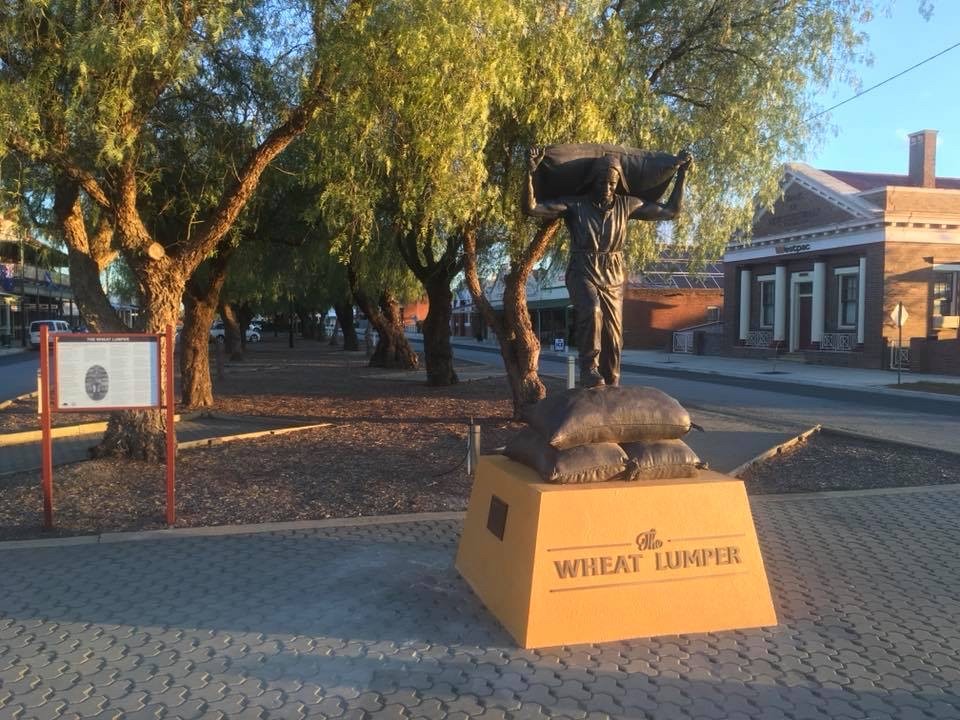 The committee was looking to place a wheat lumper in the main street & when I first received the call, I had to ask what a wheat lumper was? This was my first foray into learning about a part of Australian History. I found it exhilarating & fully immersed myself into learning.
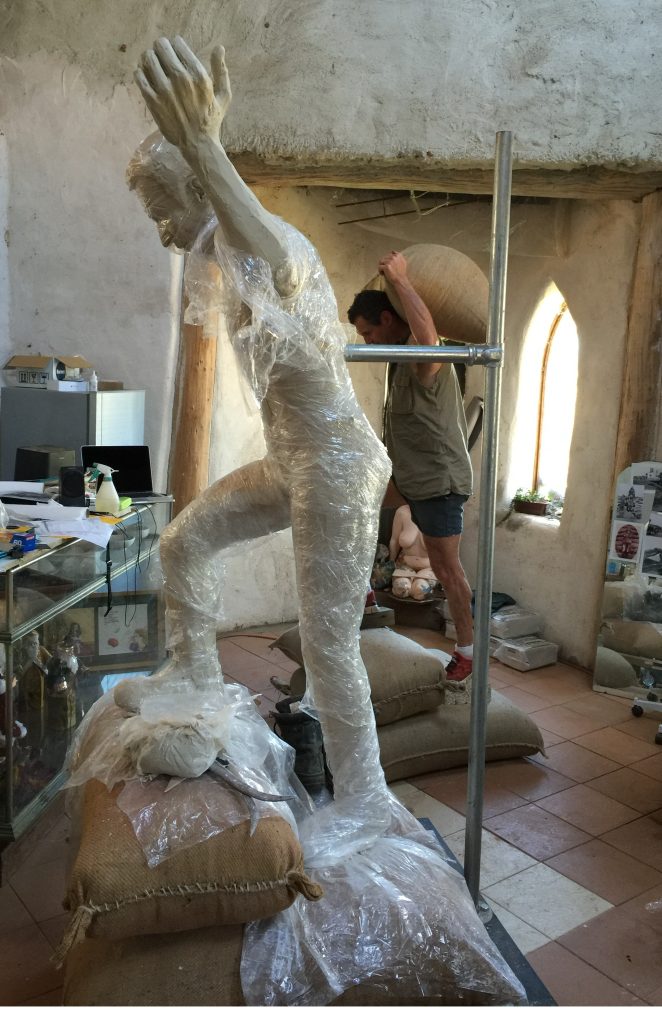 The figurative specifications Wheat lumpers were; the men working on the wheat farms were returned servicemen from WW1 and farmers, they were very lean, muscular & fit. The biggest stroke of luck was finding a model that fit the required figurative specifications and was also knowledgeable about wheat lumping as he had met some of the old lumpers in his youth whilst working in the region.
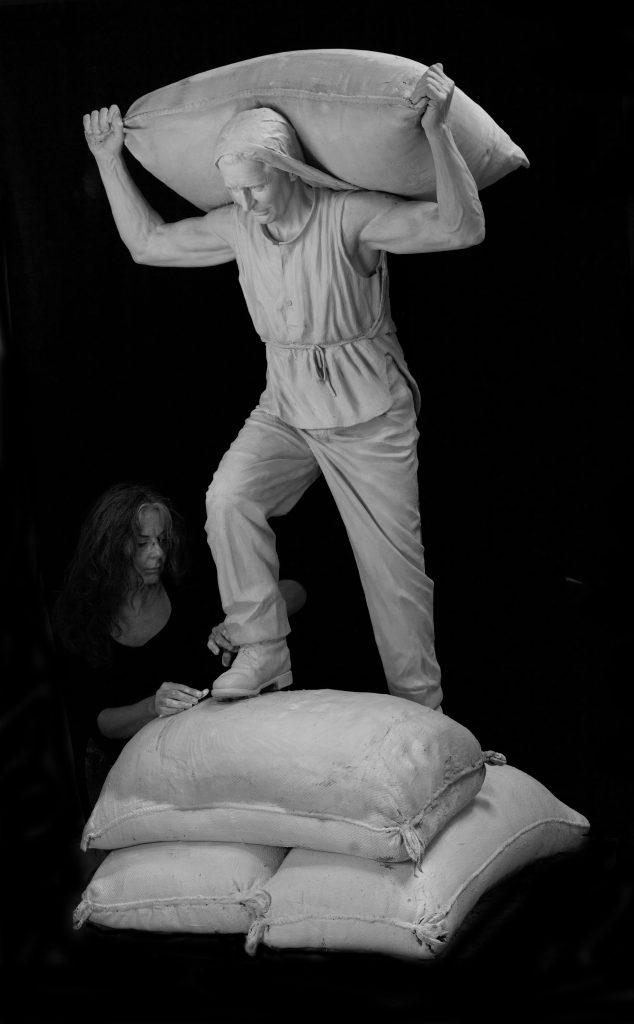 The Wheat Lumper, Clay
Can you expand on the Waterhouse commission?
It was during the bronze casting of The Wheat Lumper that Rob Waterhouse was visiting the foundry & saw my work. Rob was looking for a sculptor to make a 125% scale portrait of his father, the famous Bookie, Bill Waterhouse.
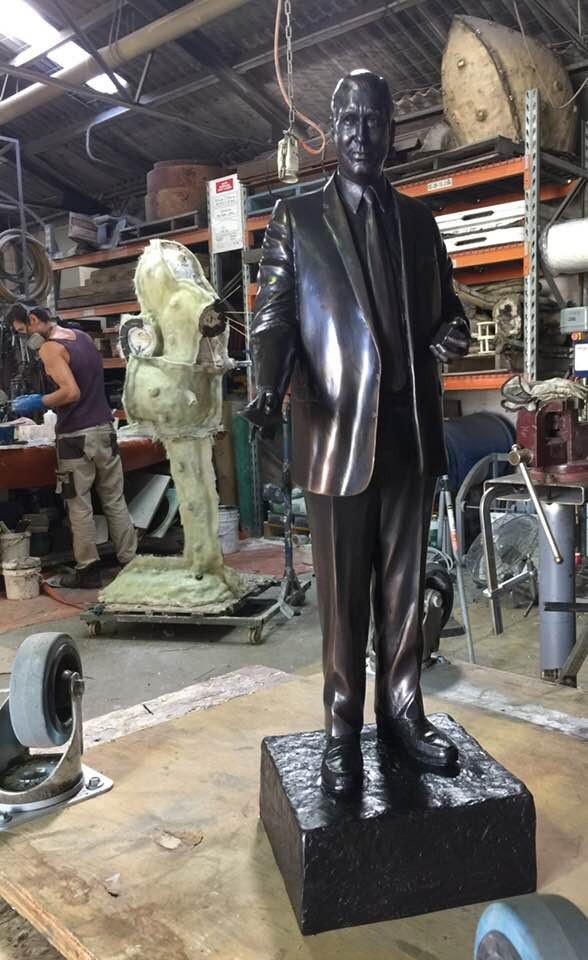 Maquette of Bill Waterhouse, bronze, edition of four
Bill was already 6’4” (193cm) tall, so with shoes and a base the resulting bronze sculpt was just over 250cm. When I went to meet Bill to take measurements, he asked Rob what I wanted them for? Rob told him I was the undertaker!
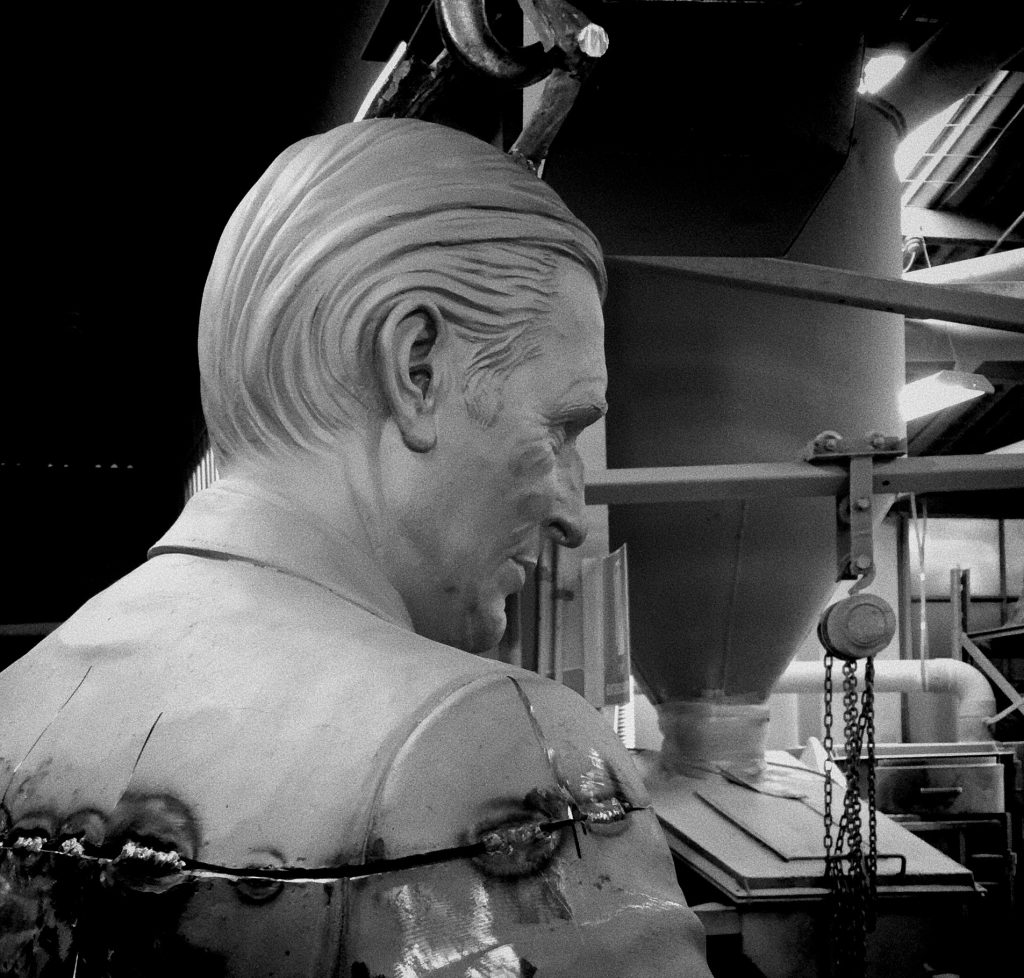
Bill Waterhouse in the foundry
At the unveiling event of Bill’s bronze, I met the painter, Tim Storrier, who introduced me to his wife, whom he felt had a likeness to the portrait of Nefertiti. I was invited to make a portrait bust of Janet Storrier.
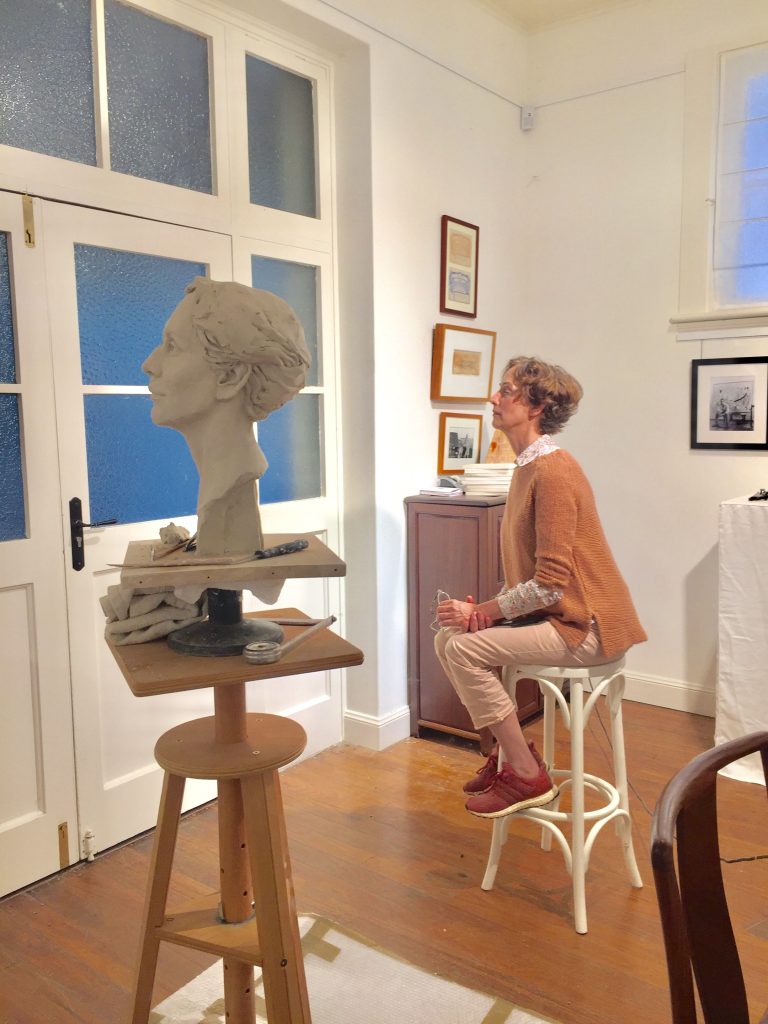 Janet Storrier
It was a wonderful experience as the stand for the clay bust, I was working on was in a gallery surrounded by Tim’s extraordinary atmospheric landscapes & sky-scape paintings. Immersed in this beauty I sculpted the delicate vulnerability of Janet.
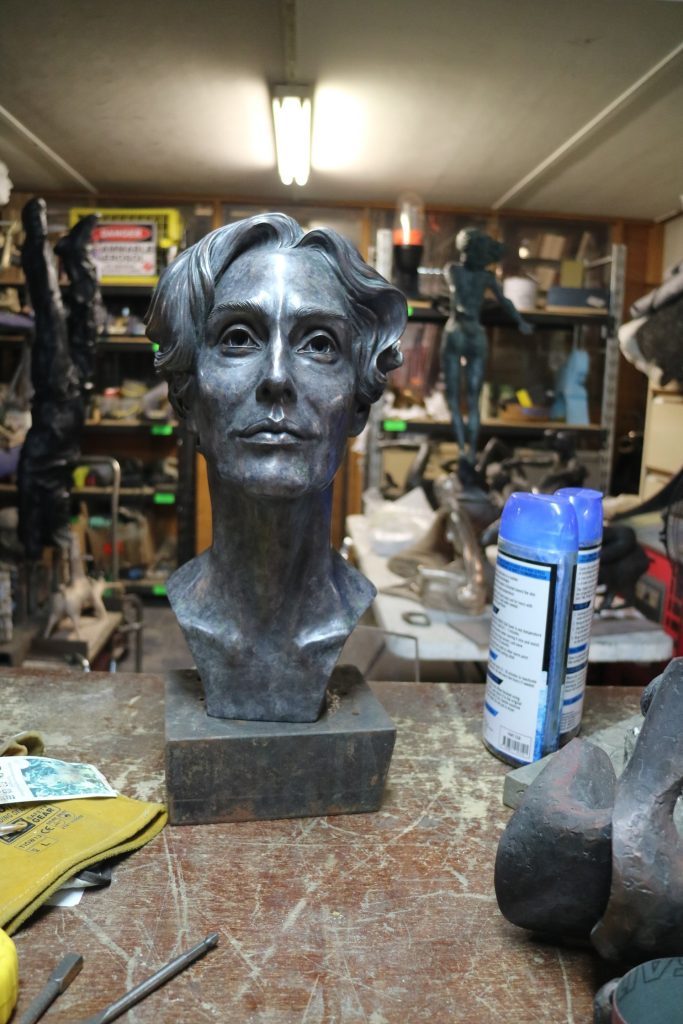
Janet Storrier bronze at foundry
Later I was commissioned to sculpt the portraits of the Waterhouse women.
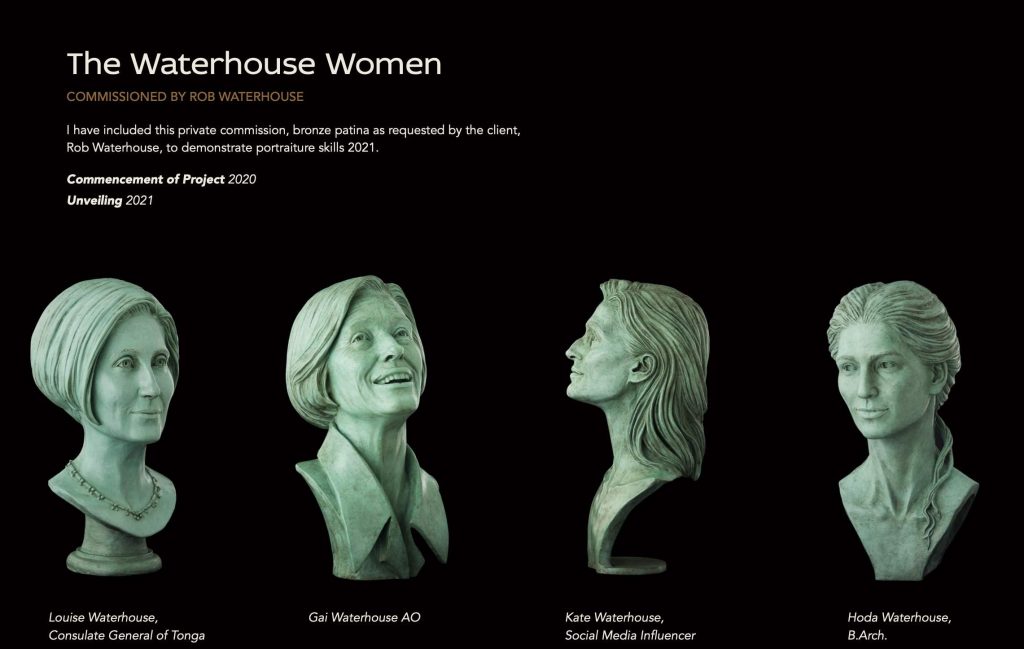
The sittings were conducted on their farm near Bowral, so travelling the clay portraits between my studio at Eurunderee & the farm limited their size to ; they’re life scale head & partial shoulders.
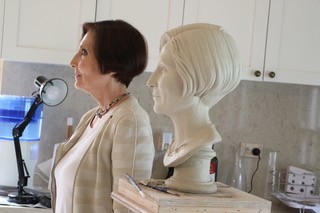 Louise Waterhouse
I like to spend the first sitting taking measurements & chatting with the sitter trying to get to know them a little. I take videos of them moving as well. On return for the second sitting, I have an armature with clay to approximately the scale of the sitter, I may have some drawings to demonstrate what I’m planning. It is at this point the model can tell me what they think, and I alter the portrait accordingly. I have the model sit for an hour each session whilst I rough in as much information as I can & take photos.
The likenesses and differences in the women.
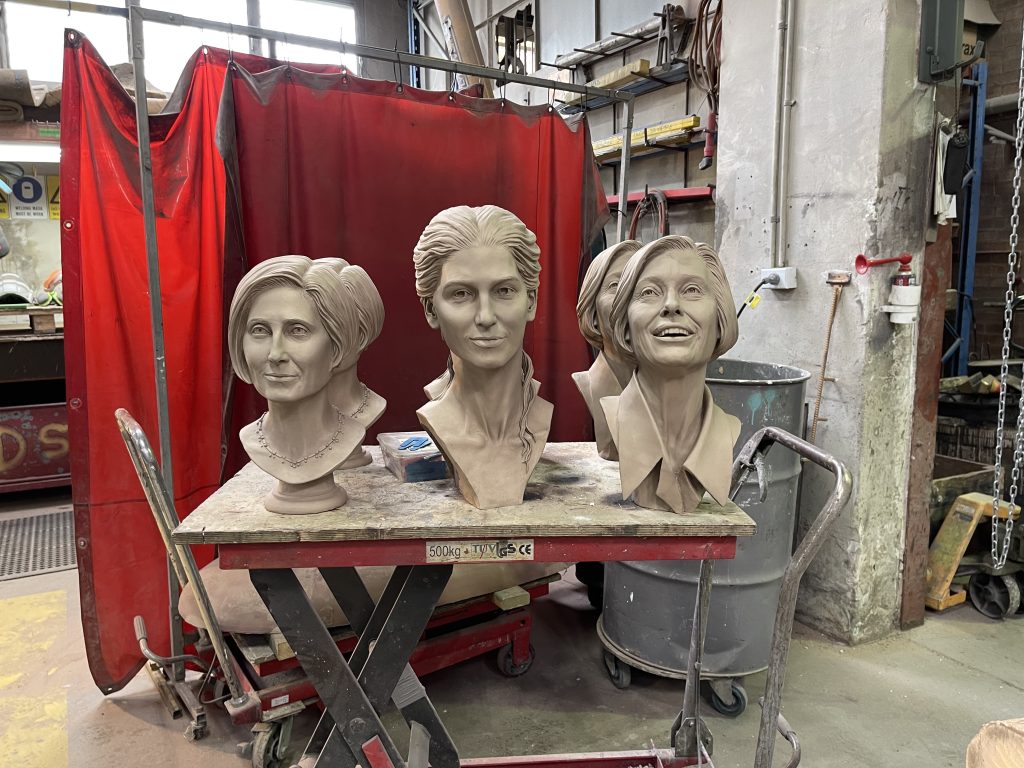 I spent many happy days sculpting each of the Waterhouse women over a few months working on their portraits, fitting sittings in with their busy schedules. The four women are very different in personality as you would expect. I most enjoyed working with Gai, with a background in acting (she was one of the early “Dr Who” girls), she could hold her pose effortlessly and had little input into my vision, I was free to see. Gai Waterhouse is the first Australian woman to train a Melbourne Cup Winner in 2013. The portraits are cast in bronze, there are two of each so Rob could have a complete set & each sitter had a bust of her own.
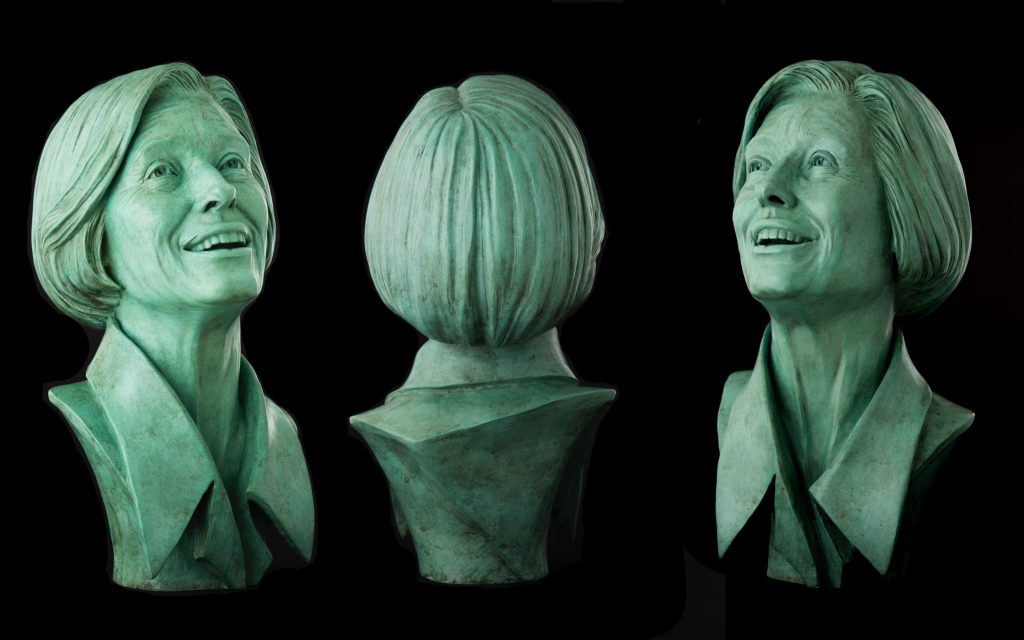 Gai Waterhouse AO
At the unveiling event of Bill’s bronze I met the painter, Tim Storrier, who introduced me to his wife, whom he felt had a likeness to the portrait of Nefertiti. I was invited to make a portrait bust of Janet Storrier.
Discuss another more current woman.
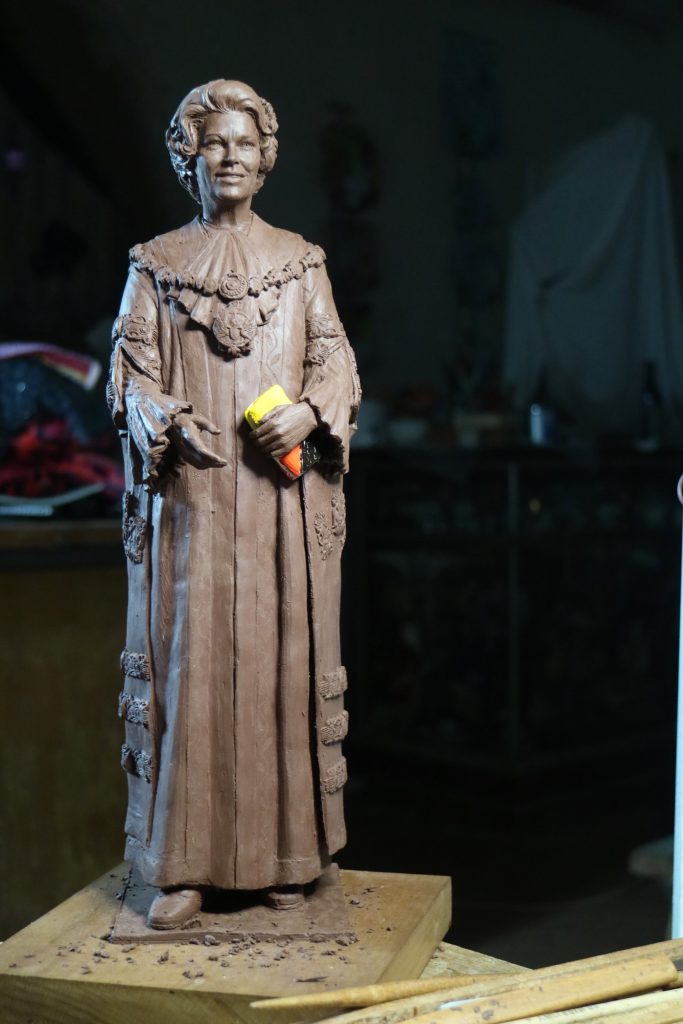 Maquette & clay Joy Cummings AM
Joy Cummings AM. The same year I was invited to submit a maquette, with five other sculptors, for commission. This was so exciting; I had researched Joy and her career for the maquette & felt so honoured to be awarded the work for the bronze life scale figure. Australia’s first female Lord Mayor, City of Newcastle NSW, Joy took the regalia of the office seriously, which meant a lot of detailing went into the gown & mayoral chain. I contacted the makers of Mayoral gowns; they supplied me with samples of the fabrics & details on the embellishments. I found just carving the embroidery around the edge of the gown took a day to carve 50cm and I had over 5 meters!
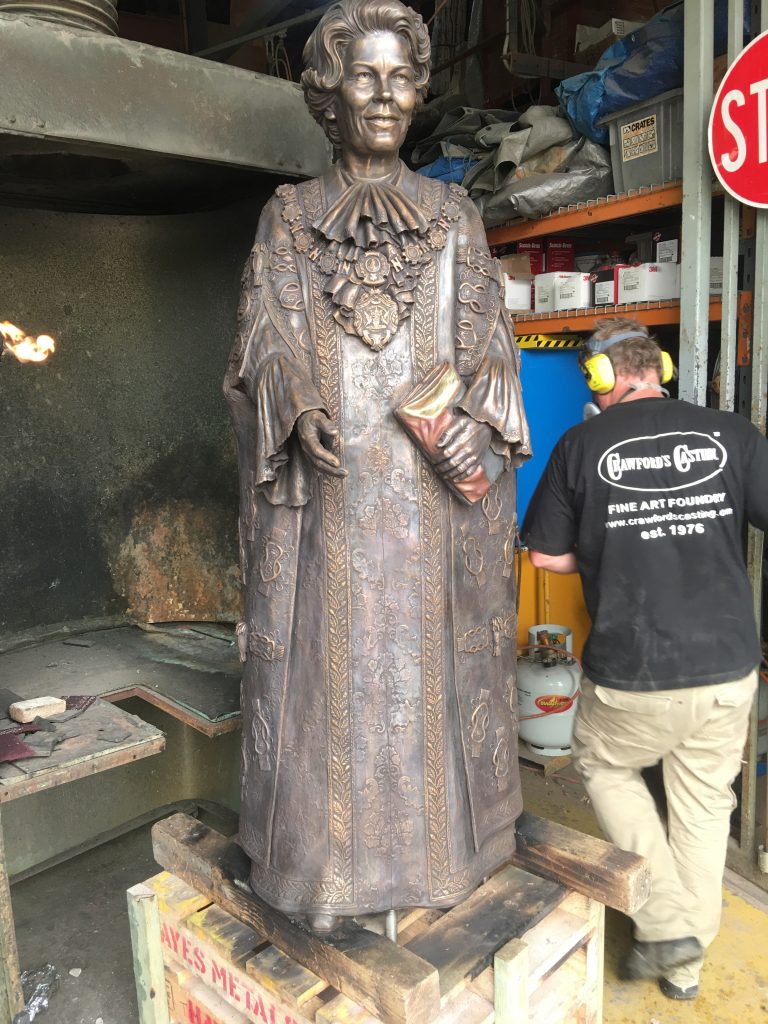 Joy Cummings AM at foundry
Can you discuss your work ‘Louisa Lawson’.
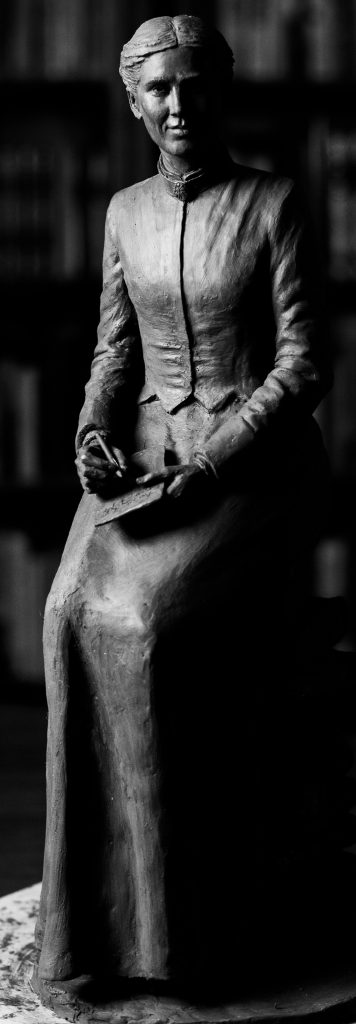
How did you come by the commission?
The sculpture of Louisa Lawson came about as a result of an article written by Lesley Hughes in The Monthly magazine in August 2020. Hughes article was about how NSW’s first public feminist, whom had been acknowledged as the Mother of Suffrage in NSW parliament in 1902, went uncelebrated at the centenary of her death. Hughes went on to point out that ‘-there were more monuments of animals in Australia than of non-fictional women’. The Rotary Club of Mudgee picked up the challenge as Louisa had grown up in the region.
What was the research process you needed to do for it?
Reading extracts from The Dawn, a publication that Louisa bought out monthly from her printery in Sydney from 1888 -1905, one of the longest running journals published, edited by Louisa, printed & distributed by women. By cross referencing everything, I felt I had a feeling of the woman behind her words.
As a girl Louisa had a secret spot in the bush where she had built a pile of rocks upon which she sat to read & write poetry. I replaced the rocks with books. The book spines afforded the opportunity to highlight some of Louisa’s many campaigns she championed throughout her lifetime. The book stack is a haphazard spiral, encouraging the viewer to move around the sculpture.
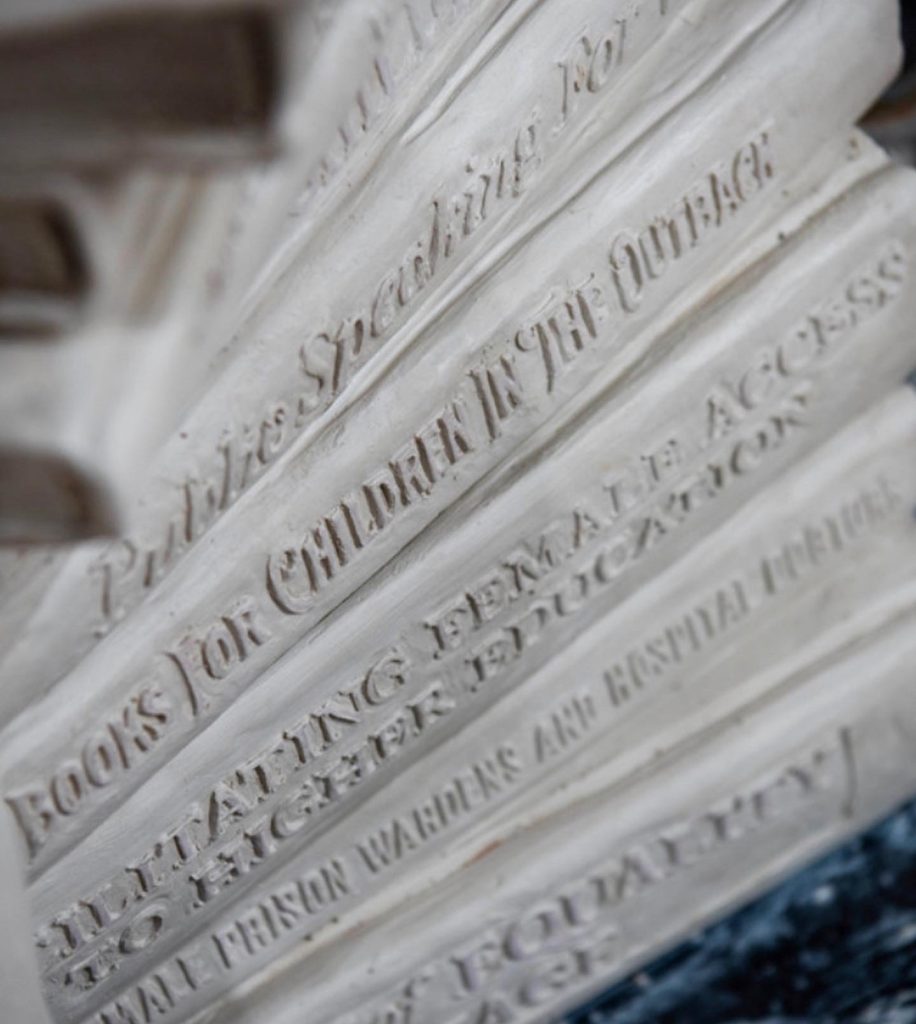 I worked with other creatives to bring the sculpture together to be historically accurate; pattern maker Kayt Dickson made the costume based on Louisa’s own hand made clothes that we could see in photographs from the Holtermann photographic collection.
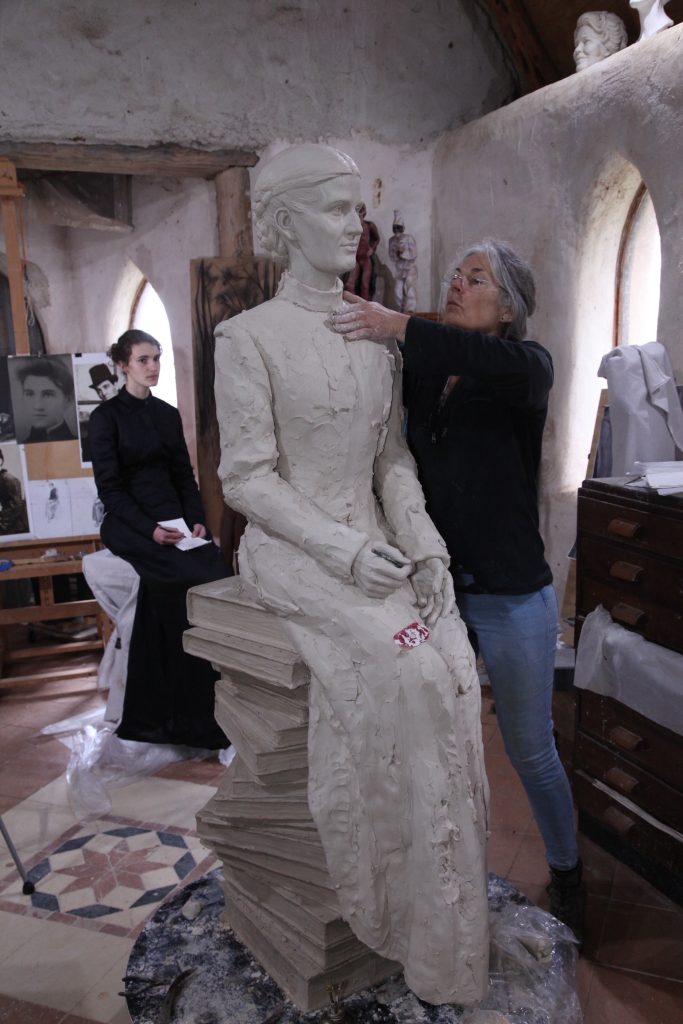 Where is it now standing?
We bought together the list of campaigns, (which had been assessed and approved by Prof Clair Wright), a poem Louisa had written not far from where the sculpture is now sited & Louisa’s slight smile. The location of the sculpture is just outside the Town Hall building on Market Street, Mudgee, a building where, as a woman, she was unable to enter to present a petition for a school to be built at Eurunderee, serving a community of 80 farming families at that time.
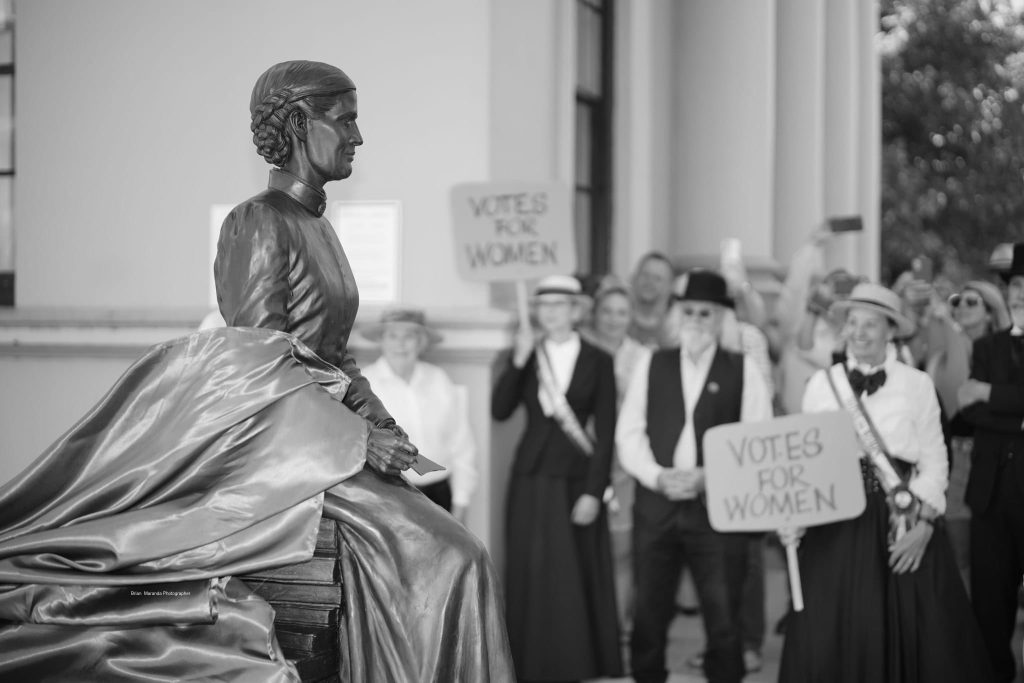 Unveiling of Louisa Lawson photograph credit Brian Maranda
The article written by Leslie Hughes was the inspiration & Leslie unveiled the sculpture on International Women’s Day in 2023.
Is there anyone you would like to sculpt?
I would love to have the honour of sculpting Julia Gillard, I admire the steely resolve that encases a compassionate centre, her political prowess & the significance of her achieving the highest office in our country. Perhaps the woman whom we most respect, whatever your politics. I look forward to meeting and learning about many interesting people in the future.
Explain the importance of Life size sculptures.
The question regarding ‘Life size’ refers to scale, & scale is particular to location and the intent of the sculptures, relationship to the viewer. Usually when I’m commissioned to make a life scale sculpture it is to personalise the figure to the viewer; so, the subject is relatable. When a figure is scaled up, as in the case of the Bill Waterhouse sculpture, it is to be placed in the landscape & have a monumental presence. This was as much about Bill’s persona as his physicality, being a very tall man and was described by his peers as being a ‘larger than life’. Scale affords additional significance to a sculpture.
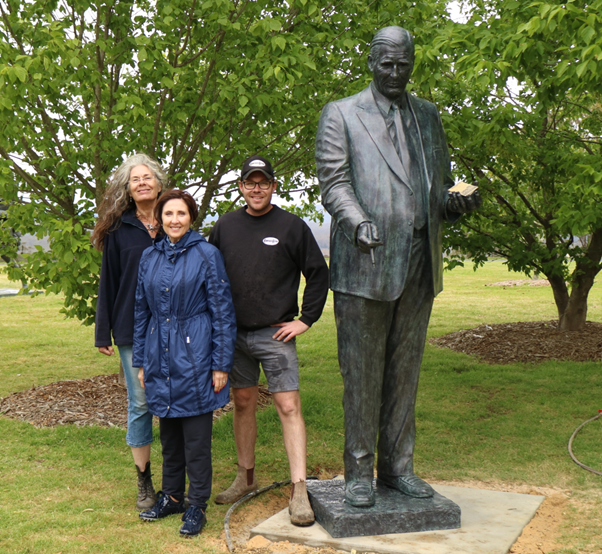 Bill Waterhouse in the garden with Louise, Matt & myself
You have made plaques. Discuss.
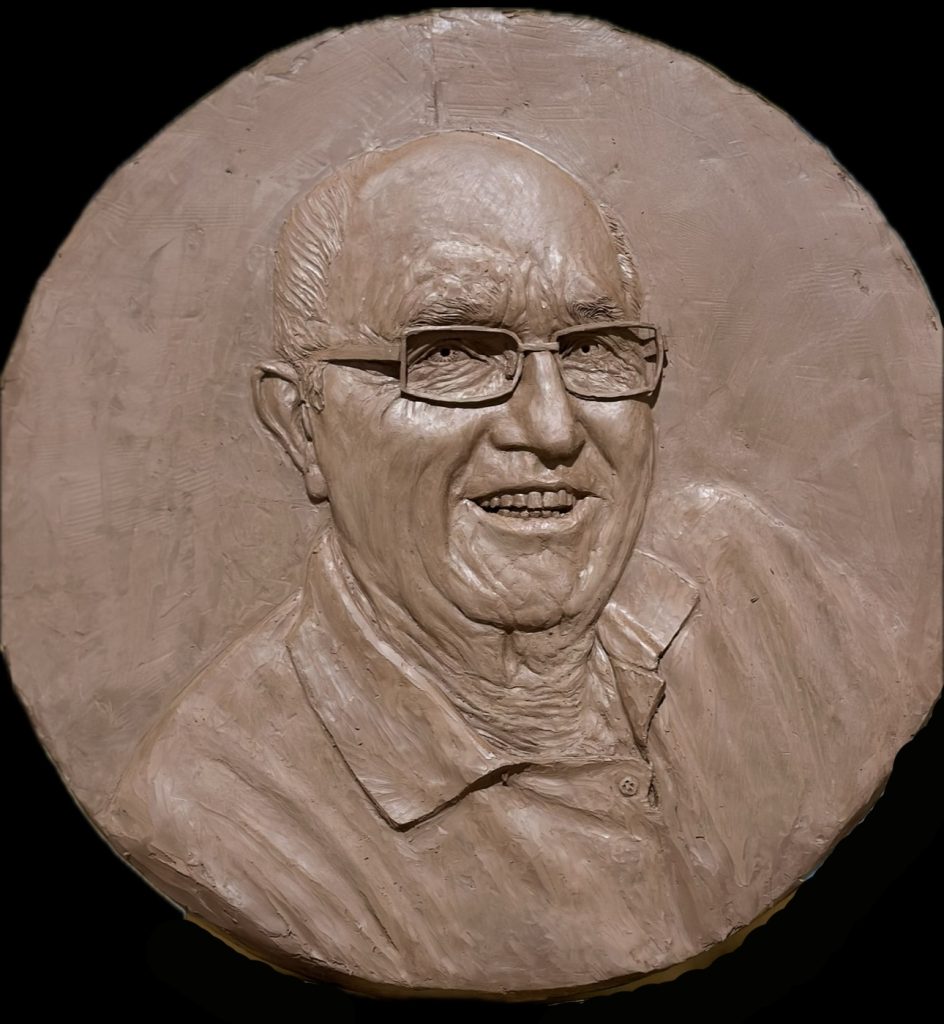 Paul Stwart, clay
The bas relief plaques were commissioned by the Birdon Group, Port Macquarie shipyard, an Australian company that began with a family & a few mates in the 1970’s & grew into the global shipping construction company it is today.
I was commissioned to make portraits of the original team for their ‘Make It Happen’ Project, honouring the founding members. It was a challenging project as I worked directly from old photographic materials & they were scaled to 110% life scale, the bronze plaques to be mounted on recycled steel beams, at height. The original vision for the project was not shared with me; I was employed specifically to carve bas relief portraits.
Chasing metal, at Crawford’s Casting, Sydney
The process of making a commissioned sculpture is endlessly fascinating, I meet interesting people who are passionate about their ideas, I enjoy the research, getting to know the subject; realising the figure in clay in the studio is my happy place, from the welding of the armature, balancing abstracted shapes to refining shapes, clothe, limb and skin, it’s really exciting. Once the client approves of the work, the foundry team move into the studio to take a mould of the clay & leave up to 10 days later with a negative, my clay destroyed. I next meet the figure in wax at the foundry at Strathfield, where I clean & repair it ready for ceramic shelling & bronze pouring. After the bronze is poured & the foundry men have reassembled the parts, I tidy up with metal chasing.
Tell us about your foundry
My favourite & constant creative collaborator is Matthew Crawford from Crawford Casting. Matthew works right across the spectrum of sculpture and has an enormous knowledge he quietly draws upon when working with sculptors attending the foundry. It is always a privilege to have your work cast in bronze and any advice proffered by Matthew in its creation is of value. I have learnt so much over the past decade of having my sculptures cast at Crawfords and have formed a huge respect for the skills of the foundry team. When I first met Matthew in 2015, I explained I had little experience of bronze, I had mainly worked in ceramics; he said “Its time Margot, you moved into The Bronze Age”.
Where is your studio today?
My studio is purpose built straw bale construction, designed to provide a cool environment for working in clay; it is built in the style of a country church as I have always loved seeing them dispersed around the landscape, I had imagined buying one & turning it into a studio, when that wasn’t to be, I built my own. Shortly before my father died, we travelled around together looking at country churches, whilst I made sketches. They are a very simple design with a high- pitched roof & simple rectangular shape. I can build sculpture up to 6 meters in height within. I’ve only gone as high as 3 meters so far, but there is still time!
Enchanted Earth Studio – Saddleback Trail – Eurunderee 2850 – NSW
Tell us about Face 2026 in the UK.
Tell us about Face 2026 in the UK The FACE is an International portrait exhibition held by the The Society of Portrait Sculptors biannually in the UK. Every now & again I make a submission, its similar with painters and the Archibald here. To be selected into FACE UK would be the best excuse to go & see some of the best portrait sculptors working Internationally today. We have some outstanding portrait sculptors in Australia; we should do something similar here!
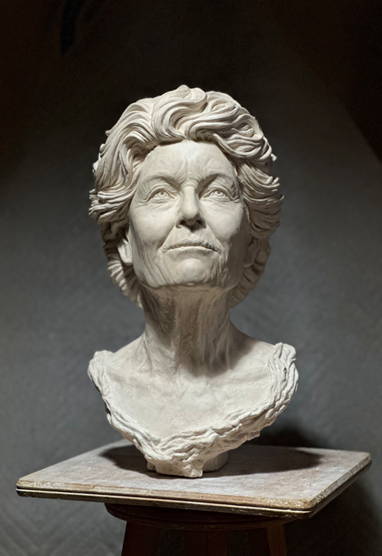 Kay Norton-Knight, Plaster, life scale
Your close observation goes beyond people to birds discuss.
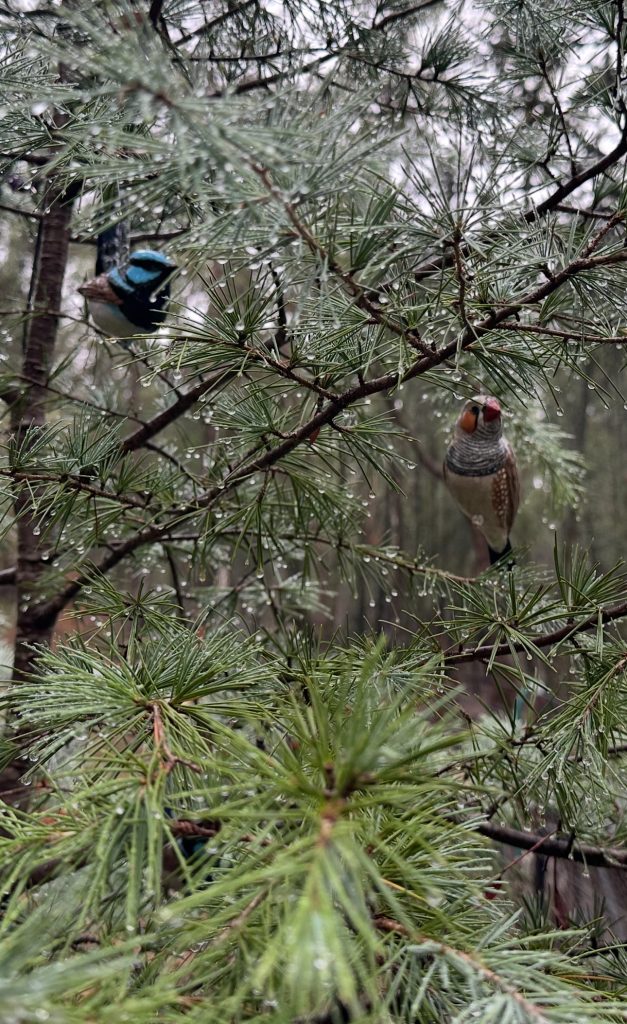 Your close observation goes beyond people to birds, discuss
At the end of each year commissions are usually completed and there are a few months over Christmas period of quiet. My husband grows Bonsai, a type of sculpture we enjoy living with, we have one child & used to decorate one of the trees each year. It occurred to me in our forest environment, that the most beautiful things in the trees are the small birds, so I sculpted the local birds in clay, moulded, slip cast, glazed & decorated our Christmas tree with them. We aren’t religious people but I like the idea of family & friends coming together to exchange gifts & enjoy our Australian summer food. The birds became gifts from me, then others purchased them to gift to others, especially to send overseas.
Contact:
Margot Stephens
Website: www.margotstephens.com/
Email: margot.lee.stephens@gmail.com
Deborah Blakeley, Melbourne, Australia
Interview by Deborah Blakeley, May 2026
Images on these pages are all rights reserved by Margot Stephens

Think a colleague or friend could benefit from this interview?
Knowledge is one of the biggest assets in any business. So why not forward this on to your friends and colleagues so they too can start taking advantage of the insightful information the artist has given?
Other artists you may be interested in: