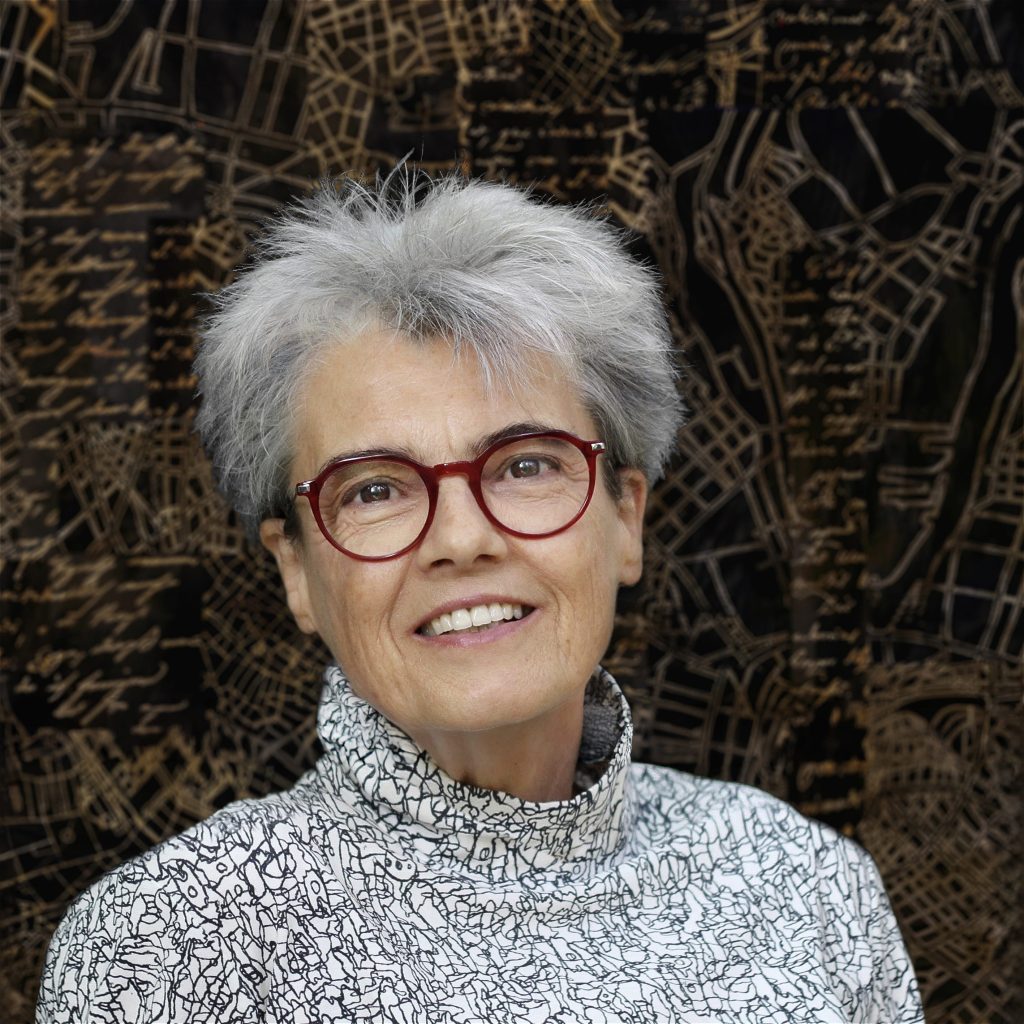

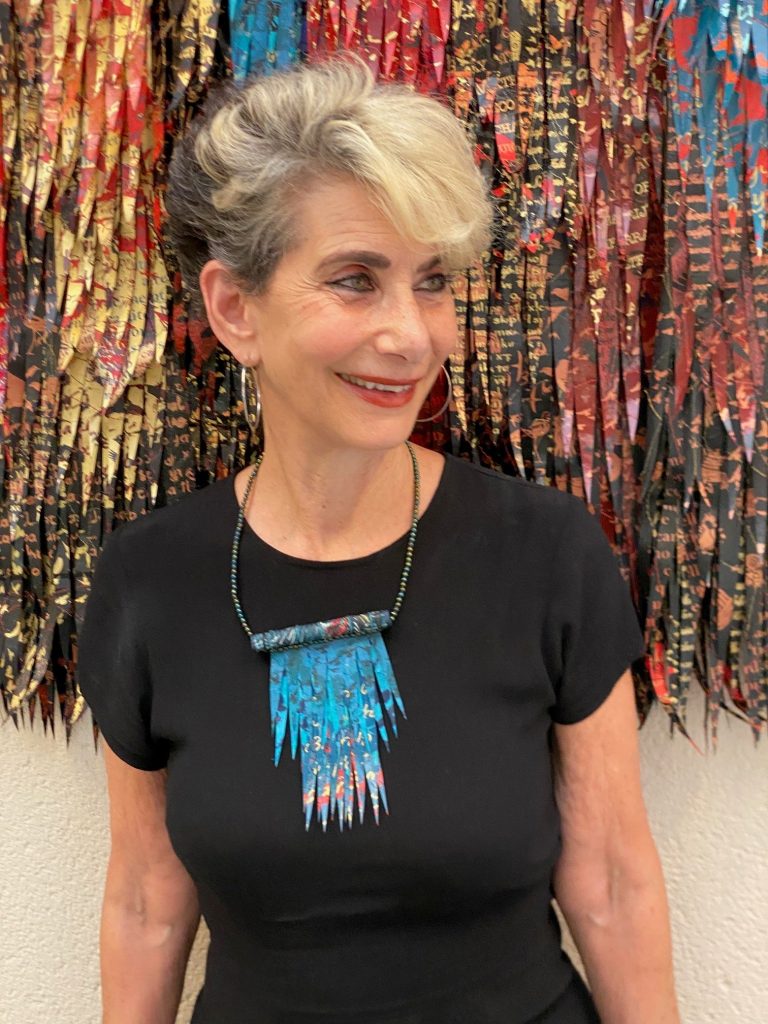
Deborah Kruger Textile and Sculpture Artist
You began your interview in September 2018, saying “like many artists, ideas emerge unconsciously and organically.”
I think creative combustion happens when an artist pays attention to the unfolding conversation between their ideas and materials. When you look at a retrospective, it’s easier to see the narrative thread that runs throughout an artist’s creative life. Persistence comes into play when we need to dig in and respond to these signals. I deeply trust the creative process and know that paying close attention to this silent dialogue yields a coherent and evolving body of work.
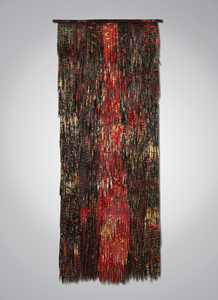
Descent, 2024
Hand screen printing on recycled plastic, hand and machine sewing, wrapping fabric, waxed linen thread.
How did you get involved in presenting your art currently in Italy?
I first showed my work in Italy in 2023 as a sculpture and installation finalist for the Arte Laguna Prize. On the way home from that landmark show, I met curator Barbara Pavan in Milan. I was already on her radar and she had my written about my environmental textile art. Our meeting blossomed into a exciting curatorial relationship and Barbara included my work in several Italian group shows that centered around contemporary textiles. Creating a solo show together was a natural next step. The stars aligned to produce the Extinctions show at the Civico Museo Parisi Valle in Maccagno, Italy.
Discuss the importance of Italian patronage?
The Venice Biennale is a global barometer for trends in contemporary art. It established Italy as the European cultural epicentre. Showing in Italy is an international stamp of approval. More doors are opening for me because of this endorsement.
Expand about the venue, in Italy, Bridge Museum.
Roman architect Mauricio Sacripanti envisioned creating a museum that was in harmony with the history, landscape, culture and integrated environmental considerations. His Civico Museo Parisi Valle checks off all these boxes as it perches on the shore of Lake Maggiore in northern Italy where it straddles the Giona River. Light from the surrounding water bathes the museum and strategically positioned windows allow for river views. Known affectionately as the ‘Bridge,’ the building invites nature into the viewing area. Both Federico Crimi, Director of the museum and Barbara Pavan, Curator of the exhibition, felt that the setting was in perfect alignment with the ecological themes of my show.
How was science (foundation Bolle di Magadino – Switzerland.) been involved?
Research about endangered birds and endangered languages drives the imagery in my artwork. It was natural to partner with the Foundation Bolle di Magadino whose mission since 1975 has been to protect fragile wetland ecosystems and track bird migrations between Europe and Africa. Their scientific research complements the theoretical framework behind my work and affirms the importance of protecting habitat as an effective strategy for protecting endangered birds.
Discuss the fragility of Little Bitten?
According to research done by the Foundation Bolle di Magadino, climate change has affected water levels and subsequently the reeds along the shoreline of Lake Maggiore. This fragile ecosystem is the habitat of the Little Bitten, known locally as the Tarabusino. When I learned about an endangered bird endemic to Lake Maggiore, I felt compelled to create a sculpture for the show to make the issue of endangered birds relevant to local residents and visitors to the museum.
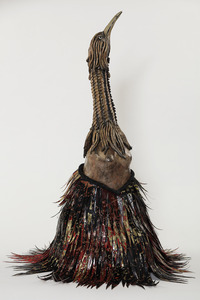
Trabusino Bird Goddess, 2026
Resin and fiberglass sculpture, pigment, recycled plastic, screen printing, hand and machine stitching, cording, waxed linen thread.
I chose a typical posture where the Tarabusino extends its long neck to camouflage itself among the reeds while hunting.
Can you expand on your art and biodiversity?
According to Eduardo Lorenz’s Butterfly Effect theory, we are all inextricably connected. Insignificant environmental impacts ripple across time and space with unanticipated often catastrophic effects. Rapacious and extractive practices, especially in rainforests, have decimated the biodiversity of these regions,impacting species and humans alike. My art practice focuses primarily on endangered birds, whose populations have plummeted as habitats have shrunk. Concurrently indigenous tribes who have lived in these rainforests for thousands of years are also at risk, along with their languages and cultures. By integrating text in indigenous languages into my artwork, along with images of endangered birds, I hope to shine a light on these losses and inspire viewers to consider their own environmental impacts and reduce our inadvertent Butterfly Effects. I was raised in a family that spoke Yiddish and I have witnessed the loss of that rich literary culture during my own lifetime. This personal loss sharpened my awareness of threats to global cultural diversity.
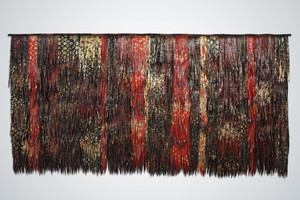
Blackbird, 2024
Hand screen printing on recycled plastic, hand and machine sewing wrapping, fabric, waxed linen thread.
Textiles are a huge part of the exhibition, discuss.
Textiles were the backdrop of my childhood and as central to me as air. My immigrant grandparents worked in sweatshops on the Lower East side of New York. I grew up sewing everything I wore. Choosing to study textile design at FIT and becoming a wallpaper designer seemed like a natural progression. My environmental textile artworks grew out of this fertile and thready background.
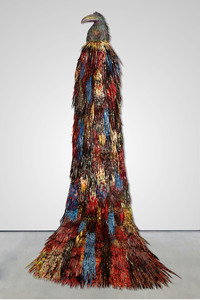
Cascade, 2026
Hand screen printing on recycled plastic, hand and machine sewing, painted fiberglass sculpture.
I’ve been thinking a lot lately about the contrast between my decorative background, which is on full display in my current body of work, and the dire subject matter which I present in a largely abstract format. I’ve decided that the beauty and color in my work act like mating plumage. Their visual appeal entices viewers, some of whom will engage with my themes. Creating objects of beauty makes it possible for me to continue building a body of work dedicated to bearing witness to extinction.
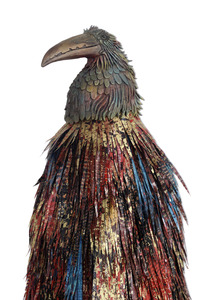
Cascade, 2026, Head detail
How do you feel craftsmanship is in 2026? How does your work show this link?
Craftsmanship and making things by hand are also facing extinction.
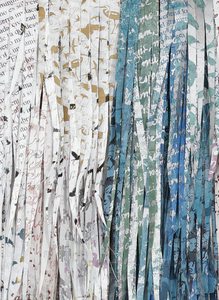
Kimono 2, 2023, detail
Hand screening printing on recycled plastic, hand and machine sewing, wrapping waxed linen and wire thread, oil stick, bamboo.
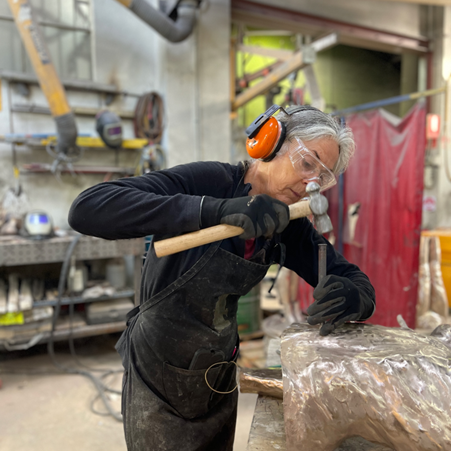
The pressures of commodification and relentless consumption challenge the economic viability of handcrafts around the world. Habitat fragmentation caused by development has not only impacted bird populations, but it has also made the cultivation and collection of natural materials like dye plants and fibers less available for traditional hand crafts. The feathers that are now emblematic in my artwork are meticulously crafted using many disappearing techniques like hand stitching, machine sewing, hand silk screening, and wrapping. Their fabrication by a team of women hearkens back to a time when making was a collective and joyful creative process. I prize my craftsmanship which itself is an act of resistance in a throwaway and fast fashion world.
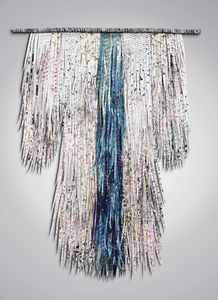
Kimono 2, 2023
Hand screening printing on recycled plastic, hand and machine sewing, wrapping waxed linen and wire thread, oil stick, bamboo.
Comment on how your work has been embraced in –
USA
My home state of North Carolina has offered me numerous opportunities to exhibit my artwork and teach environmental art techniques at colleges, universities and art centres.
In New York, where I was born, I have a special relationship with a curator and climate activist who includes my work in climate themed shows. The Museum of Art & Design has two of my monumental textile pieces in their permanent collection.
On the West Coast, the Visions Museum of Textile Art has also collected my work, and I am represented by Imperfecta Gallery in Portland, Oregon where I will be having a solo show in November 2026.
Mexico
Curators can open doors for artists, and I have several who have presented solo exhibitions of my work throughout Mexico where I have a production studio. My advice for emerging artists is to cultivate authentic relationships with curators who respond to your work. One of these is the director of a foundry where I am making the new bird sculptures that will debut in Italy and Portland, Oregon.
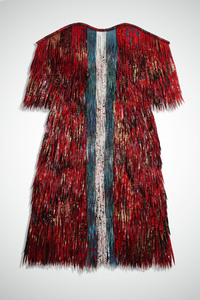
Ropa Mexicana 3
Hand screen printing on recycled plastic, hand and machine sewing, wrapping, coding, waxed linen thread.
Asia
Being tapped for the Arts in Embassies Program of the US State Department was a career highlight. AIE placed my large environmental mural ‘Redwing’ in the US Embassy in Ashgabat, Turkmenistan. The Ambassador is a bird watcher and environmentalist.
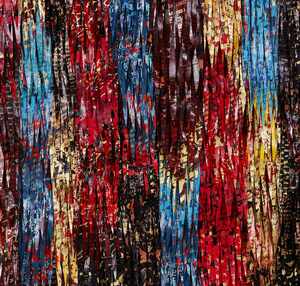
Rainbow Mural
Hand screen printing on recycled plastic, hand and machine sewing, cord, waxed linen thread, wrapping.
Australia
Long before textiles became a staple in contemporary art, Australia had a long-standing tradition and respect for fibre and fibre art. I exhibited in the inaugural Textile Biennale and have appeared in Australian press 2010.
Contact: Deborah Kruger
Website: https://deborahkruger.com/
Email: https://deborahkruger.com/
Deborah Blakeley, Melbourne, Australia
Interview by Deborah Blakeley, July 2026
Images on these pages are all rights reserved by Deborah Kruger

Think a colleague or friend could benefit from this interview?
Knowledge is one of the biggest assets in any business. So why not forward this on to your friends and colleagues so they too can start taking advantage of the insightful information the artist has given?
Other artists you may be interested in: