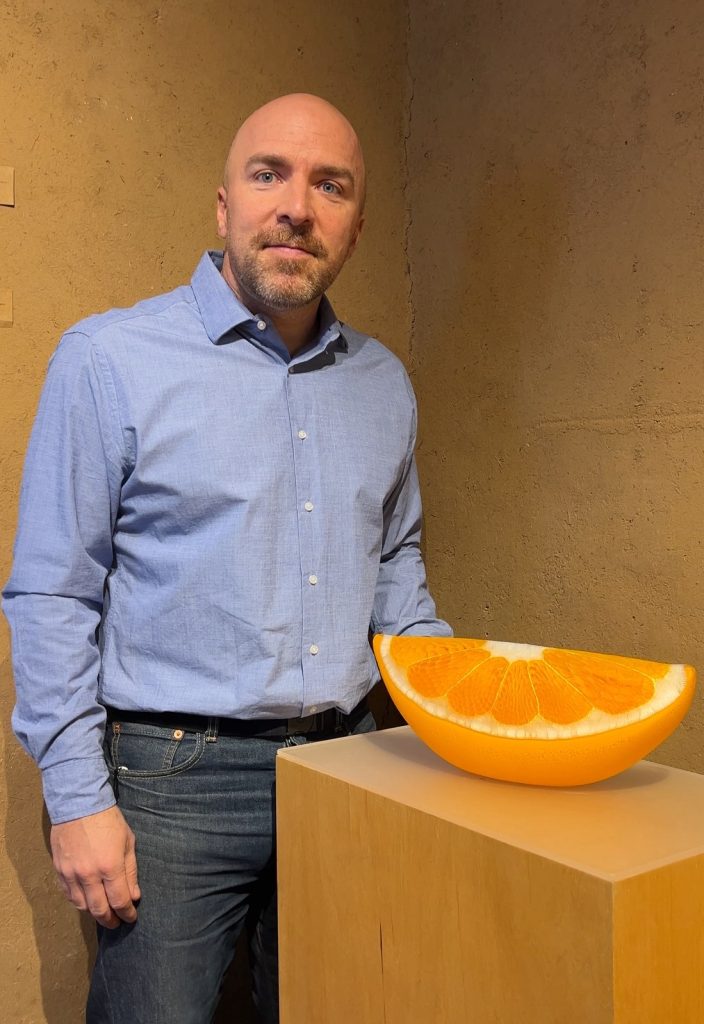
Steven Hagan Glass Artist
Do you like to be known as a glass foodie?
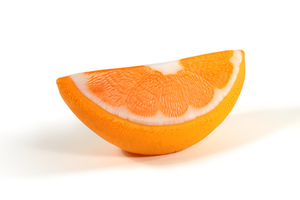
Orange Wedge, 12.5×6.5×5 inches
I can appreciate the label of a glass foodie. I was raised in a food driven family. Shared meals and time together were pretty important and I was always excited to help in the kitchen from a very young age. I think I realized that being in the kitchen meant I got to be involved in the process and get little treats or samples and that was always amazing.
Can you discuss how and where your glass studio is?
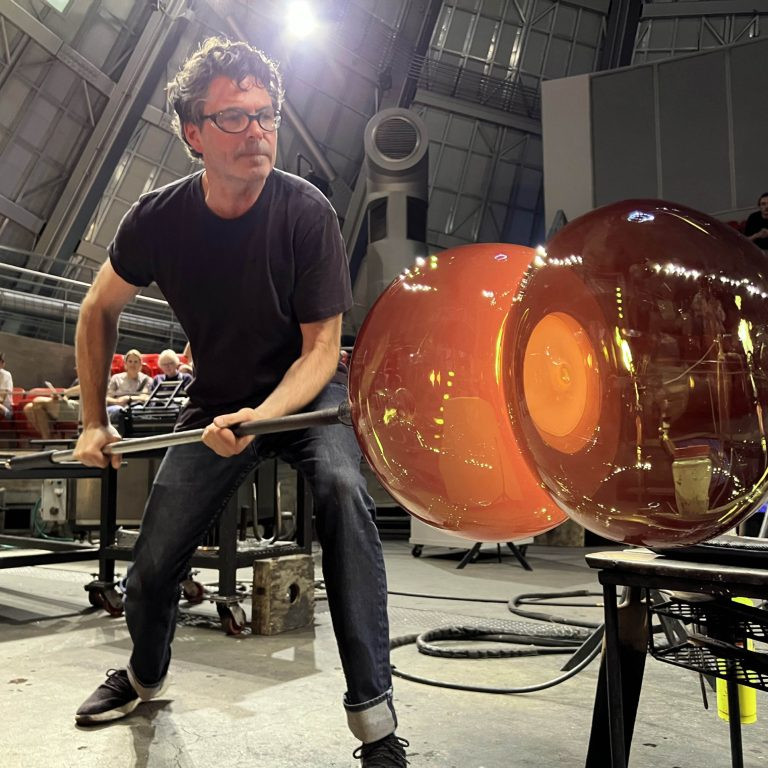
My studio is located in Tucson Arizona. I moved here in 2021 and started my studio with Mark Leputa. I came from Oregon and Mark came from Alabama and it was our hope to pair our studio practices into the same studio space. We have all of the kilns, torches, and cold working equipment we use to create our works. Then we use the Sonoran Glass School as our hot shop access, which is a public access glass space here in Tucson.
How many of you, work together to achieve your pieces and why?
Generally a citrus sculpture has three people working to complete the project. Some of the steps are just me and one other person. Like the cane pulling and murrini bundling portion of the process. It isn’t until the final assembly that the third set of hands is really needed. And that is just helpful with working the doors while there is a lot of hot torch work being done to complete the citrus rind texture.
Discuss the layers of colours you need in your glass to create an orange.
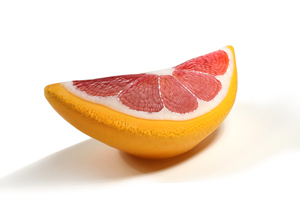 Pink Grapefruit, 13.5x6x5 inches
I would say that there’s really just two layers of color to complete an orange sculpture. I believe the murrini pattern is the most vital to my work. Pulling and bundling the canes to make my representation of the citrus fruit is vital to the designs. The second and more backdrop to the murrini pattern would be the rind surface. I get color close to the surface to give the illusion of the bubble volume looking primarily that solid orange. I use different color combos to create variety and sometimes the rind colors are actually two different colors layered together.
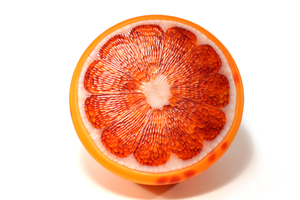
Blood Orange, 9x11x10 inches
Discuss the difference in technique to make a half and a quarter orange.
A fair share of the process is the same. The cane pulling and murrini bundles are created and at any time in the process the patterns could become a wedge or a half. The final decisions are made either based on the size of the patterns. A large one I will use for a half shape versus a slightly smaller pattern can get stretched into the wedge shape a little easier. Also sculpting the wedge shape takes quite a bit more refining to get the profile the way I like. I use cork block paddles and spend a bit of time getting the long angled profile just right.
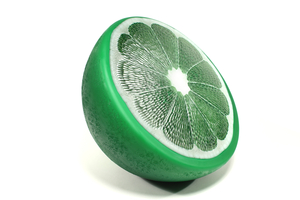
Half Lime, 10x11x10 inches
How large can some of your glass be?
Some of the largest sculptures are between 12-14 inches in one direction. So the finished objects are certainly larger than life in comparison to a standard sized piece of fruit. I’ve also started making some watermelons, while they are still often larger than the original the leap in size isn’t nearly as drastic.
Is it very heavy?
In the process of production, the glass always feels heavier or larger until the piece comes out of the kiln. I actually love the scale where the work is currently at. The heaviest of works are generally less than 12-15 pounds but feel so substantial still. The finished sculptures are completed as a bubble form, which reduces a fair share of the overall weight in comparison to if the sculptures were a solid volume of glass. Then they would weight 40-50 pounds and be far more taxing on our bodies during the process.
What other fruit do you make?
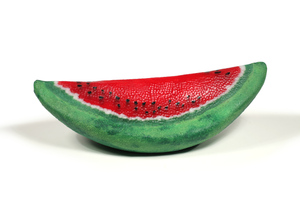
Watermelon Segment, 14x7x5 inches
I have also made both kiwis and watermelons as sculptures and smaller consumables like earrings and marbles. When I started making the murrini patterns into citrus I recognized the ability to expand my representations. It just took a little time to get to the different fruits.
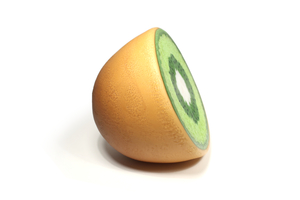
Kiwi
Discuss why you have spent so much time academically, from first graduating in 2002 to 2011?
I believe with any art media life experience is as vital to our journey and education as being in a classroom or academia. So my gap of time between finishing my undergrad degree and starting a three year grad program allowed me to gain knowledge about glass but more importantly the time to explore some of my own ideas of concept or process. I felt maybe a little older starting grad school to some of peers in the program but it actually was very helpful to know myself a little more. I don’t think I would’ve been ready had I jumped right from undergrad into a grad program.
What is one of the aspects of teaching that make you especially happy?
It is absolutely the human connection. I love glass and the choreography that occurs during the production process. Sharing that love of the material brings me so much joy and feeding off the energy people give off while learning or experiencing the glass making process is so wonderful. I’ve taught class with children so young that a parent is holding them in their arms and as old as 96 years. It’s a huge age gap but really cool to see how excited people can get about glass even as first timers.
Comment on your love of food and fruit?
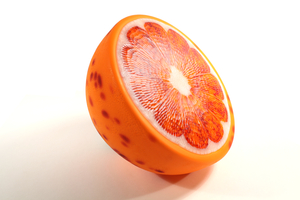
Blood Orange, 9x11x10 inches
As I mentioned, I grew up in a food driven family. Pairing my love of food and my love of glass took some time. Obviously, when I first started with glass I made a lot of functional objects. Cups, bowls, plates, vases…. A lot of the standard vessel format objects. I feel incredibly lucky to have a studio practice with some of my best friends and the opportunity to mix my glass and food loves. It wasn’t until my thesis show for grad school that the fruits and sculpted objects began to pair my two loves. Glass and food. I feel incredibly lucky to have a studio practice with some of my best friends and the opportunity to mix my glass and food loves.
Expand on your small pieces of fruit – earrings.
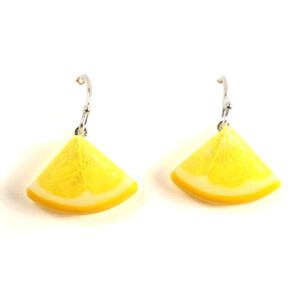
Lemon Earrings
Before the sculptures there were the earrings and marbles, what I call the consumables that I make out of the murrini patterns. I had one murrini pattern in my MFA thesis show and I knew leaving grad school that was the coolest thing I had ever created out of glass. So over the course of the next few years I really dug in and learned more of how to reproduce that citrus pattern.
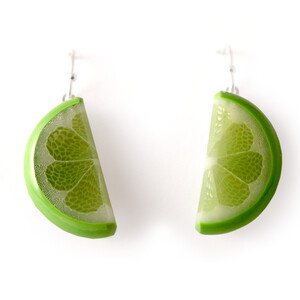
Lime Earrings
I saw the value in the color and vibrant patterns and wanted to share those with the world. It was some years later that the larger sculptures became a thing and took a fair share of my focus
Steven Hagan
Contact:
Website: https://stevehagandesigns.com
Email: stevehagandesigns@gmail.com
Deborah Blakeley, Melbourne, Australia
Interview by Deborah Blakeley, June 2026
Images on these pages are all rights reserved by Steven Hagan

Think a colleague or friend could benefit from this interview?
Knowledge is one of the biggest assets in any business. So why not forward this on to your friends and colleagues so they too can start taking advantage of the insightful information the artist has given?
Other artists you may be interested in: