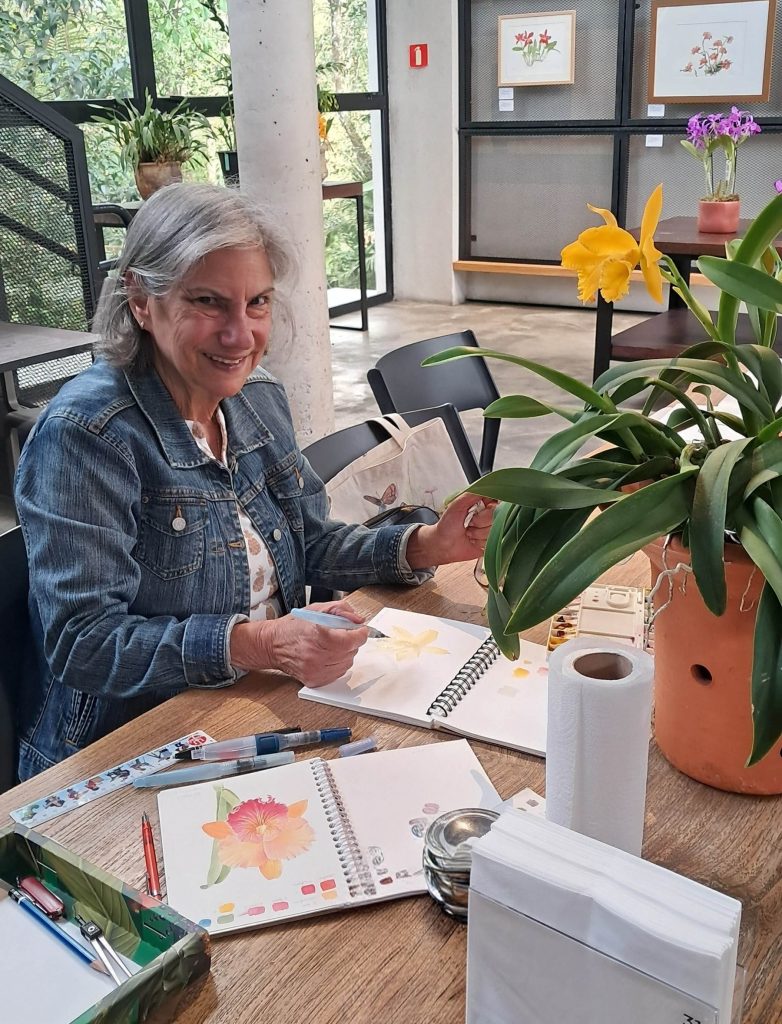
Fátima Zagonel Botanical Artist
Do you feel your work as a graphic artist was a good base to continue to onto Botanical Art?
In some ways, yes. I think that my compositions are always created with the intended use of the illustration in mind. This helps make the image more suitable for its purpose, especially when I need to portray different aspects of a plant within the same plate.
Can you expand on the importance of being collected by the Shirley Sherwood Collection?
Being part of the Shirley Sherwood Collection means having doors open to exhibitions and remarkable publications. It is like having a distinguished mark of quality. I met her at my graduation exhibition from the Margaret Mee Scholarship at the Royal Botanic Gardens, Kew (London Herbarium).
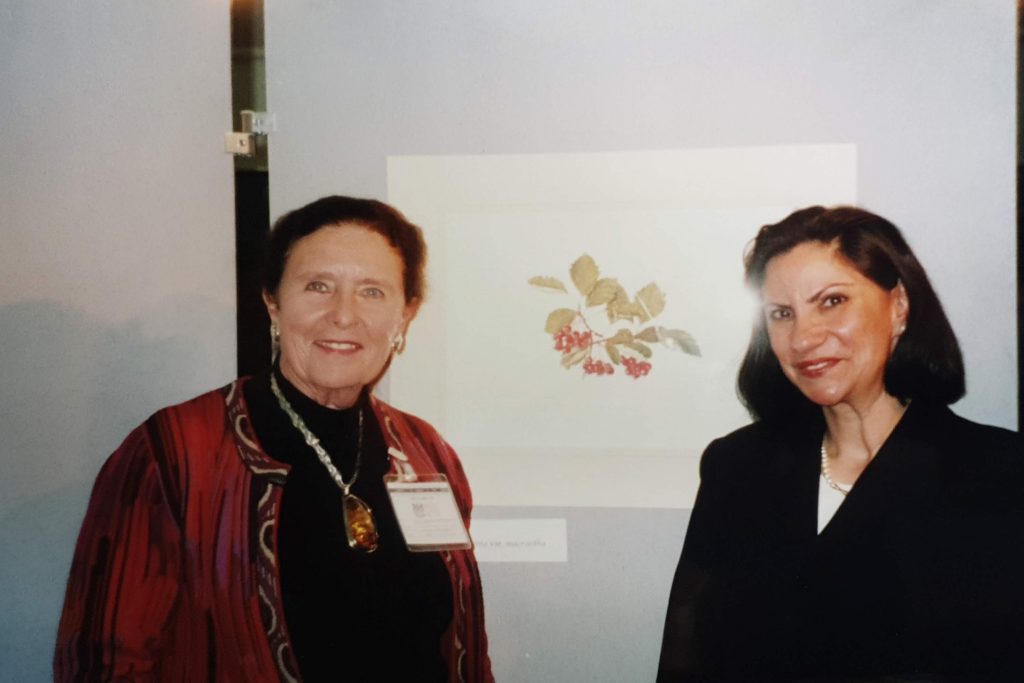 1999 – Kew Gardens – Margaret Mee Fellowship Exhibition
At the time, I had no idea who she was or what she represented. She graciously approached me and said she was interested in two of my paintings. Someone else was also interested in one of them, so I shyly asked her later: “Have you decided which one you are taking?” She smiled and said, “I will take both, dear.”
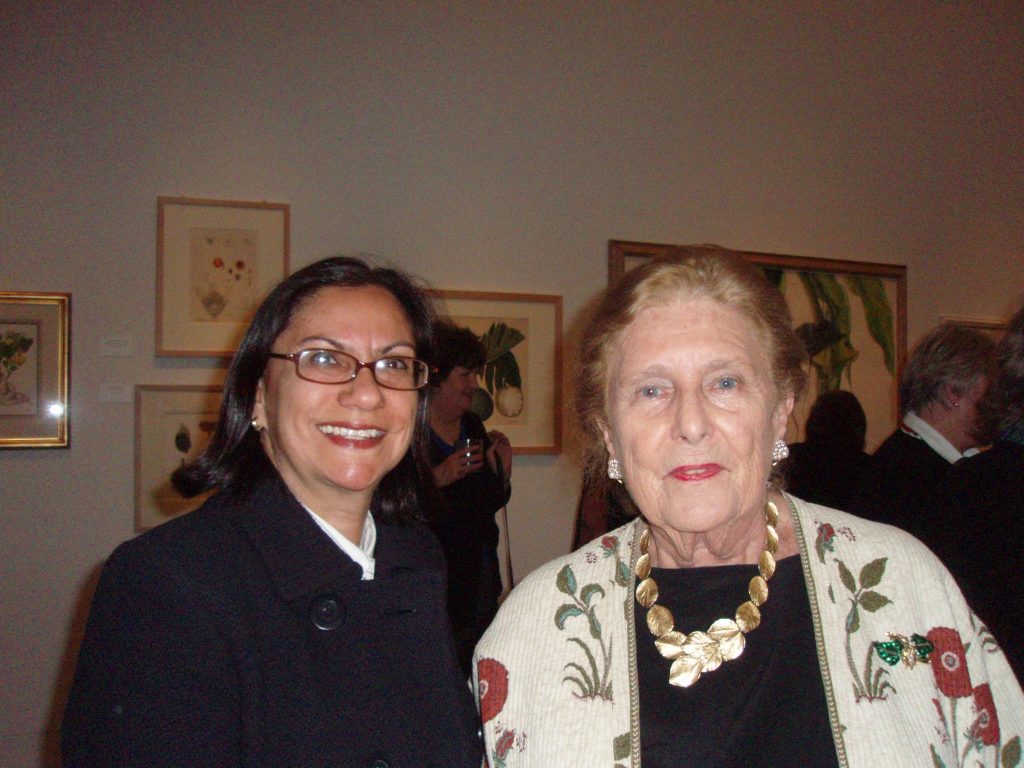
2008 – The opening of The S. Sherwood Art Gallery at Kew
I didn’t realize at the time that it was my lucky day. I met her again in Rio, in New York and at Kew when she opened her gallery. She is always so attentive and makes you feel important — she is truly a lady.
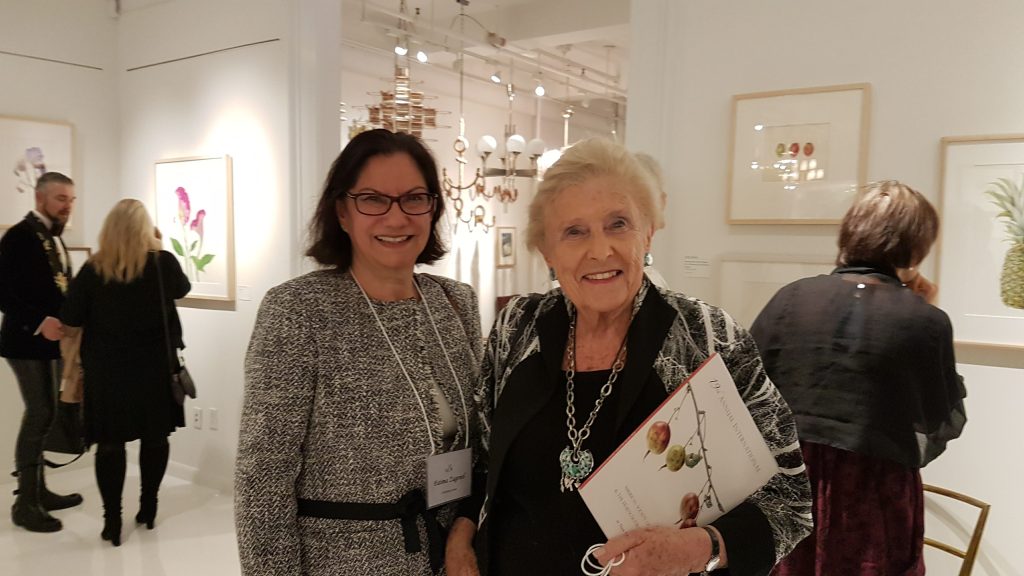 2016 – Exhibition ASBA and HSNY
Where can people see this the Shirley Sherwood Botanical Collection?
At her gallery at the Royal Botanic Gardens, Kew in London. She frequently promotes exhibitions from her collection. Usually, a theme is chosen, and if your work fits that profile, you may be included.
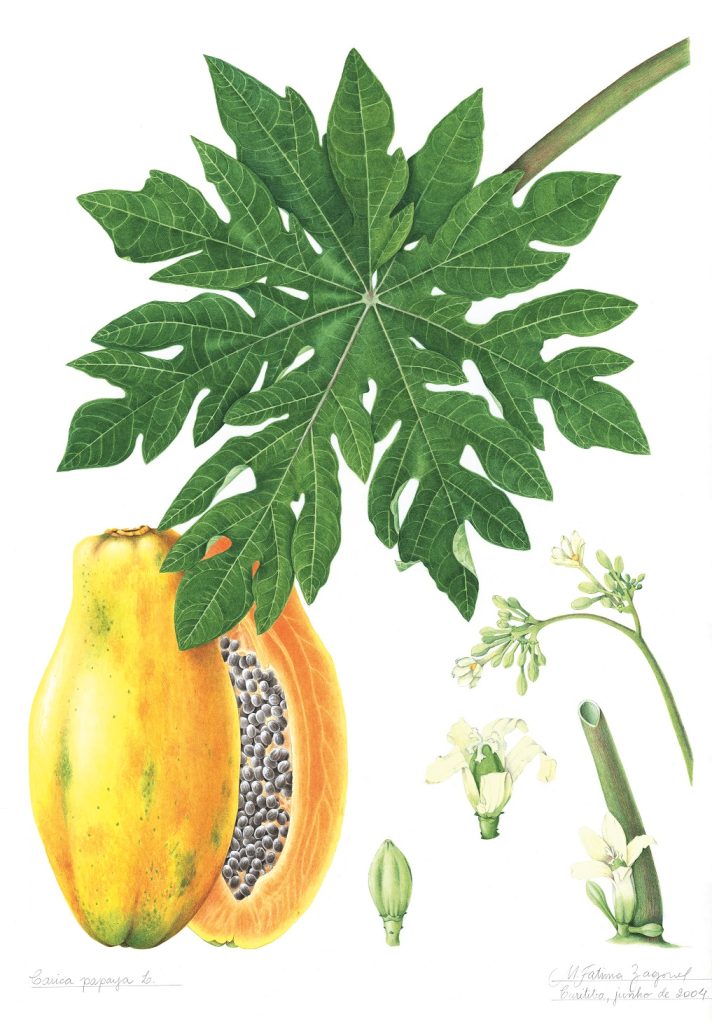 Carica papaya
Does living in Brazil have you focusing on Brazilian native plants?
Yes, absolutely. I mainly portray native plants. Of course, sometimes I accept commissions or work on subjects with special meaning, such as a plant with my son’s name: Laelia Cattleya nobile bruno-bruno, which I illustrated with great pleasure.
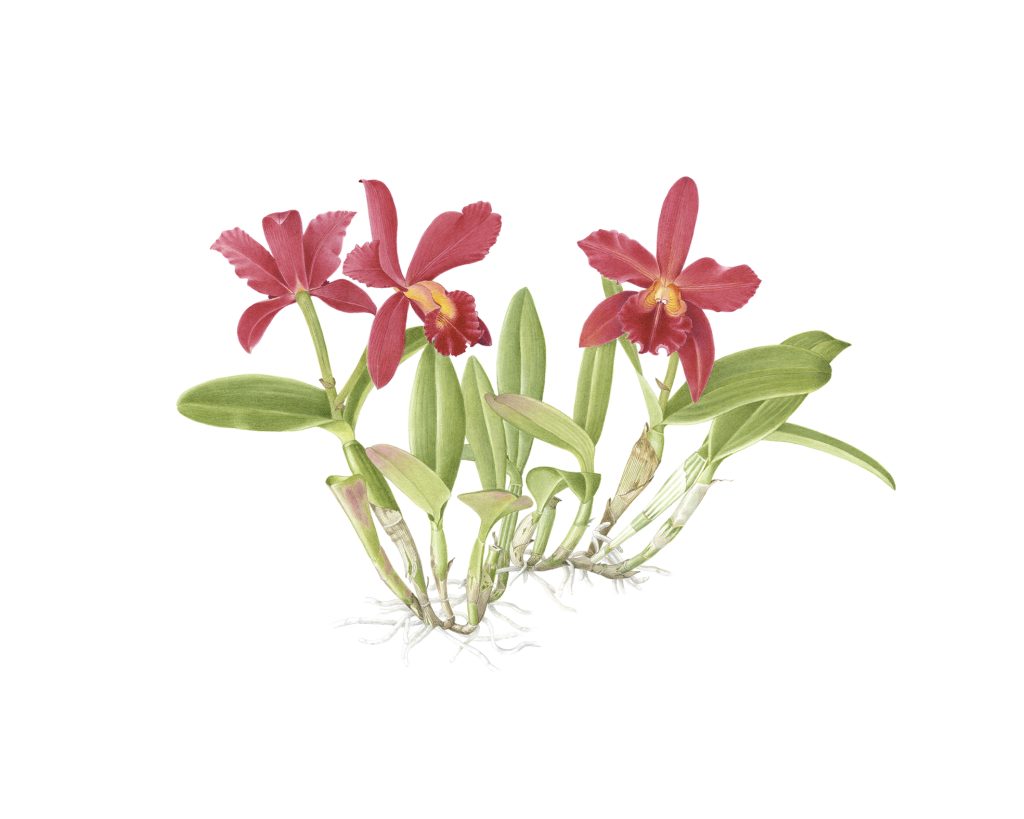 Laelia Cattleya nobile bruno-bruno
Can you discuss the positioning of the leaves in Caladium Bicolour?
When I first saw this plant, I was amazed. There were so many different patterns that I couldn’t choose which one was the most beautiful — I wanted to portray them all.
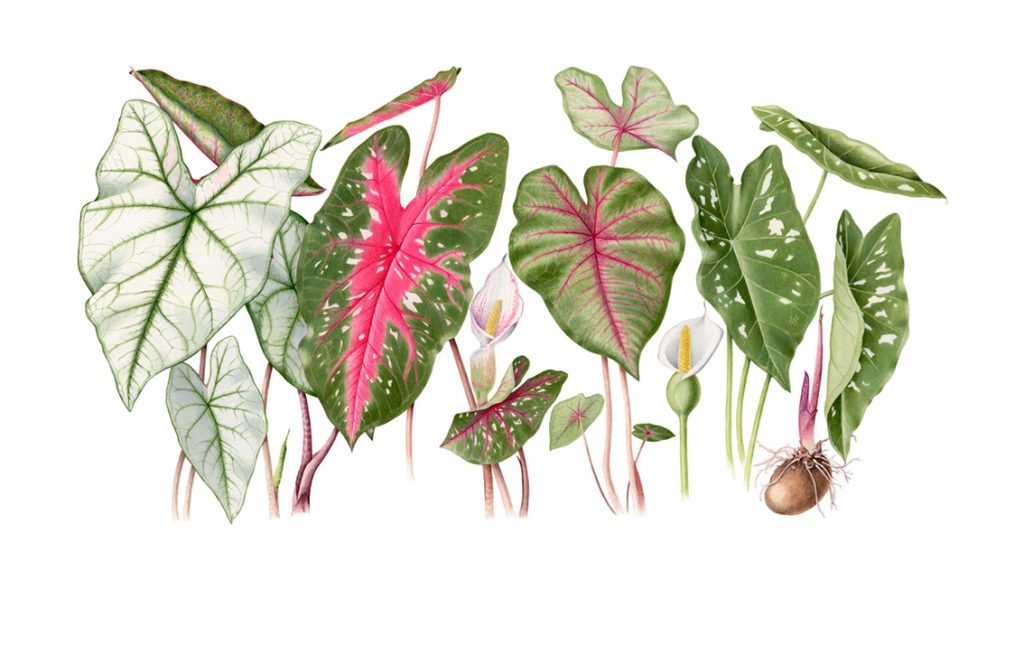 Caladium Bicolor
So, I selected my favorites and decided to create a panel. I challenged myself to do something different from traditional botanical composition. It gave me great satisfaction and made me feel that I should take creative risks more often!
Why do you let some of the plants flow over the frame?
(Campanula Mollis) was illustrated during the Margaret Mee Scholarship at RBG Kew under the guidance of Christabel King. I believe that painting a plant without showing the underground part reveals its full growth habit more clearly, which is also a traditional approach. Even so, it may appear as though the plant is flowing.
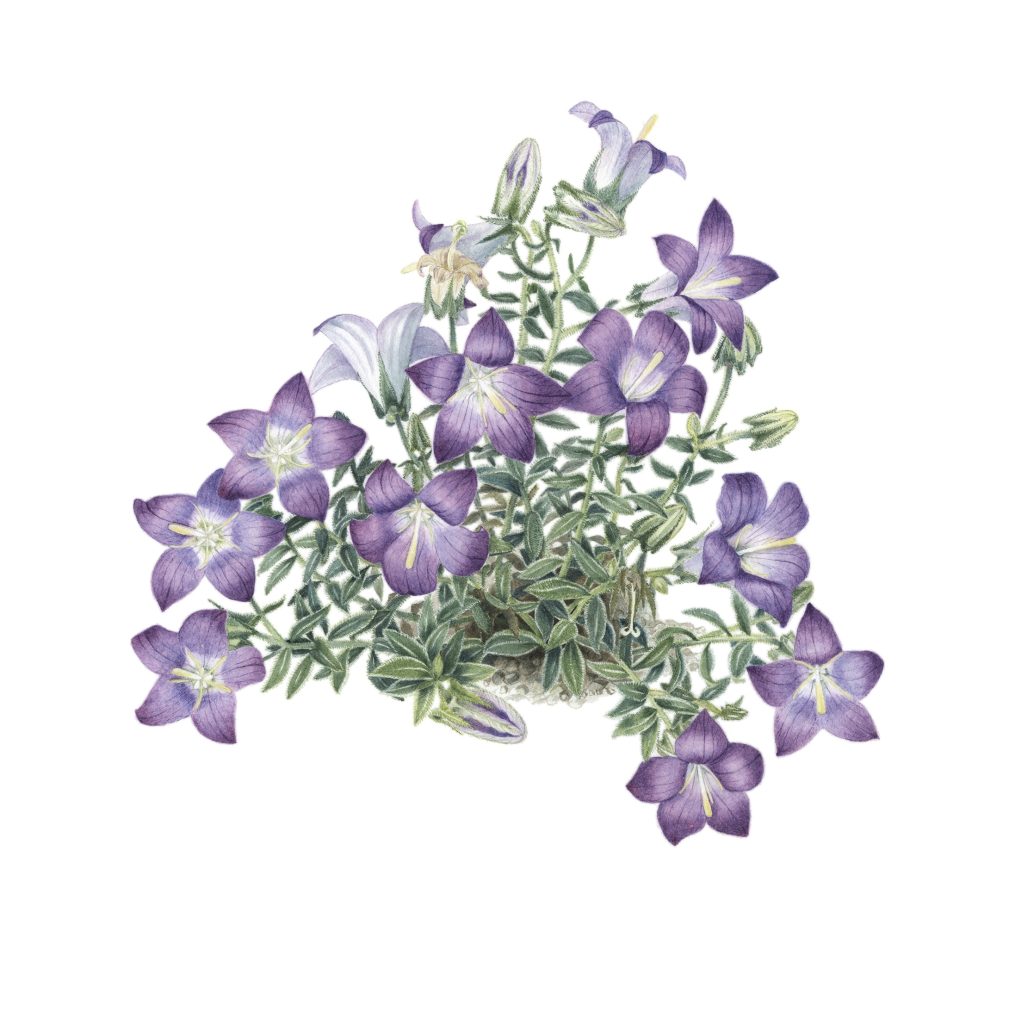 Campanula mollis
You paint beyond plants – fruit and nuts. Can you comment on some of these works.
Sometimes fruits are more representative than flowers, as in the papaya tree. In this case, I chose to highlight the fruit. Other times, I depict both flower and fruit with equal emphasis, even if the flower is not the most important part — it can be so beautiful that it is impossible to ignore, as in my Passiflora edulis illustration. To achieve this, I sometimes have to wait for different seasons in order to portray both stages.
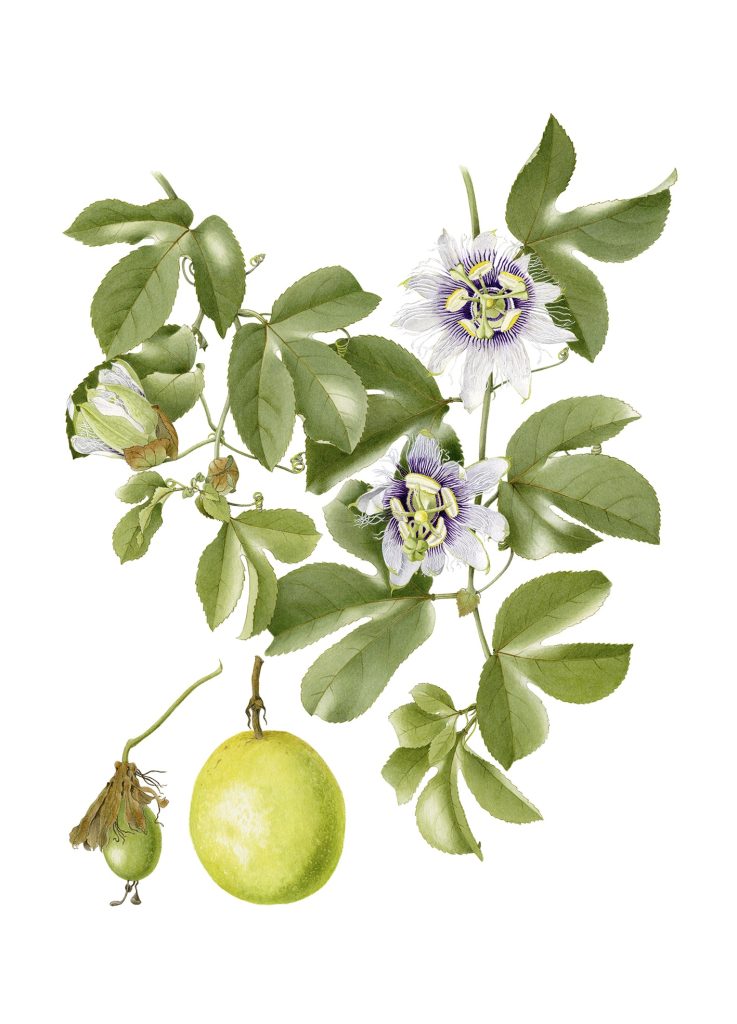 Passiflora edulis
Have you painted plants that are on the endangered list, or have become extinct since?
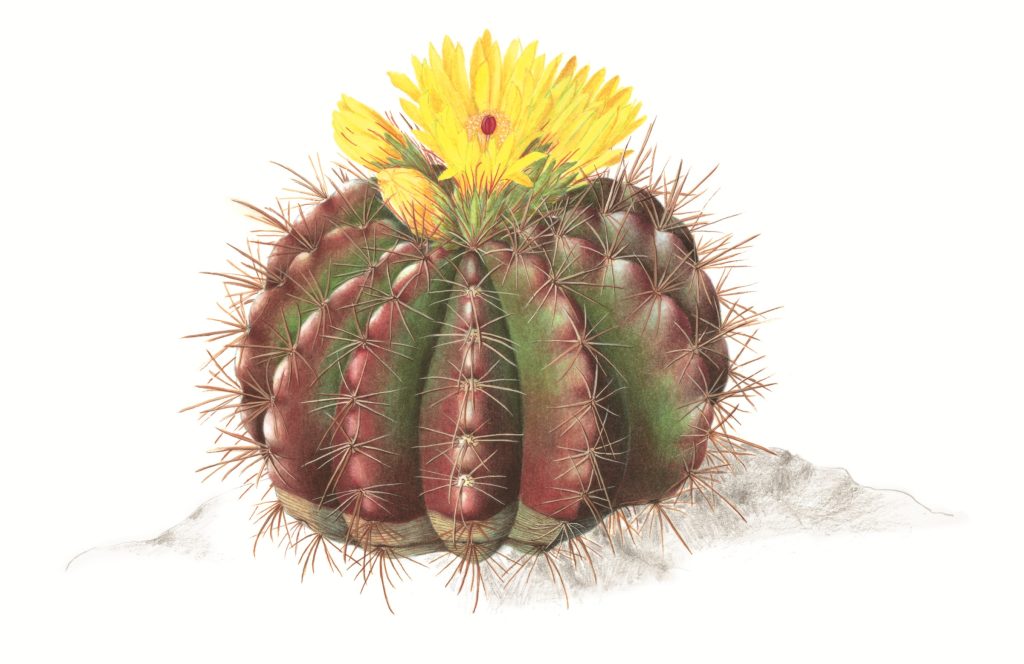 Parodia ottonis
Yes. I was fortunate to visit a protected area outside my hometown where I saw some endangered plants on a private property. One is a small cactus, Parodia ottonis, and another is Hippeastru psittacinum.
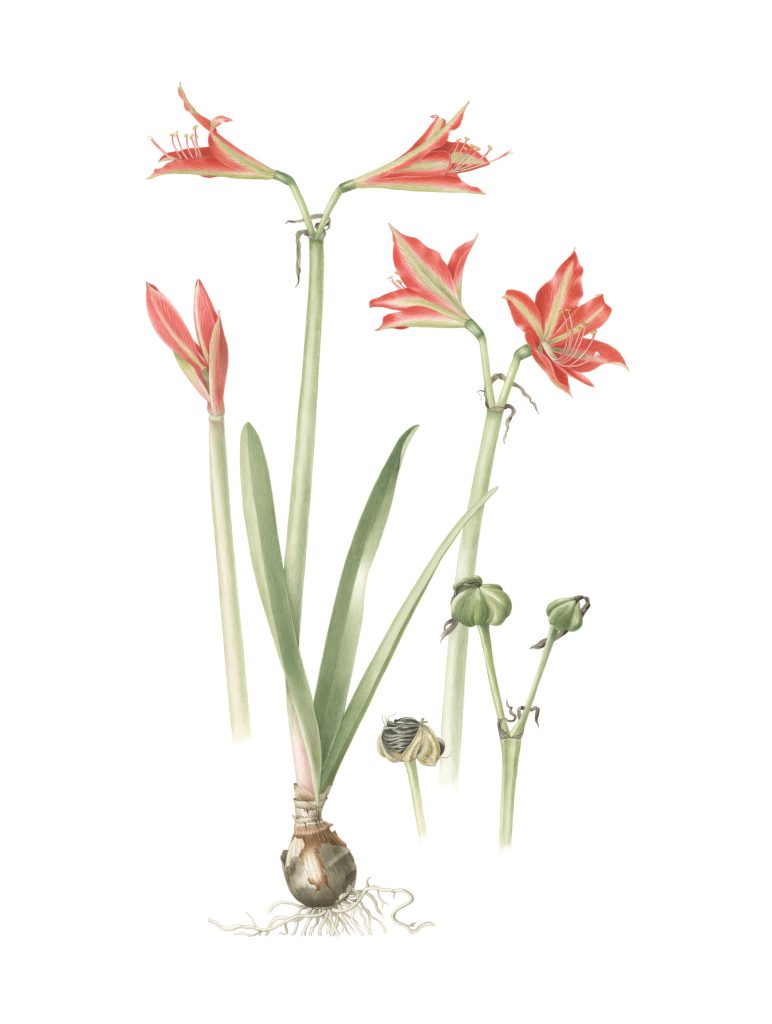 Hippeastrum psittacinum
I also included Araucaria angustifolia in a composition about macrofungi from Brazil’s pine forests.
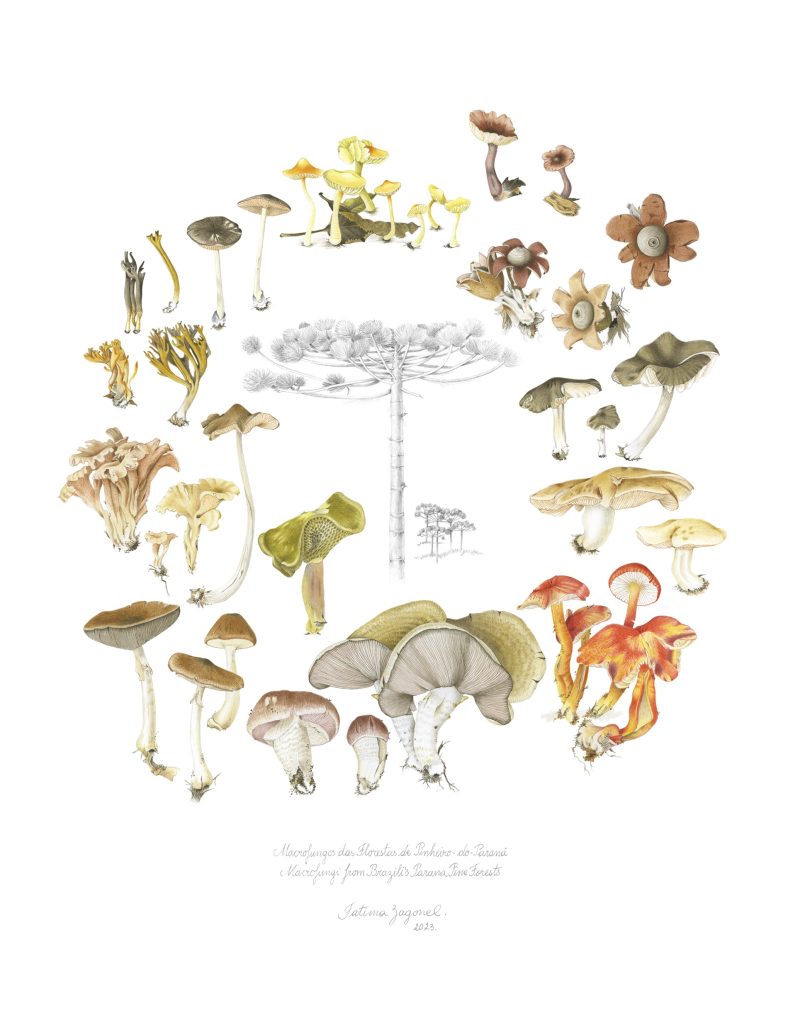 Macrofungi of Paraná Pine Forests
This tree is the symbol of Paraná State, where I live. Its seeds have been appreciated since ancestral times. I also illustrated the pine and its seed. When I moved into my house 40 years ago, the first tree planted in my backyard was this pine — it is majestic. It is very similar to the Australian Araucaria bidwillii.
Discuss your entomological illustrations.
Some subjects are chosen for their importance or beauty, while others come unexpectedly — as in this case. My group was presenting an exhibition at the entrance of the Federal University of Paraná (Biology Department). My artwork depicted Senna bicapsularis, a species full of stamens that resemble small antennas.
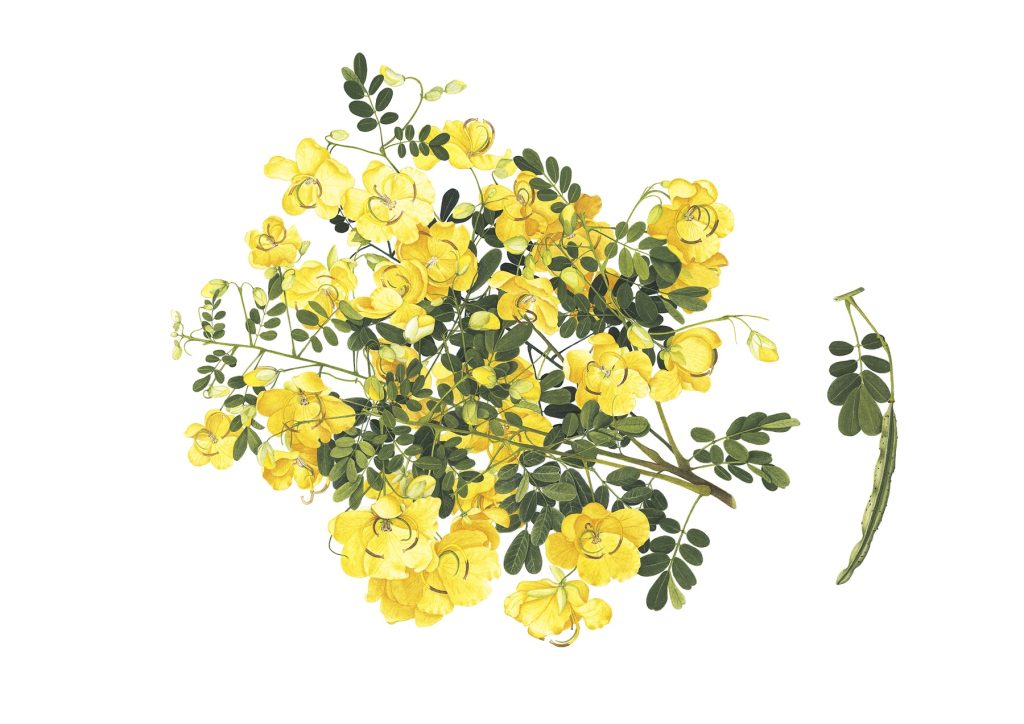 Senna bicapsularis
An entomologist approached me and asked if I would be interested in drawing bees. I said I had never illustrated any kind of insect. He replied, “After seeing all the stamens you included in your illustration, I’m sure you will enjoy it!” The result was two years of drawing bees for the manual Brazilian Bees, followed by another book, Insects of Brazil, and more work thereafter.
Contact:
Fátima Zagonel
Website: www.fatimazagonel.com.br
Email: fatima@zagonel.net
Instagram@fatimazagonel
Deborah Blakeley, Melbourne, Australia
Interview by Deborah Blakeley, May 2026
Images on these pages are all rights reserved by Fátima Zagonel

Think a colleague or friend could benefit from this interview?
Knowledge is one of the biggest assets in any business. So why not forward this on to your friends and colleagues so they too can start taking advantage of the insightful information the artist has given?
Other artists you may be interested in: