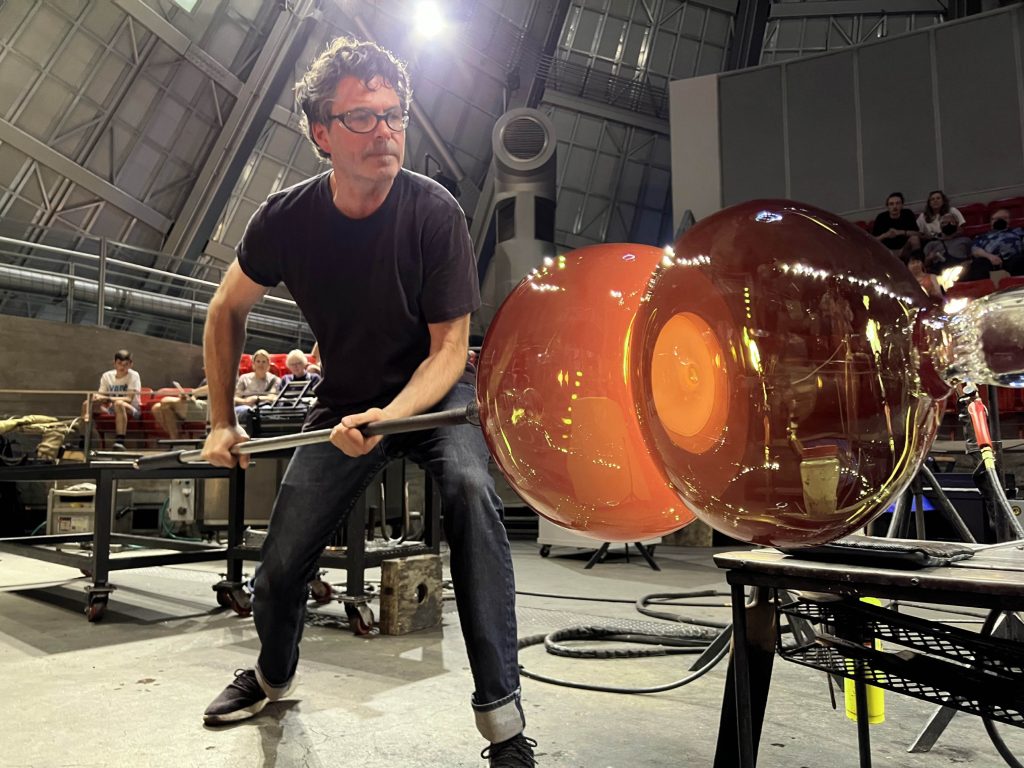
John Kiley Glass Artist
Can you explain why you refer to your glass as ‘geometric architectural forms’?
Most of my glass work uses primary geometric forms, such as spheres and rectangles. I also construct sculptures using multiple parts, and these pieces reference architecture, albeit abstractly.
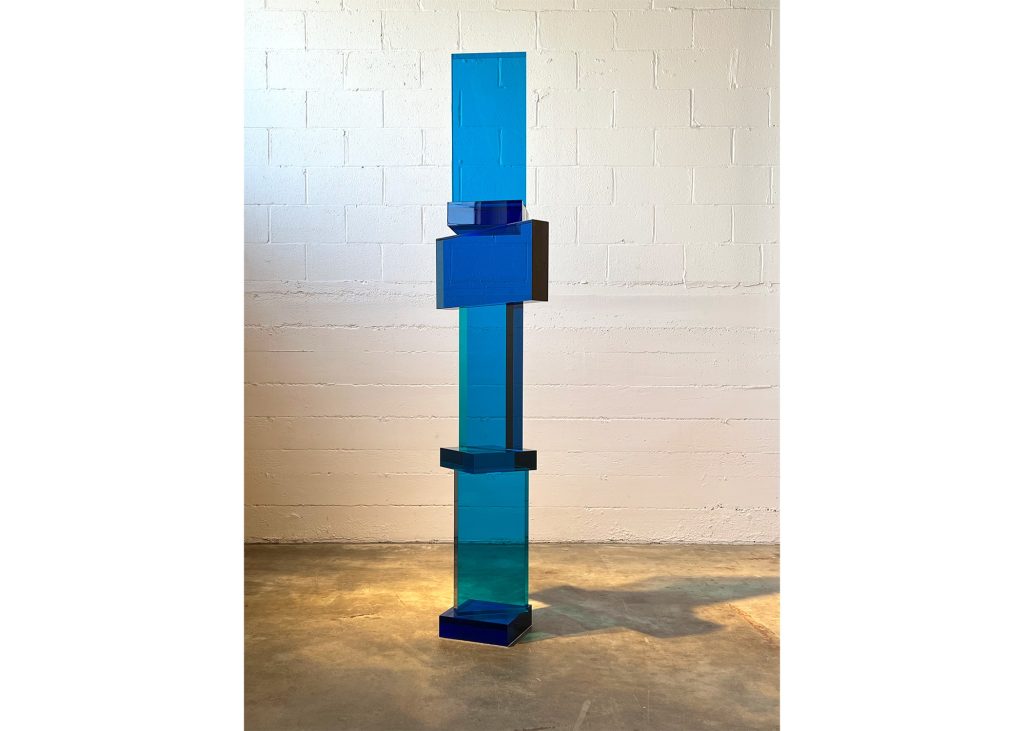
Aquamarine Tower, 2023 80 x 20.5 x 13 in (203.2 x 52.07 x 33.02 cm)
Discuss how you use impact and thermal shock in your work?
This relates to the “Fractographs”. I employ various methods to break polished optic glass blocks, creating a three-dimensional record of time, energy and place. Impact Fractographs are made using a sledge hammer. I also use thermal shock to break the glass, either by pouring molten glass onto a room temperature glass block, or focusing a propane torch on a specific point on the glass, and then using a few drops of water to initiate a break. After the piece is broken, I reconstruct it, using optic epoxy.
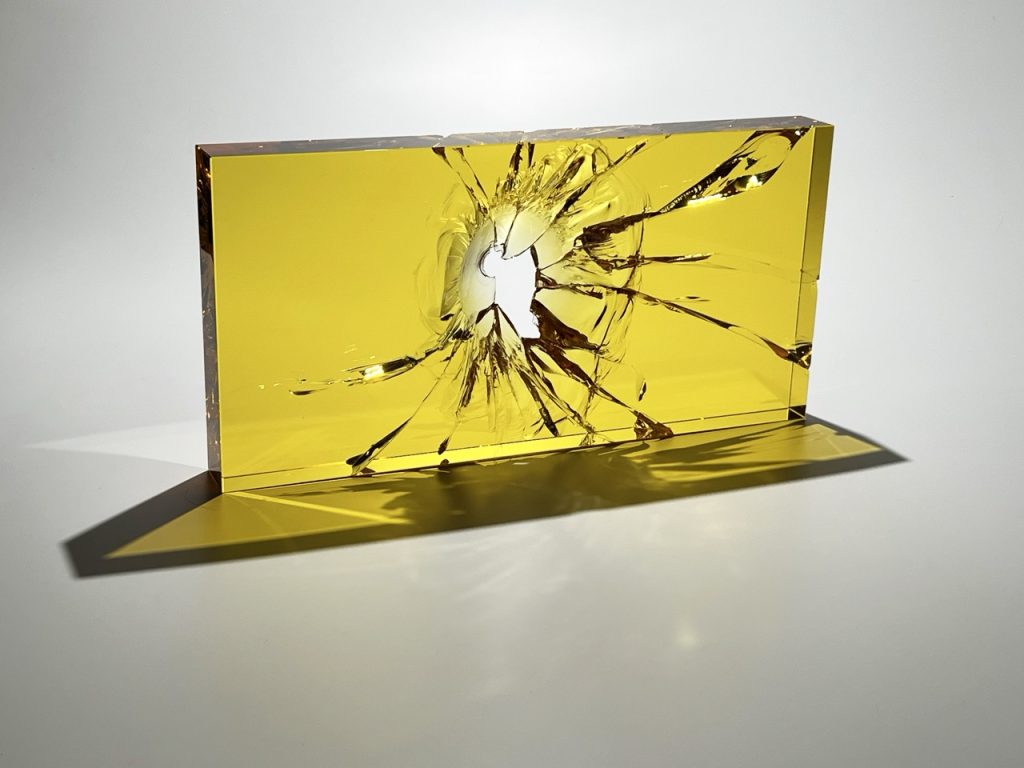
Indianola Fractograph #1, c. 2026, 24 x 12 x 2.25 in (60.96 x 30.48 x 5.72 cm)
Comment on how your glass art has taken you to over ten counties and in what capacities.
I’ve been fortunate to travel extensively because of glass, for exhibitions, teaching, and working with other artists. Recently I worked in Italy with Lino Tagliapietra and Dante Marioni making the torch for the Olympic closing ceremonies. Another favorite trip was for an exhibition at Waterford City Hall in Ireland, that showed contemporary glass sculpture (including my work) alongside masterpieces from Waterford Crystal.
I’ve also been to Bulgaria to source supplies, and to China.
What led you to want to become a glass artist?
I didn’t set out to be a “glass artist” but I wanted to be a sculptor from the time I was quite young. After I graduated from high school, I set up a small sculpture studio in a tool shed behind my fathers business in Seattle. My little studio was next door to the Glass Eye Studio, a famous little factory that produces glass giftware. I’d visit once or twice per week and eventually convinced the production manager to hire me. After about a year or so working there, I was hired to work on Dale Chihuly’s team, and shortly after met Lino Tagliapietra. Working with them and learned about the sculptural potential of glass which is very different than how it’s used to make functional objects.
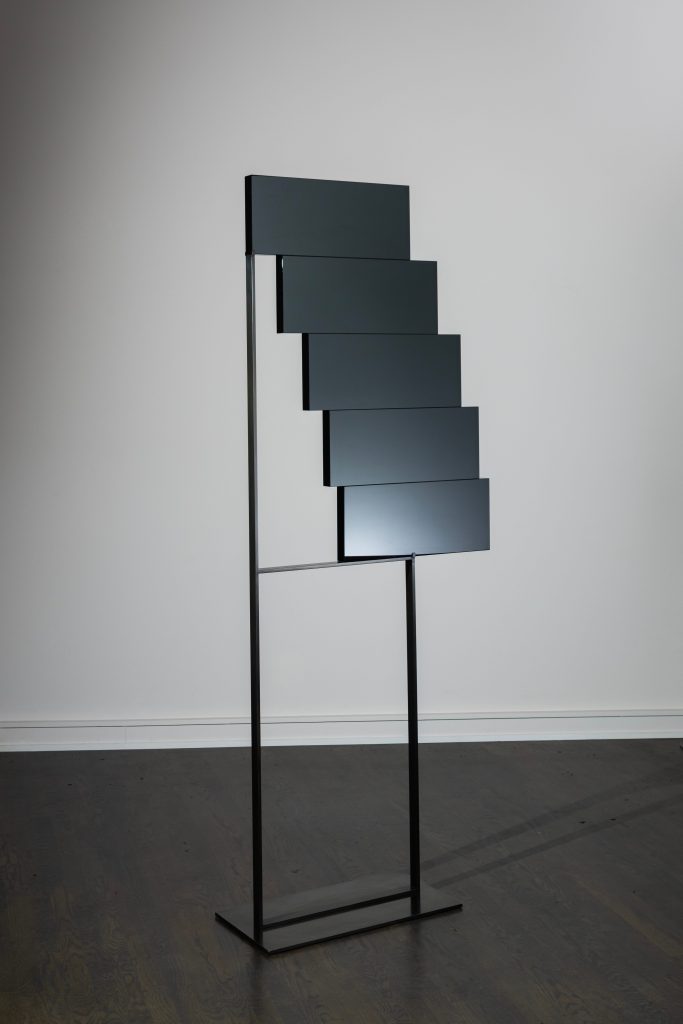
Twilight Tower, 2024, Bonded Optic Glass & Steel 80.5 x 32.5 x 13 in (204.47 x 82.55 x 33.02 cm)
You have been trained at three glass school, Stanwood, Penland and Seattle. What took you from one to the next?
Pilchuck is located not too far from where I grew up in Seattle, and it’s the most famous glass school in the world. I took my first course there when I was eighteen years old. Pratt Fine Arts Center in Seattle provided a good introduction in fundamental glassblowing skills, which were built alongside assisting other artist and working in production studios.
I also went to Penland Mountain School of Craft in the mountains of North Carolina for a two-month intensive glassblowing course. This was a great place to learn new skills and lay the groundwork for developing a body of work.
Briefly discuss how working with Dale Chihuly and Lino Tagliapietra has influenced you.
In the 1990’s I worked with Dale Chihuly for four years and travelled with the team during the Chihuly Over Venice project. Dale has in innate understanding of the material that transcends technique. His ability to capture the inherent beauty of glass and draw the viewer in remains unmatched.
Working with Lino Tagliapietra for sixteen years was incredible. Aside from his renowned artwork, he’s also widely considered to be the best glassblower in the world. He was very adamant that one should find their own voice and look outside of technique and material for inspiration. It was a gift to be able to work so closely with him.
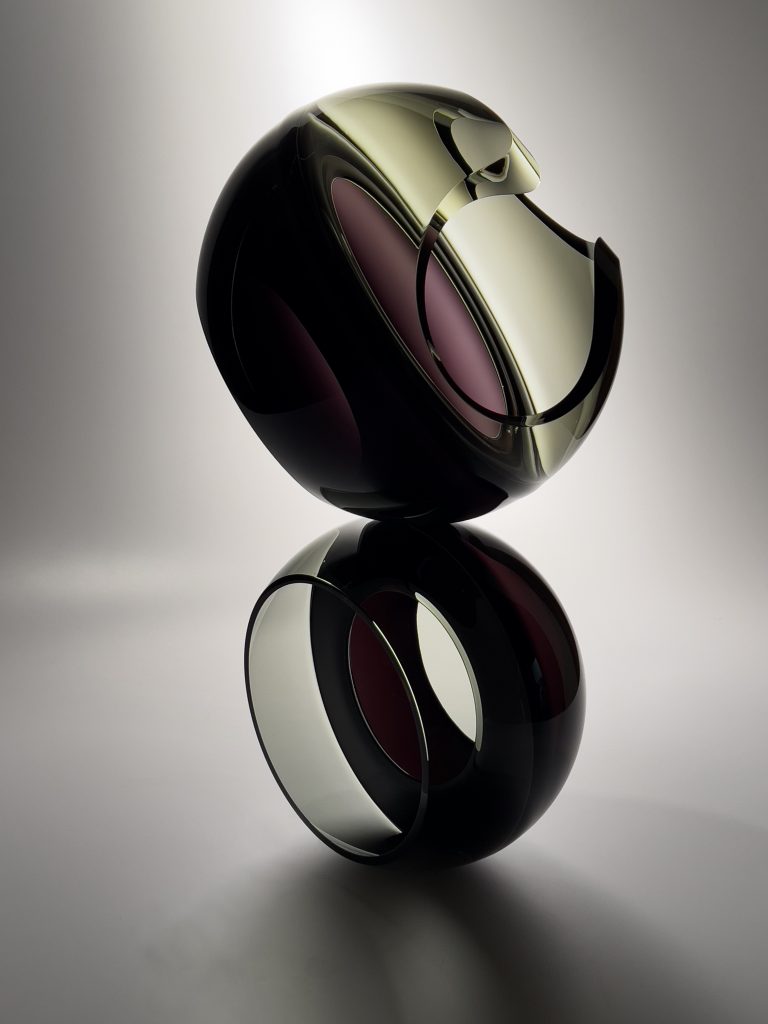
Midnight Sentinel, c. 2025, 31 x 17 x 15.5 in (78.74 x 43.18 x 39.37 cm)
How do you document all your art?
All of my work is photographed and catalogued in a database. I also make a video of each Fractographs breaking in slow motion. For solo exhibitions galleries will often make a printed catalogue of the show as well, and occasionally a poster. The image of a works are typically seen by more people than will ever see the piece in person.
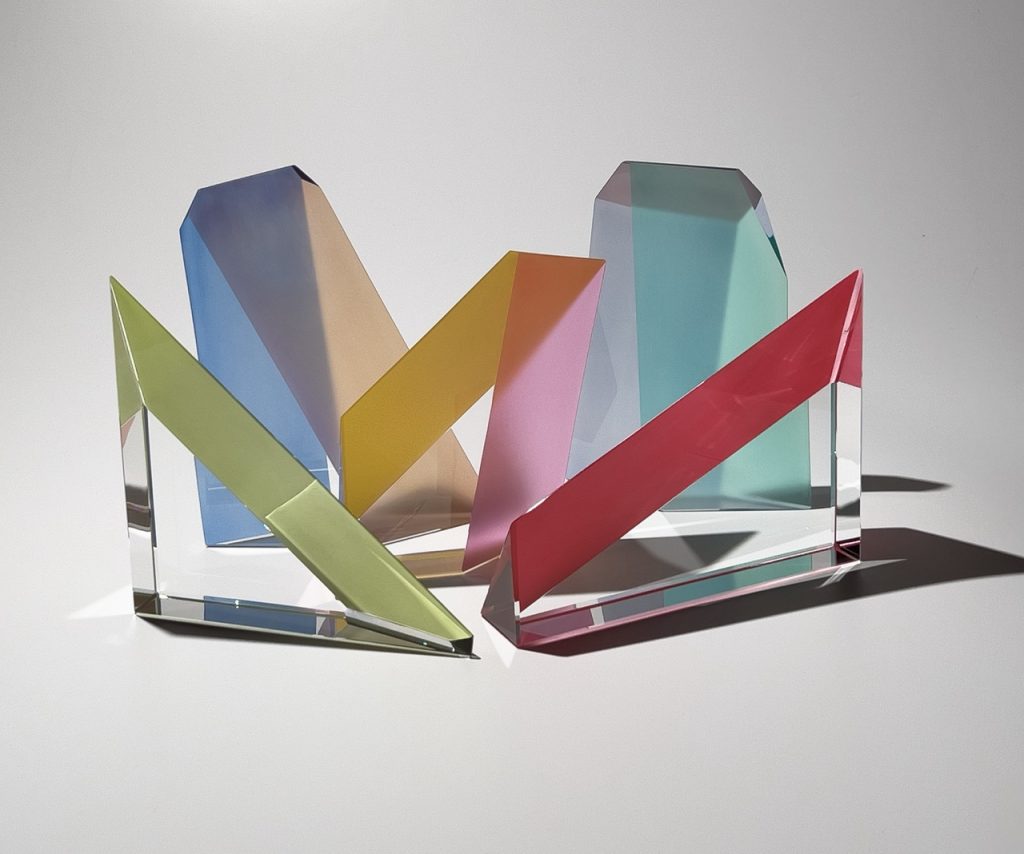
Crystal Color Horizon, c. 2026, 13.25″h x 20″ x 18″ as arranged. Individual elements are 3″d
Can you take one piece that has been added to a specific Collection and how it came to be in the collection?
Elton John collected a number of pieces over the years, and would visit Traver Gallery in Seattle, where I show my work. He was in town for a concert during one of my exhibitions and gave me tickets to the show. That was pretty cool…
Discuss your ‘Towers’
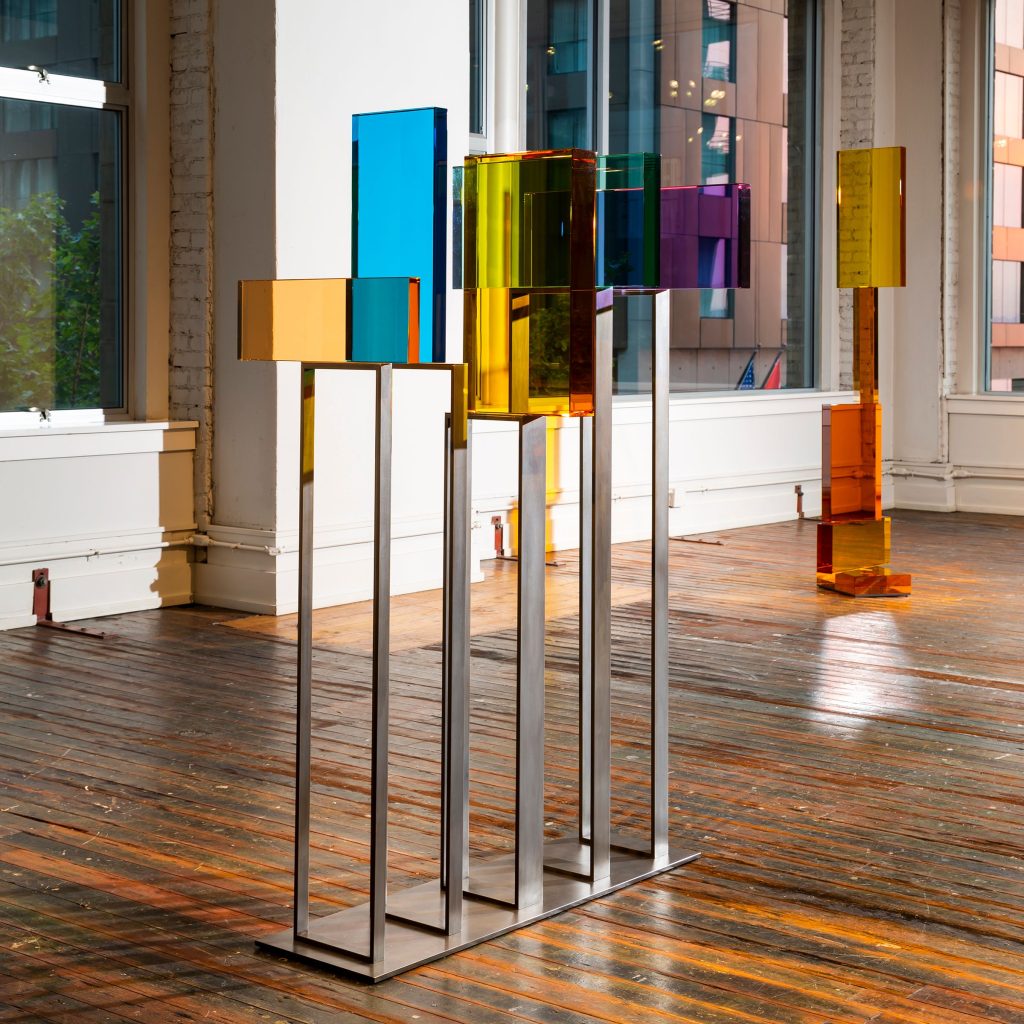
Chromatic Tower, 2020, 61 x 24 x 40 in (154.94 x 60.96 x 101.6 cm)
The towers are the most monumental pieces that I’ve created. They’re up to two meters tall, and can weigh 200 kilos. Part of this work to me is about physically balancing heavy, perfectly polished, optic glass blocks, then repositioning the elements until I decide it looks right. The sections are then chemically bonded together, which is a very involved process. The finished sculptures remind me of buildings, or architectural elements. They change as the viewer moves around them.
Sometimes the finished sculptures are monochromatic, but occasionally I’ll use different colors in an overlapping pattern to create more visual interest. Optic glass is the purest form of the material, and reflects, transmits, and refracts light in an incredible way. Considering how each element and the finished sculpture interacts with light is critical.
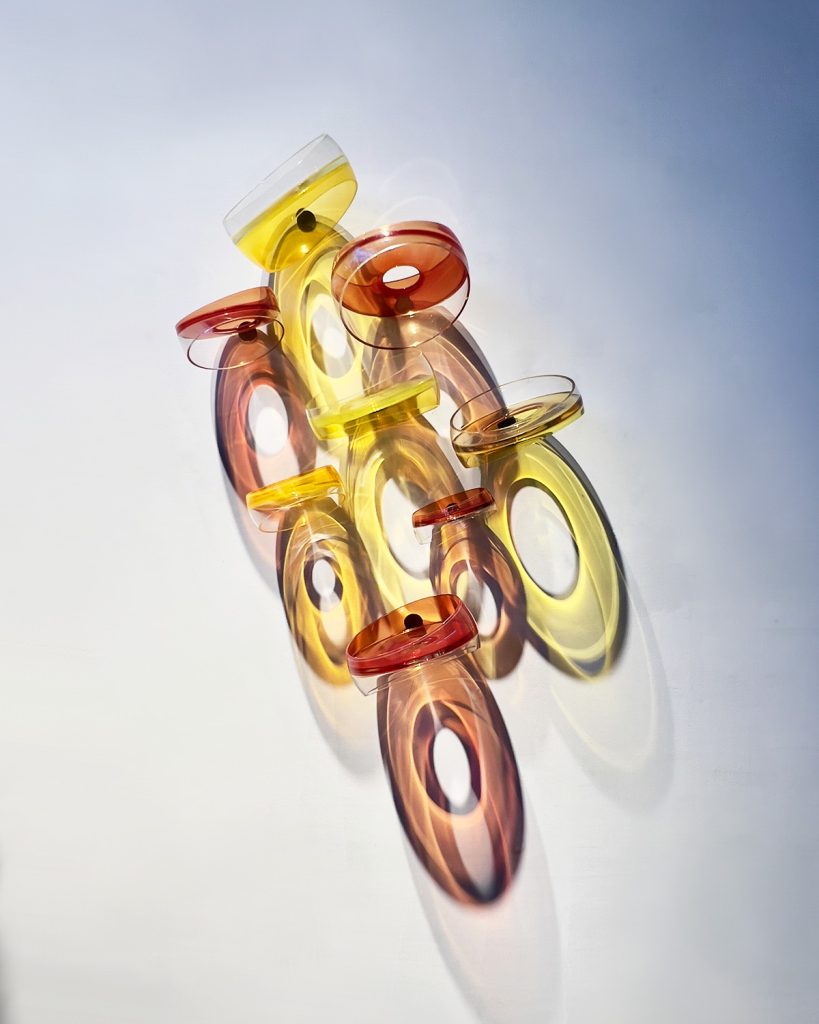
Sunset Shadowmaker, c. 2025, Blown, Cut & Polished Glass, 36″ x 23″ x 9″ As installed
Explain what the word ‘Fractograph’ is and in relationship to your work.
Fractography is the science of the breaking of brittle materials. The term fractograph in a scientific context is usually a magnified photograph of the surface of a broken material. I use the term to describe broken and reconstructed glass blocks. Fractures caused by impact or thermal shock propagate through brittle materials at the speed that sound travels through that material. In the case of optic glass, that’s as much at 11,0000 MPH. Breaks in glass cannot be exactly replicated, so each pieces is irreproducible.
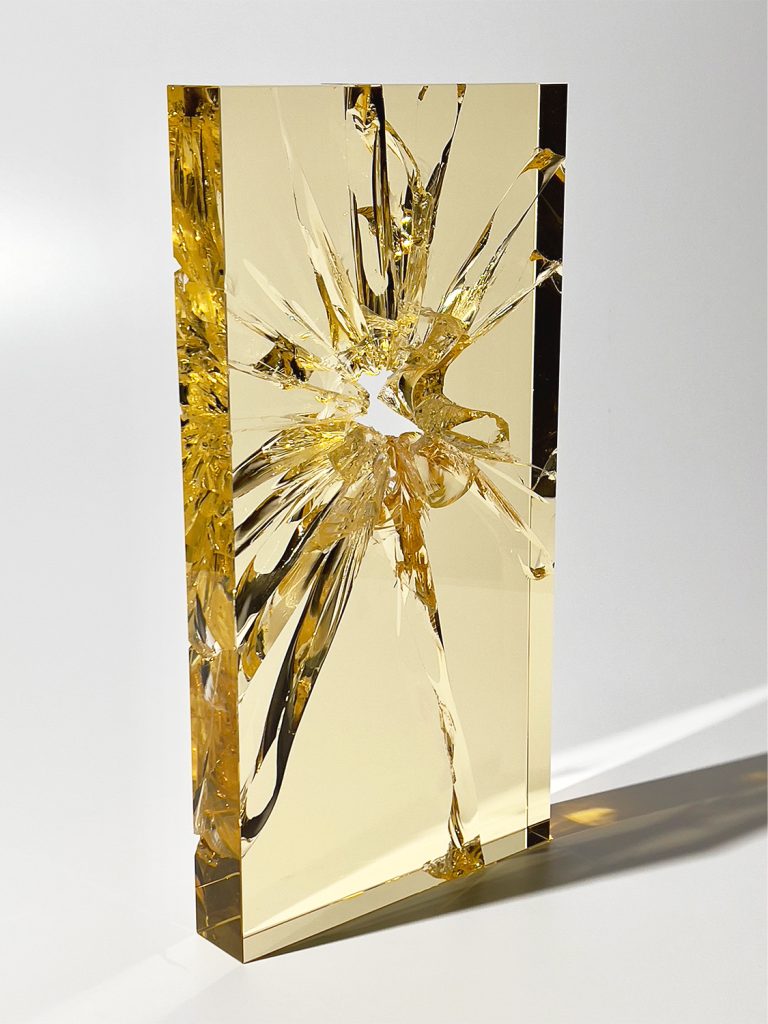
Indianola Fractograph #1, c. 2026, 24 x 12 x 2.25 in (60.96 x 30.48 x 5.72 cm)
How do you cope with the size and weight of each piece?
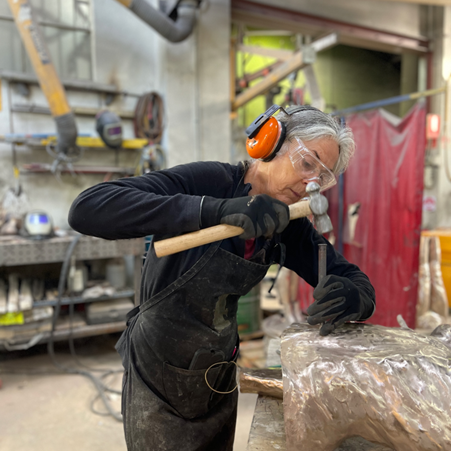
You have to stay in shape, and with glassblowing work with a good team. Glassblowing is very difficult to do alone, particularly for larger pieces.
John Kiley Working Shot
How large is the team in your glass works?
The glassblowing team is typically seven people including myself. I also have assistants who work in the cold shop grinding and polishing.
Explain how the viewer needs to become involved in your spherical forms, (peering through).
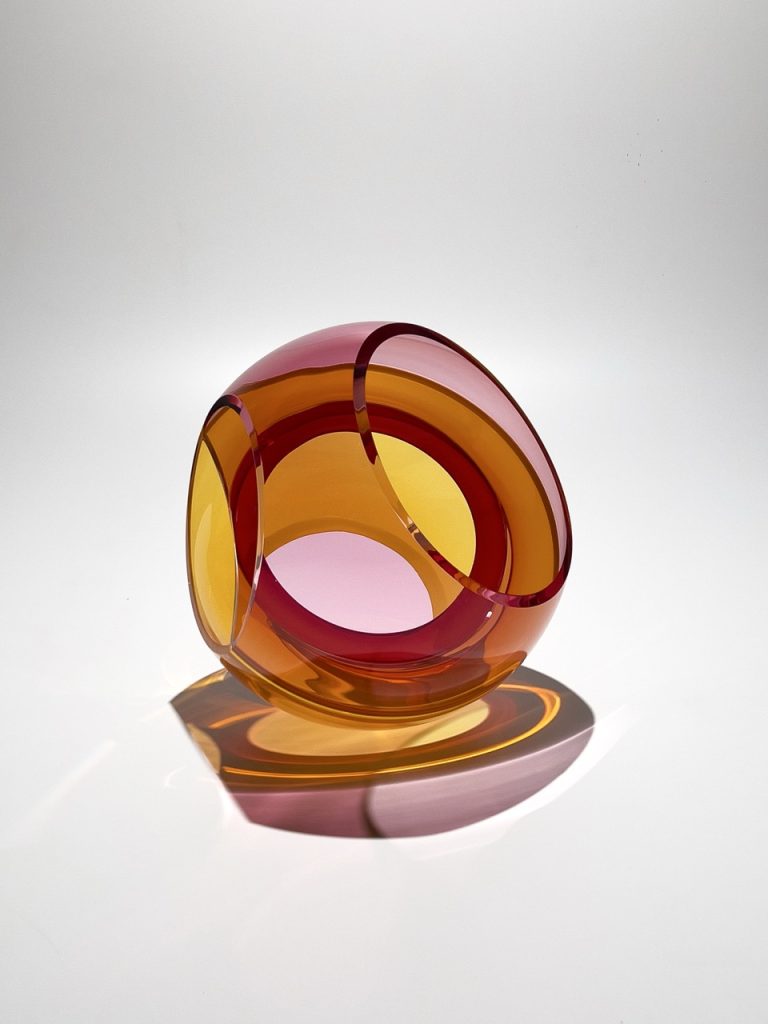
Concave Crosscut, c. 2026, 16 x 14 x 14.5 in (40.64 x 35.56 x 36.83 cm)
True sculpture should have no front. The interior sections of my speerical forms either have a solid membrane dividing the interior or overlapping colors with on opening. The inside is just as important as the outside.
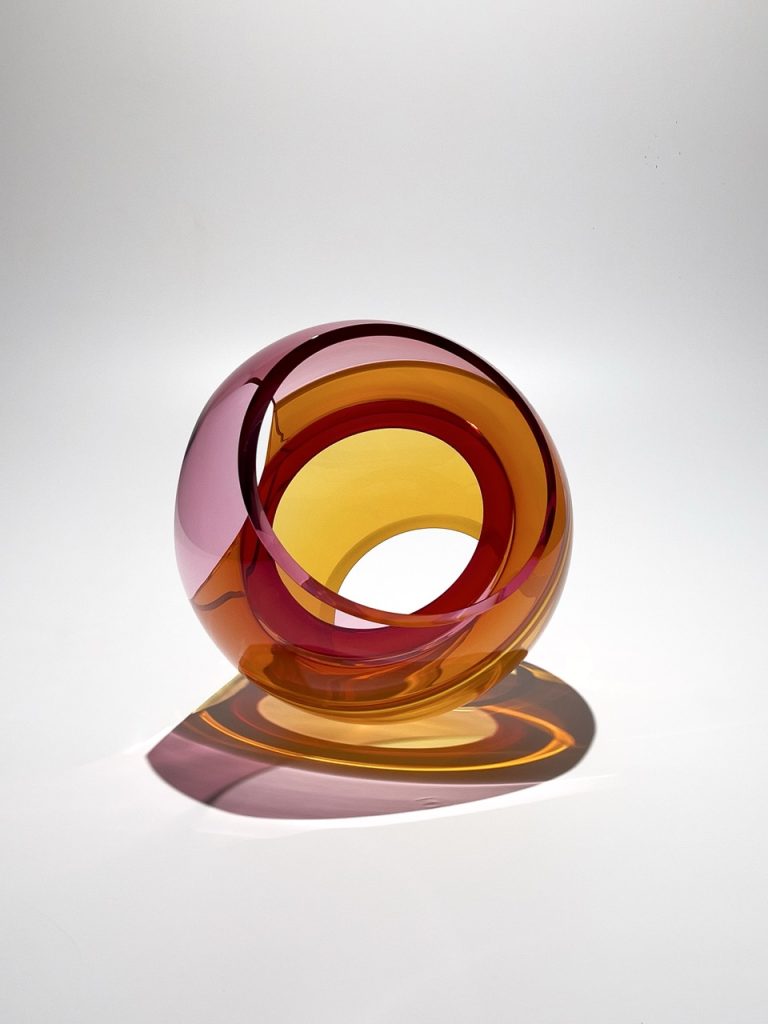
Concave Crosscut, c. 2026, 16 x 14 x 14.5 in (40.64 x 35.56 x 36.83 cm)
What led to your collaboration with Dante Marioni?
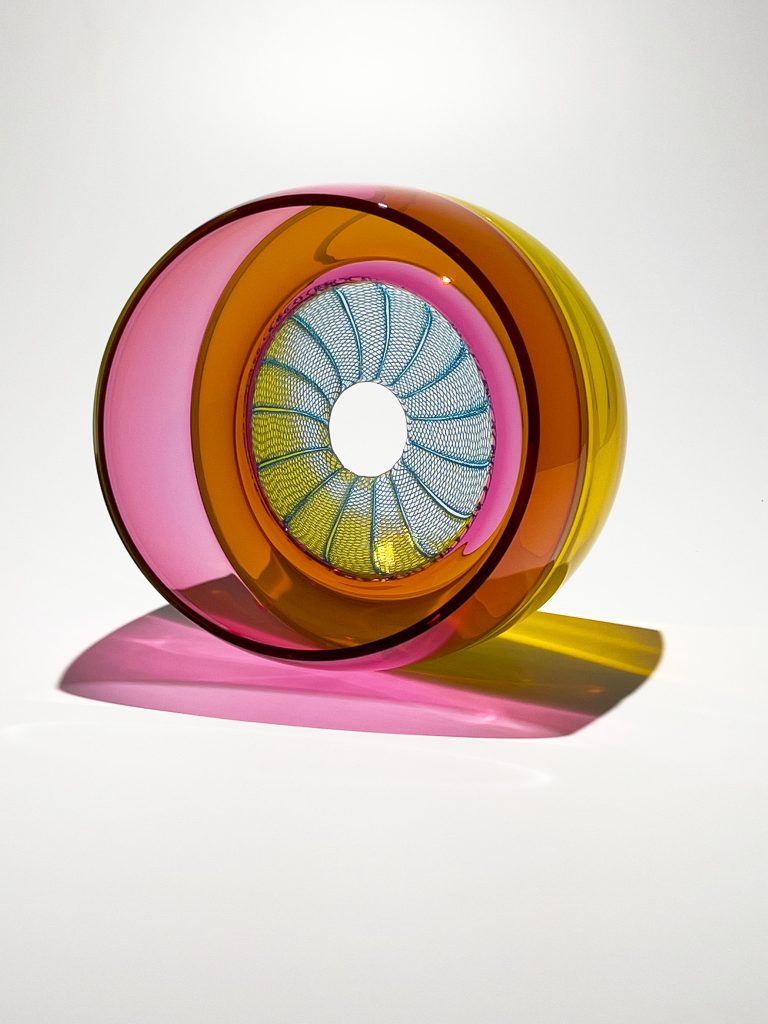
Zanfirico Halo – With Dante Marioni, c. 2026, 15 x 14 x 10.5 in (38.1 x 35.56 x 26.67 cm)
I met Dante Marioni when I was 17 years old, before I ever touched glass. We’ve been good friends for many years, and using the patterns that he makes positioned inside of the spherical forms made sense to both of us. It’s really fun working together.
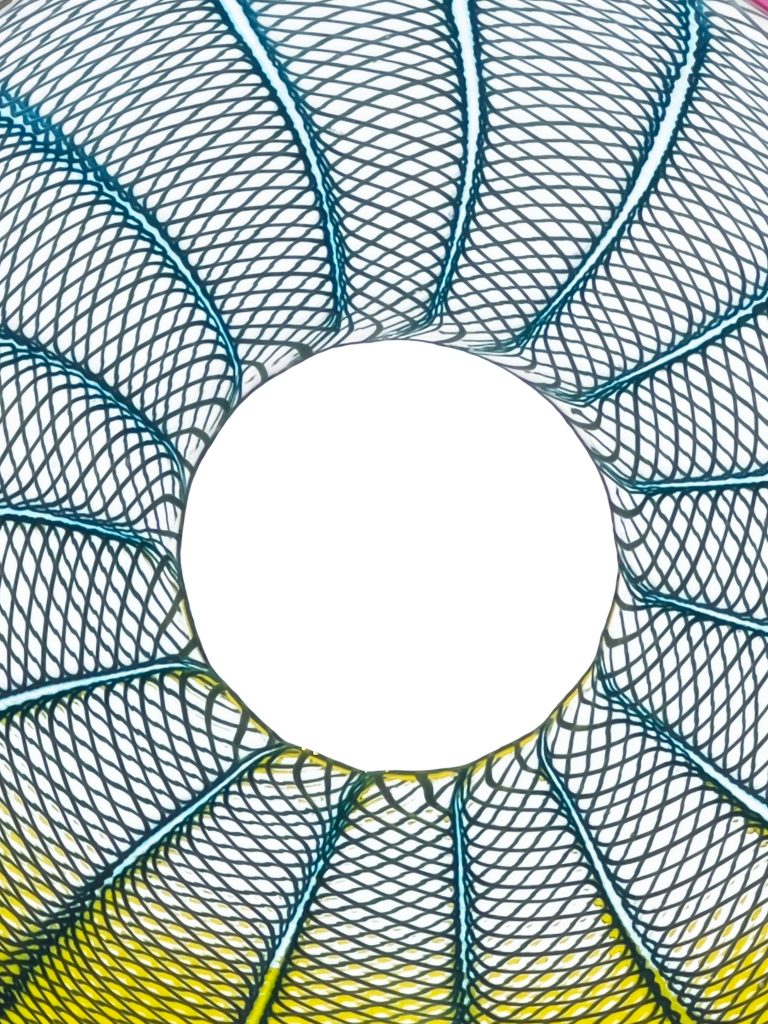
Zanfirico Halo – With Dante Marioni, c. 2026, 15 x 14 x 10.5 in (38.1 x 35.56 x 26.67 cm)
How do you combine glassblowing and fabrication in your work?
To make larger sculptures using blown glass elements, the pieces need to be chemically bonded. This process involves griding, polishing, and the fabrication of armatures to secure the sections until the adhesive sures.
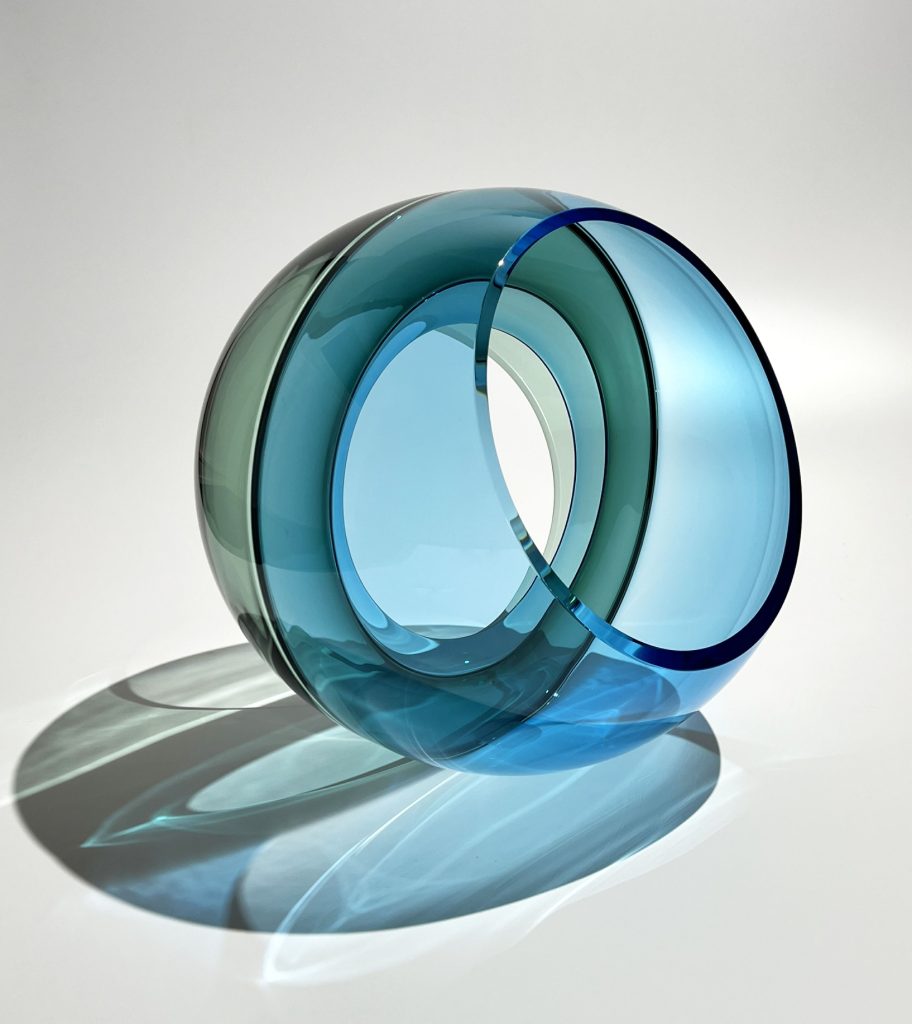
Sailish Sea Overlap c. 2024 49.53 x 49.53 x 49.53 cm 0
What method are you currently working on?
I’m constantly experimenting and lately have been utilizing a 5 axis waterjet machine to help create the rough shape for new forms, based on my Fractographs. It’s a new way of working and thinking for me.
This video shows us how innovative John Kiley is. How he is able to see far beyond the obvious. A true independent artist and thinker. Take yourself to the next level of understanding of why some of us are watchers while others are inspired by what is in clear sight, Waiting to be unlocked.
John Kiley
Contact:
Website: https://www.johnkiley.com/
Email: john@johnkiley.com
Deborah Blakeley, Melbourne, Australia
Interview by Deborah Blakeley, May 2026
Images on these pages are all rights reserved by John Kiley

[/vc_column_text][/vc_column][/vc_row]
Think a colleague or friend could benefit from this interview?
Knowledge is one of the biggest assets in any business. So why not forward this on to your friends and colleagues so they too can start taking advantage of the insightful information the artist has given?
Other artists you may be interested in: