Randon Burns Wood Artist
When did you first become involved with wood, as an art form?
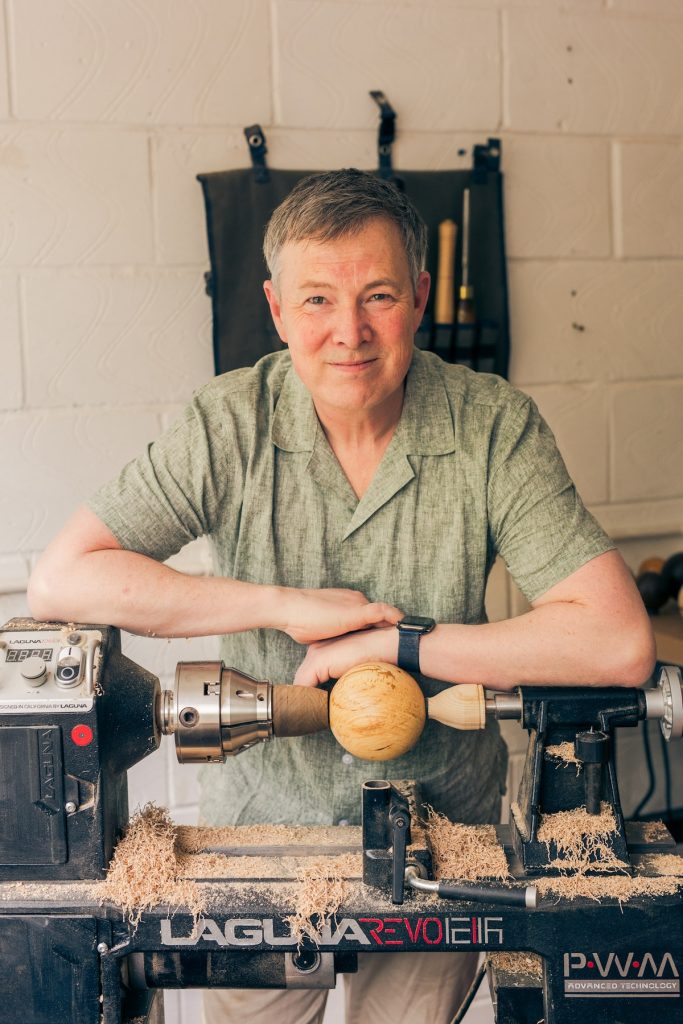
I came to craft, and to wood, relatively late after a career as a project manager in the translation industry. When that industry was significantly impacted by advances in AI, I went looking for a more creative path. London is fortunate to have many institutions offering adult education in craft and the arts, so I began exploring.
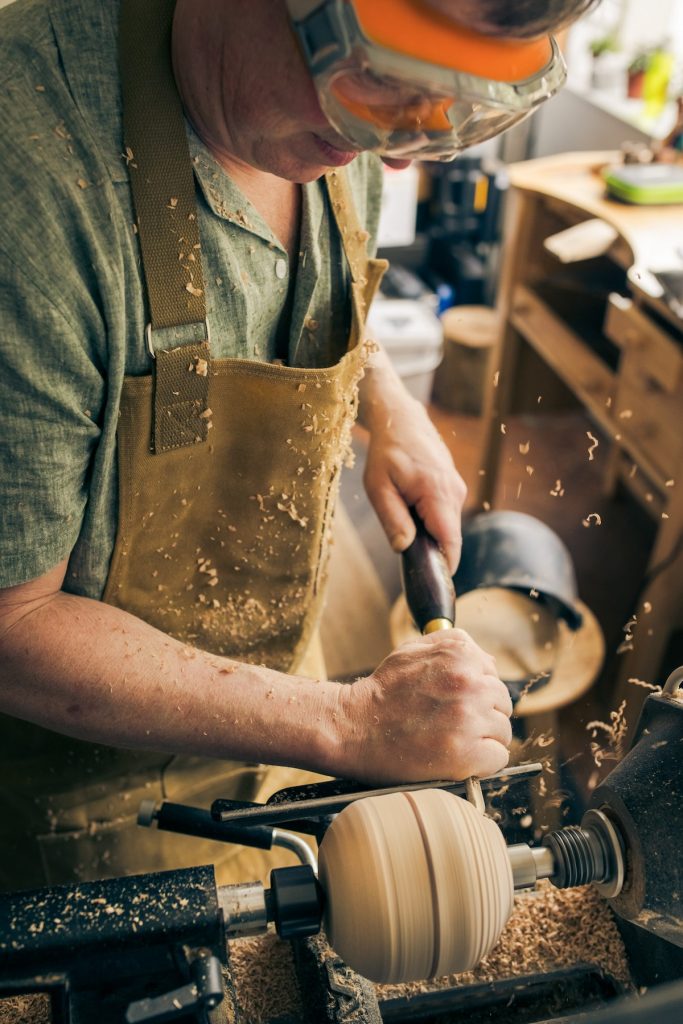
Work in progress by Paul Read Photography
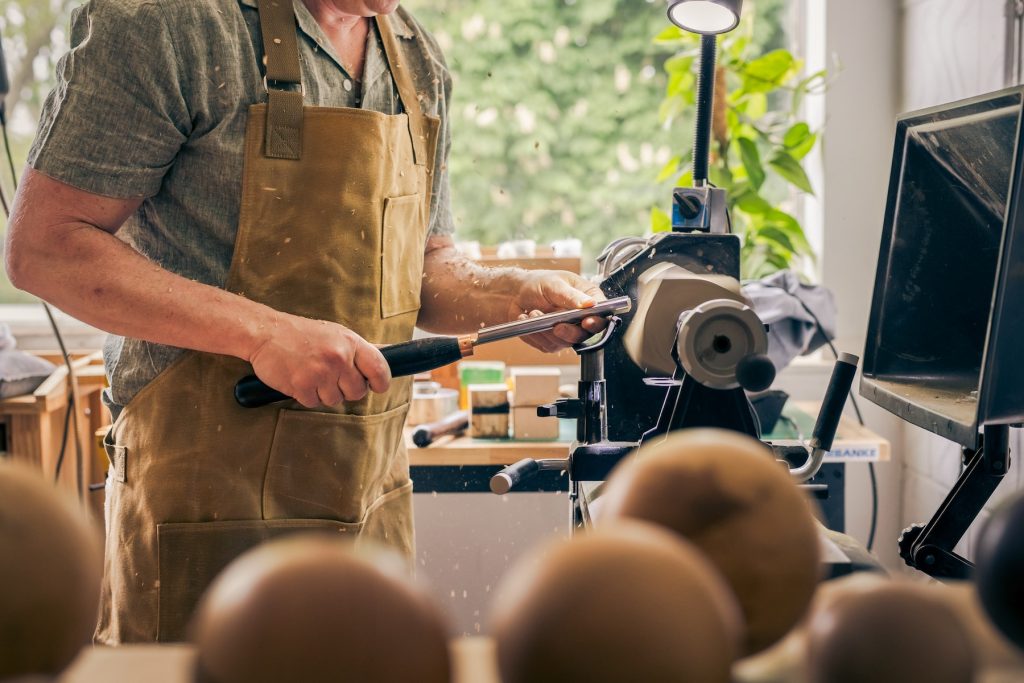
I started with wood carving in 2023, initially inspired by Japanese netsuke, and then moved on to silversmithing, coppersmithing, stone carving, and various aspects of jewellery making. I discovered woodturning at Blackhorse Workshop at the start of 2024. Blackhorse is a wonderful community-based wood and metal workshop, and that’s where things really clicked.
What is unique about the globes you make and what is it about the shape of a globe that excites you?
My globes are minimalist representations of personal geography. They are turned wooden spheres, each marked with either the Equator or the North Pole to establish a geographical point of reference. Specific locations or connections between places, flight paths for instance, are then inlaid with metal or set with gemstones.
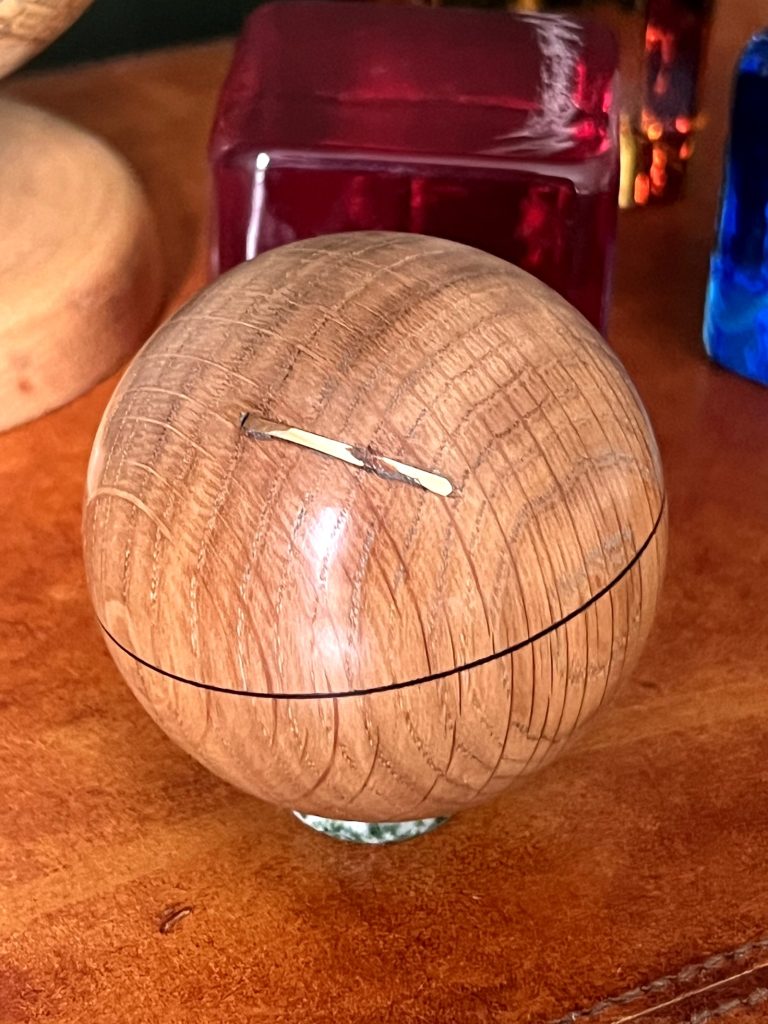 London to Tel Aviv in oak and gold edited
Nothing else is marked, so each piece is reduced to its most basic elements, a curve, a line, a dot, yet each piece still holds history and tells a story.
There is something inherently compelling about a pure form like a sphere. I’ve always had an interest in geography, cartography, history, and travel, so it comes naturally to me to look at a sphere and see a globe.
What type of wood do you mainly work with and why?
I’ve been experimenting with a range of woods. Open-grained species like oak and black walnut, with their visible pore structure, work particularly well, but there are many others I’d like to explore.
When working on commissions, I keep a selection of blank spheres available so clients can choose the wood themselves. It’s interesting to see what people respond to, and that has influenced the direction of my work.
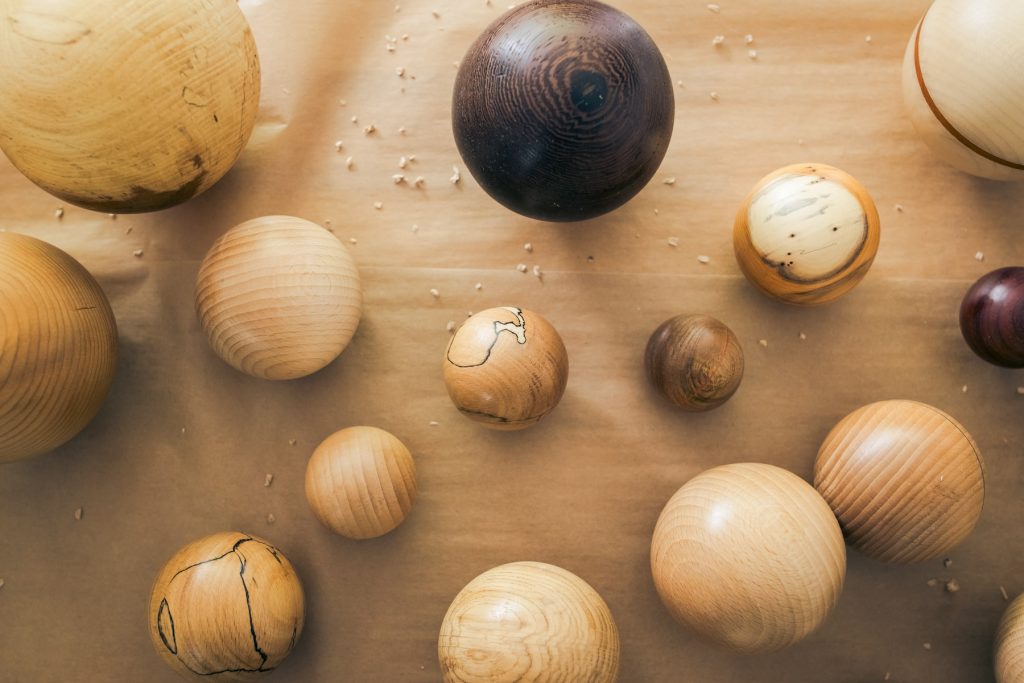 Assorted globe blanks – photo by Paul Read
Discuss the importance of combing wood with silver, gold, and gems.
Precious metal inlay is a centuries-old technique, but it’s most often seen on flat surfaces such as boxes or cabinets. Adapting it to a curved surface like a sphere has been a learning process.
I use silver, gold and gemstones partly because I trained with them through jewellery courses, but also because they carry an inherent sense of value. They allow me to mark certain places or routes as significant in a direct and readable way.
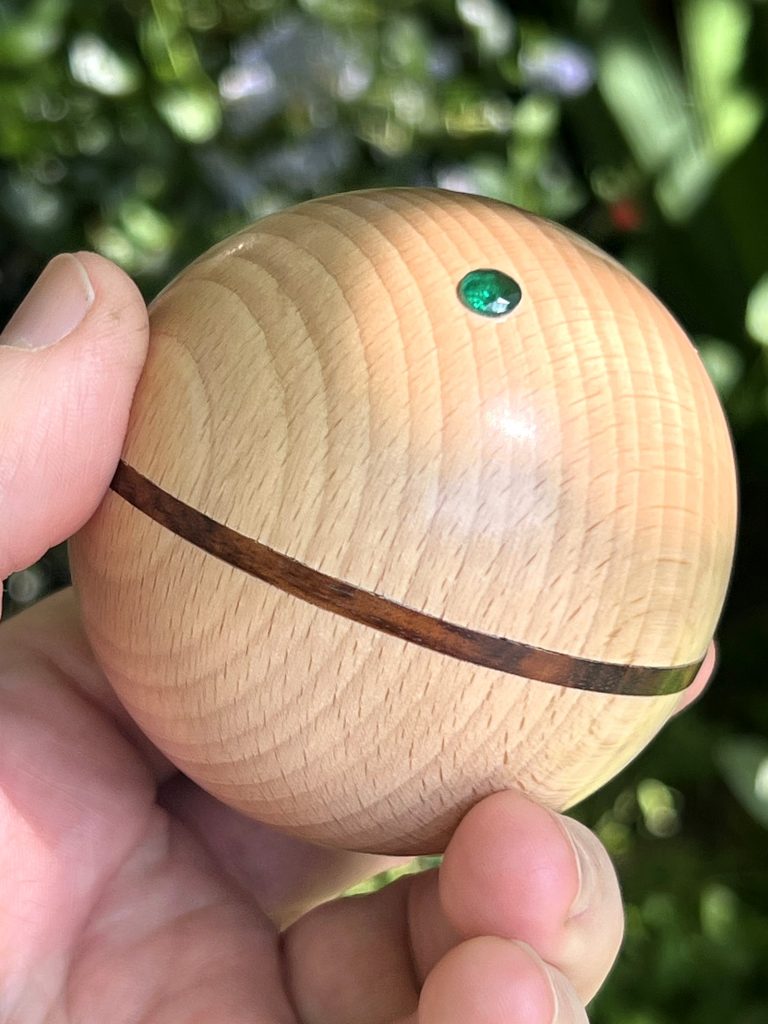 Ireland in oak and emerald edited
Explain a little about the importance of being a member of the Worshipful Company of Woodturners?
The Worshipful Company of Turners received its Royal Charter in 1604, although its origins in London date back to the 12th century, making it one of the oldest livery companies still in existence.
I became a Yeoman of the Company in 2025 during my bursary year at Cockpit, through active involvement and support of its work. The Company plays an important role in supporting the craft today through education, funding, and community, and it has been a valuable part of my development.
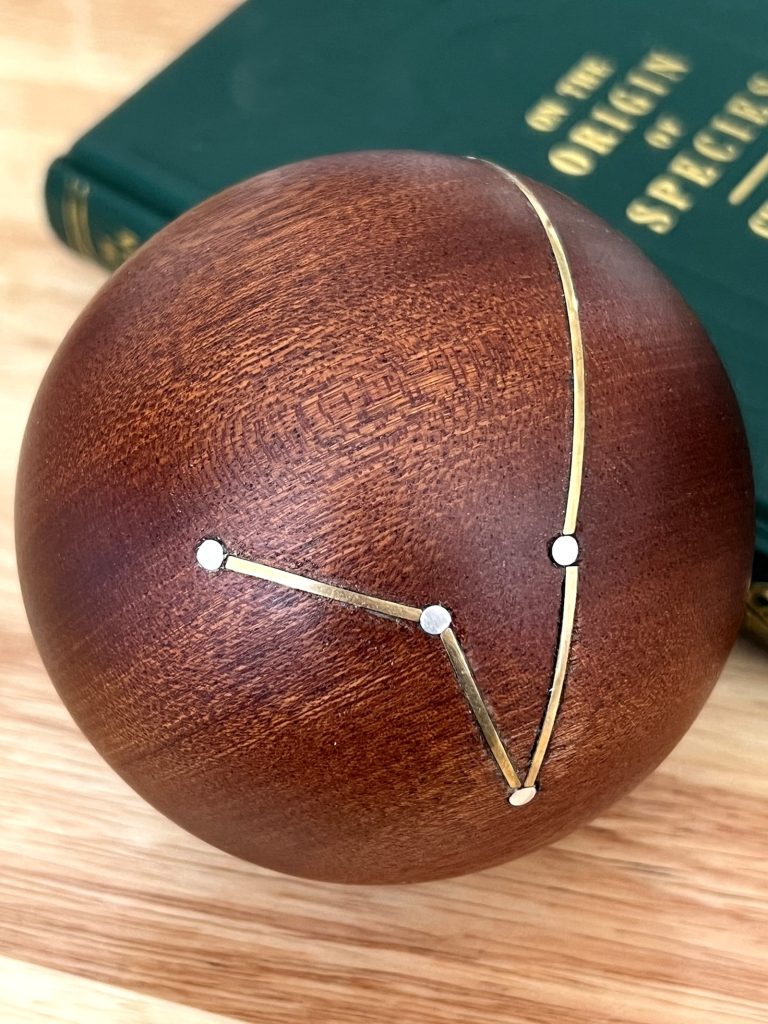 Darwin’s Voyage, edited
You take commissions, discuss that process and give an example.
I work mainly to commission. Once people understand the idea of a globe marked with their own places and journeys, they quickly begin thinking about the places and connections that matter to them and their loved ones. They come to me with their stories, and we work together to decide how best to represent those connections, including the choice of wood and materials.
I enjoy hearing the stories behind each piece, and that aspect of the work gives me a strong sense of purpose while I’m making it.
For example, my first commission was for someone based in London who works frequently in New York. It was commissioned as a gift by a colleague who understood the importance of those two locations to that person and their work. I’m originally American and moved from New York to London myself 20 years ago, so the piece felt personal to me as well. The resulting globe, in black walnut and inlaid with gold, charts the flight path between those two cities.
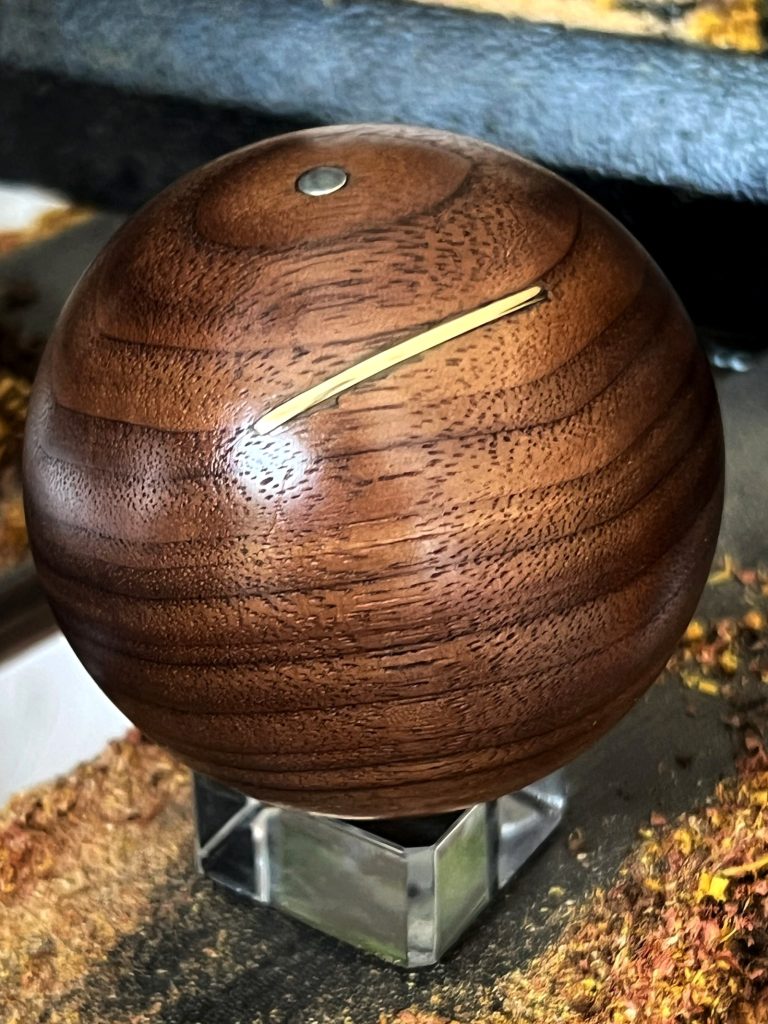 LHR-JFK in gold and walnut edited
As my skills catch up with my ambitions, the work has become more complex. I recently completed a globe charting Darwin’s voyage from the UK to the Galápagos via South America. That piece was speculative, but it quickly found a home. I haven’t yet done London to Melbourne, but perhaps that’s next.
Comment on the importance of sharing you skills through workshops with others.
I was fortunate to learn in a shared workshop environment with an enthusiastic teacher, and I think it’s important to pass that on. There’s a strong appetite for woodturning in London, but relatively few opportunities for people to try it.
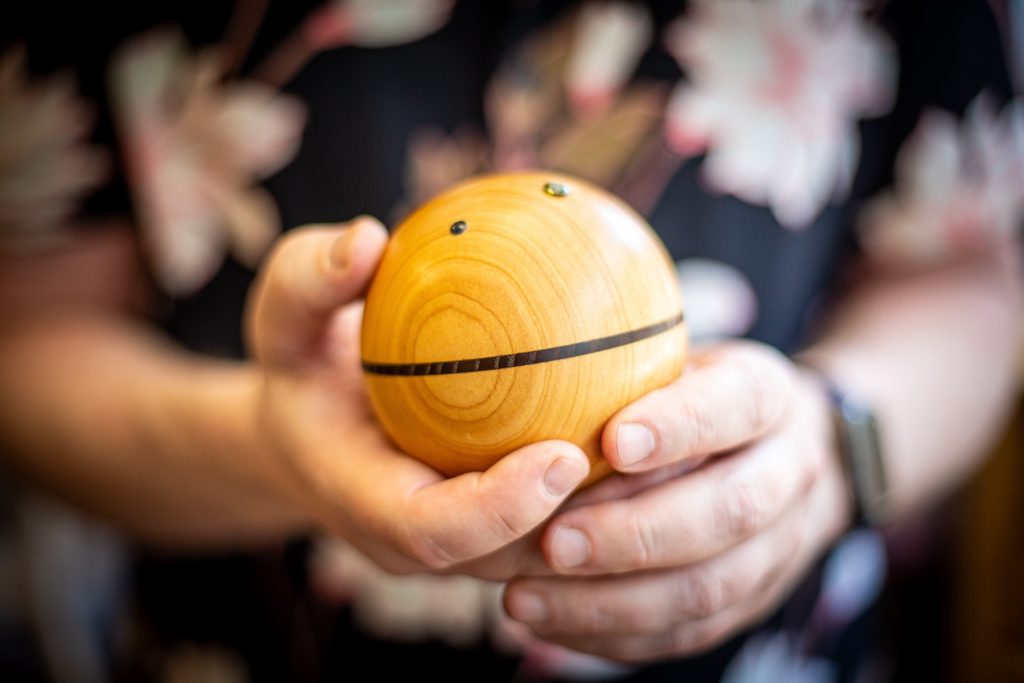 Globe with equator
Teaching is ultimately about connection: connecting people to the material, to each other, and to the wider woodturning community. That same idea of connection runs through my own work, so it feels like a natural extension of what I do.
Expand on the importance of Cockpit in London and your art practice.
Cockpit is a remarkable organisation, currently celebrating its 40th anniversary. It is one of the leading craft incubators in London and is supported by many of the livery companies, the historic city guilds.
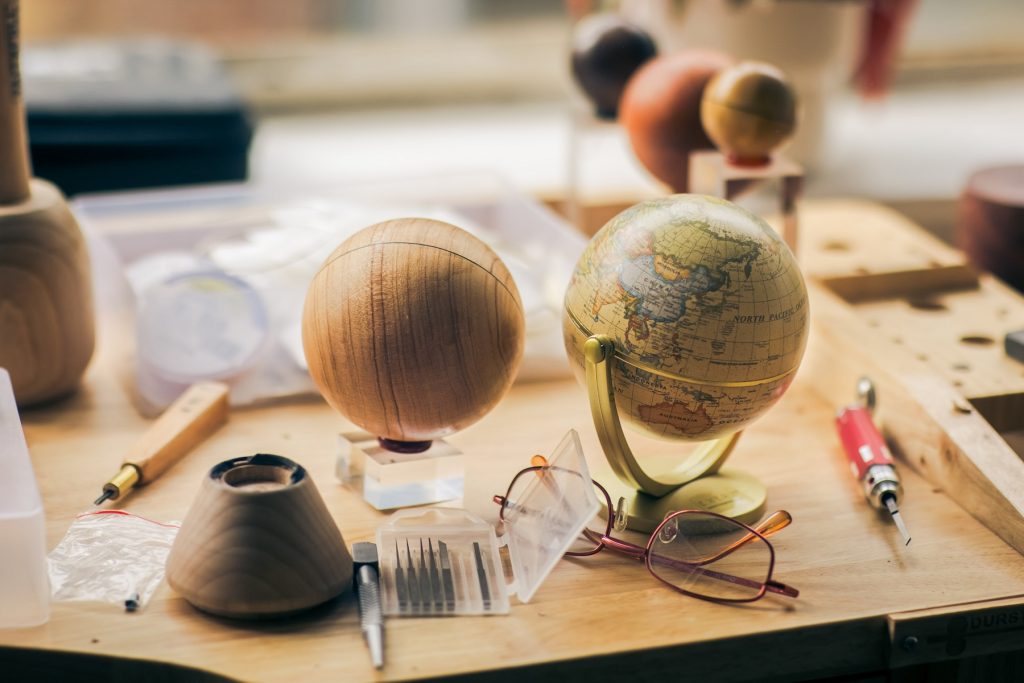 Globe in progress photo by Paul Read
For me, it has provided not just studio space, but structure, community, and opportunity. Their open studios, held twice a year, create an important bridge between makers and the public, allowing people to see both the work and the process behind it.
Recently you have started a three-month residency at Makerversity. It sounds wonderful can you explain how you got the residency and what and where it is?
Makerversity is a shared workspace in the basement of Somerset House in London. Somerset House was once the home of the Navy Board and now houses the Courtauld, among other institutions.
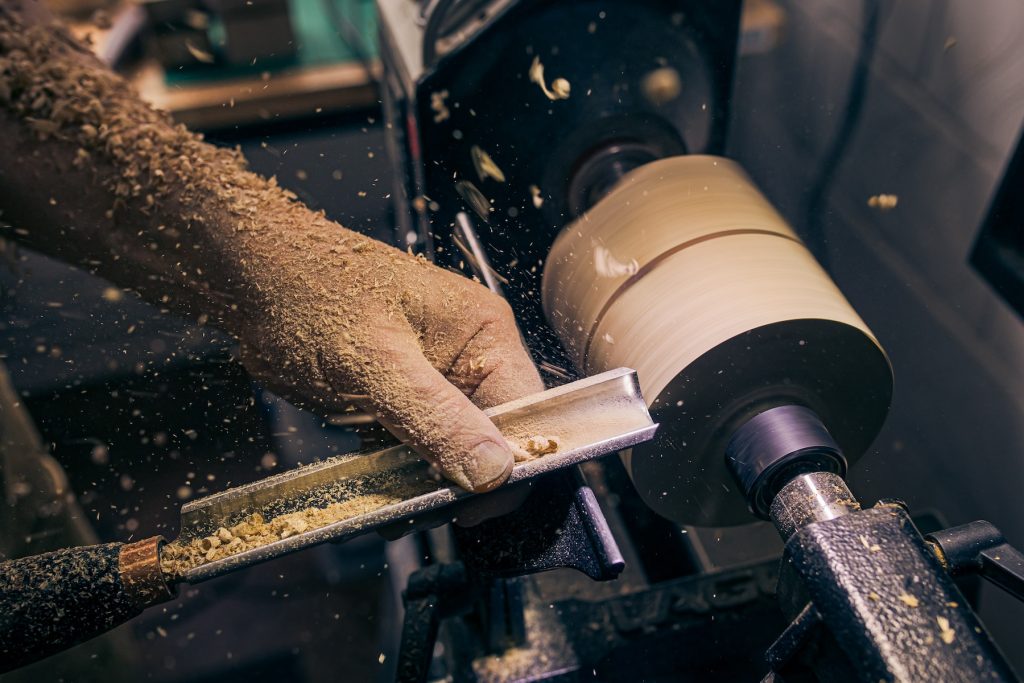 Makerversity provides workspace and equipment to a wide range of makers, innovators and designers. It offers shared access to advanced tools such as state-of-the-art 3D printers and laser cutters, alongside more traditional woodworking equipment. Many of the residents are developing prototypes or startup ideas, which creates a very different atmosphere to Cockpit.
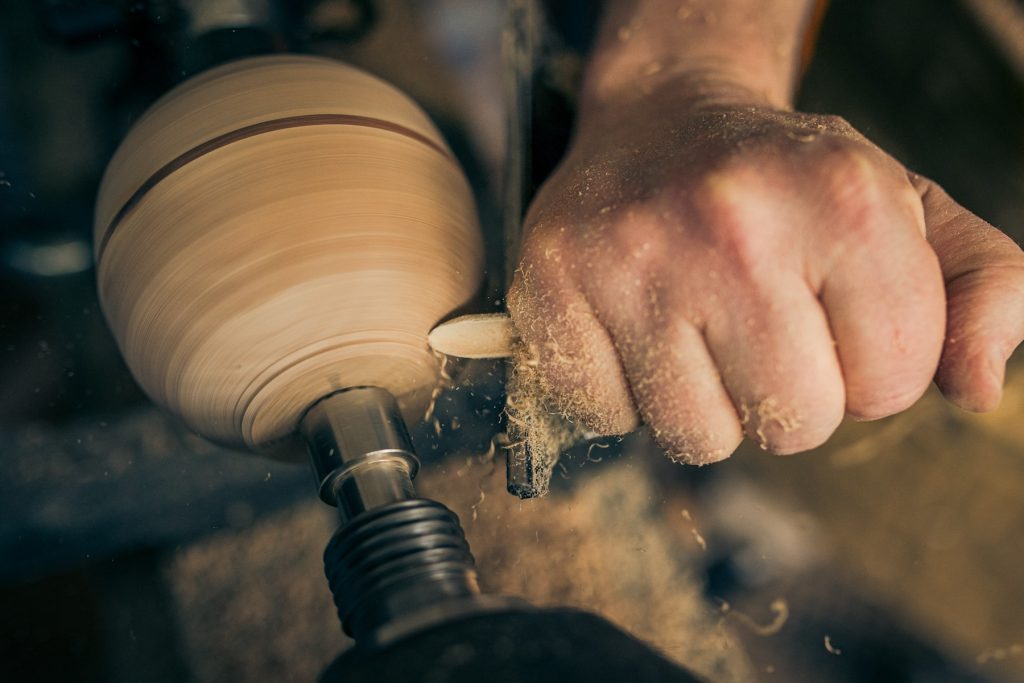
That difference is exactly what drew me to it. It has given me the opportunity to explore how more advanced manufacturing techniques might be incorporated into my work or design process, without having to invest in equipment that may not ultimately be relevant. As with Cockpit, the community aspect has also been invaluable.
What are you currently working on?
I was recently shortlisted for the Royal Academy Summer Exhibition with a piece titled Nurse’s Journey: MNL – LHR (via DXB). It traces the route many Filipino nurses take when coming to work in the NHS, often travelling via Dubai as there are no direct flights from Manila.
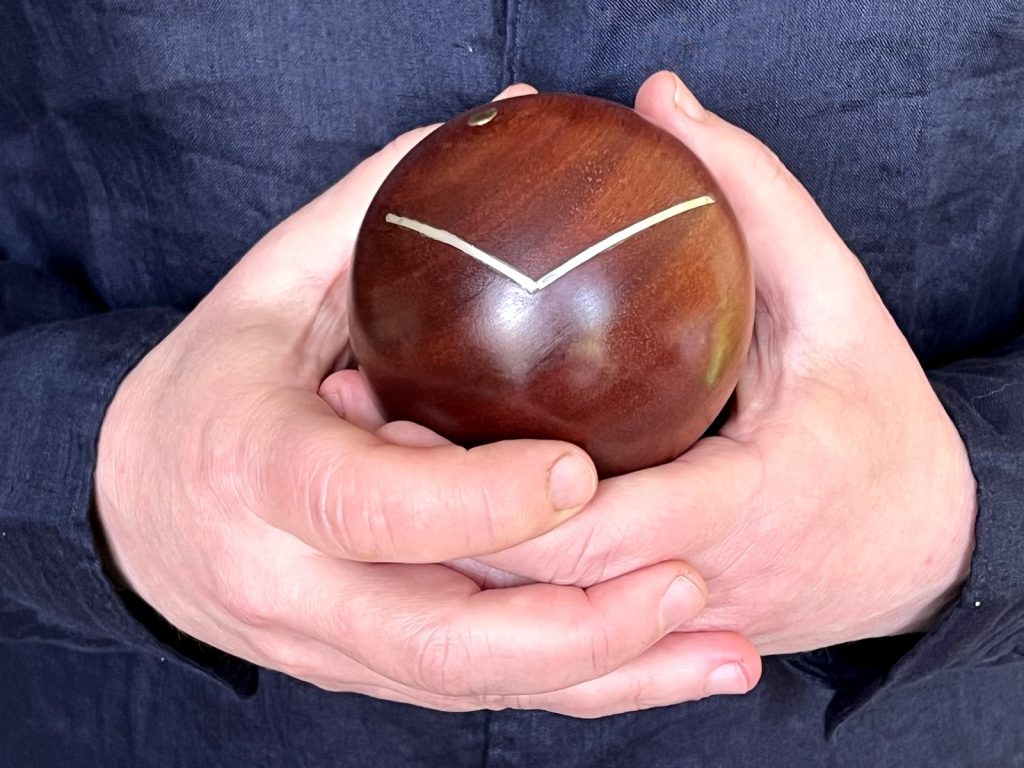 Nurses Journey MNL- LHR via DXB
The piece works on a literal level as a flight path, but also more broadly as a reflection on movement, labour, and connection between cultures.
I’m now preparing for the possibility of exhibiting it this summer. The final selection isn’t announced until the end of May, so I don’t yet know if it will be included, but it’s an encouraging step.
 Randon Burns
Contact:
Website: www.randon.co.uk
Instagram: @randon.co.uk
Email: studio@randon.co.uk
Deborah Blakeley, Melbourne, Australia
Interview by Deborah Blakeley, April 2026
Images on these pages are all rights reserved by Randon Burns

Think a colleague or friend could benefit from this interview?
Knowledge is one of the biggest assets in any business. So why not forward this on to your friends and colleagues so they too can start taking advantage of the insightful information the artist has given?
Other artists you may be interested in: