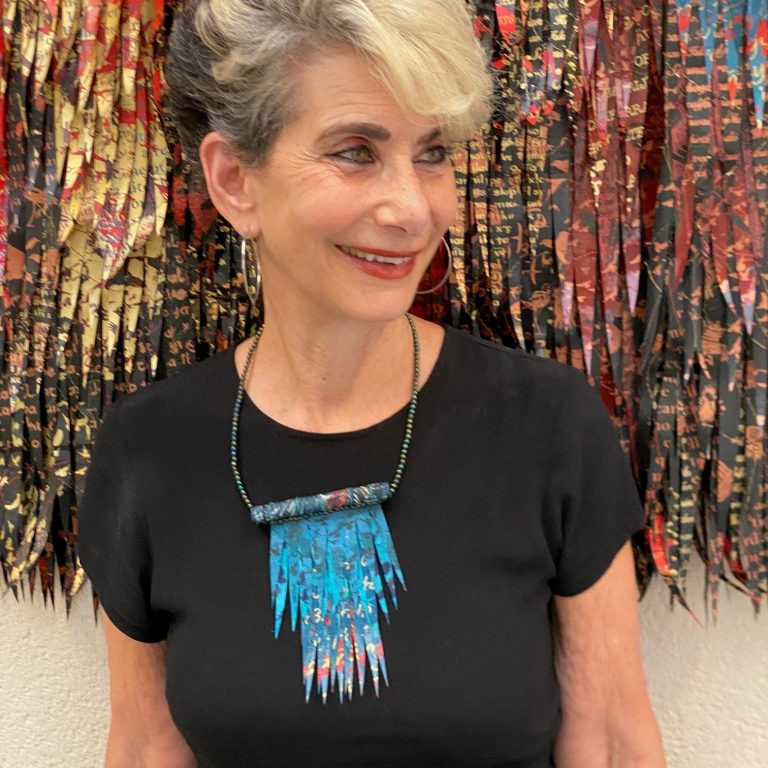
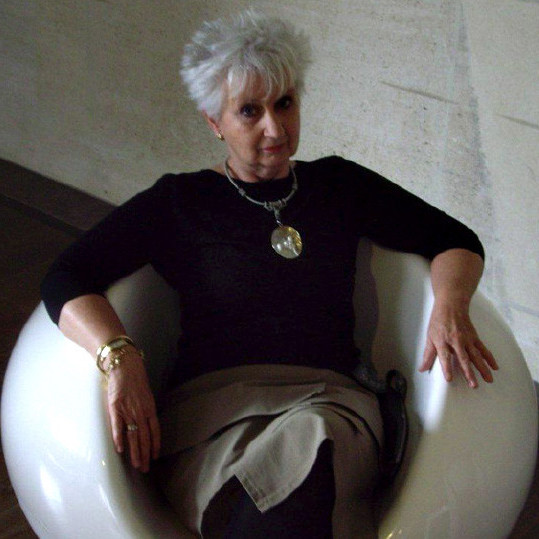
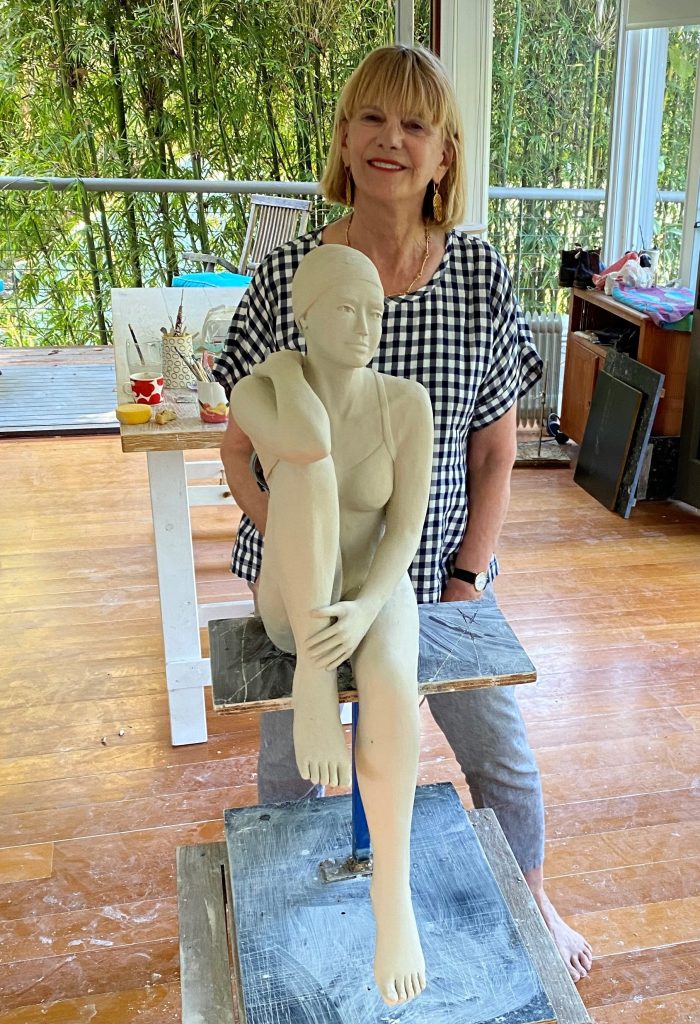
Mela Cooke Sculptor
Was your original occupation as a physiotherapist and the understanding of the human body a big influence on your sculpture?
My original occupation as a physiotherapist has had a profound influence on my sculpture. Years of working with the human body gave me an intimate understanding of anatomy, balance and movement. I have always had a natural inclination to portray the human form in three dimensions and interestingly I never draw. Sculpture has always felt like my most natural language.
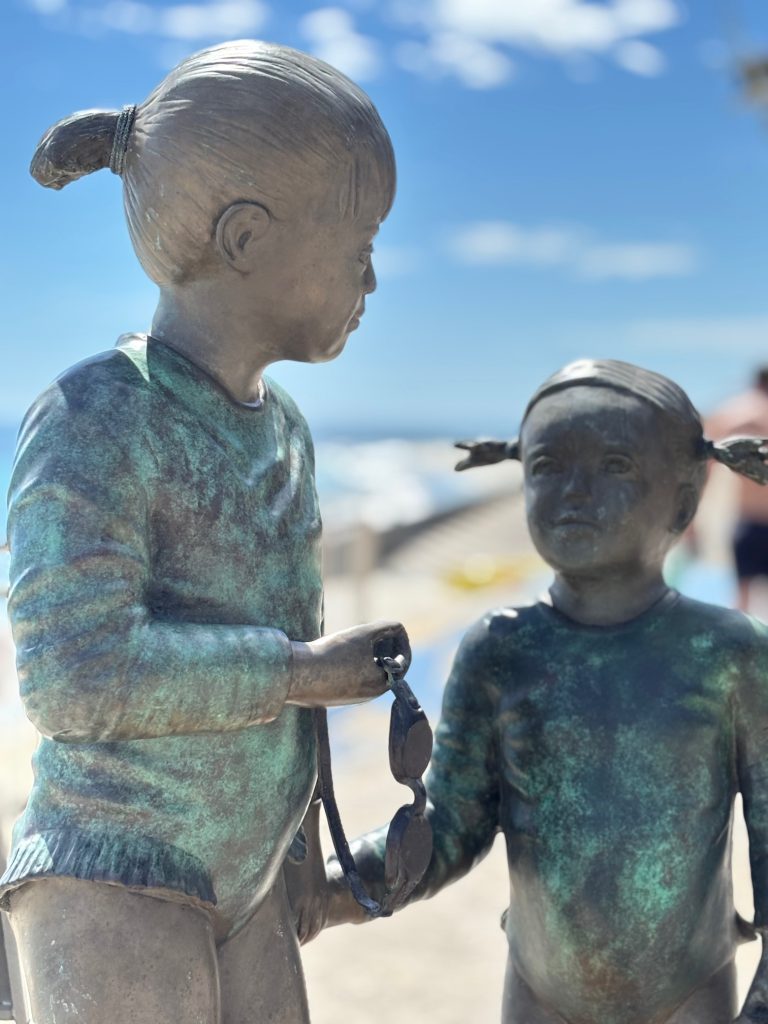
‘My Little Sister’ at Cottesloe Beach WA photo by Deborah Blakeley
Can you please explain why and when you decided to work only in bronze?
I began working in clay, making moulds and casting in cement fondu. Once I had sculpted several pieces and was pleased with the results, I decided to have a work cast in bronze. From that moment I was completely hooked. Bronze allows a permanence and richness that elevates the work.
Bronze and clay allow you the joy of both mediums expand on both.
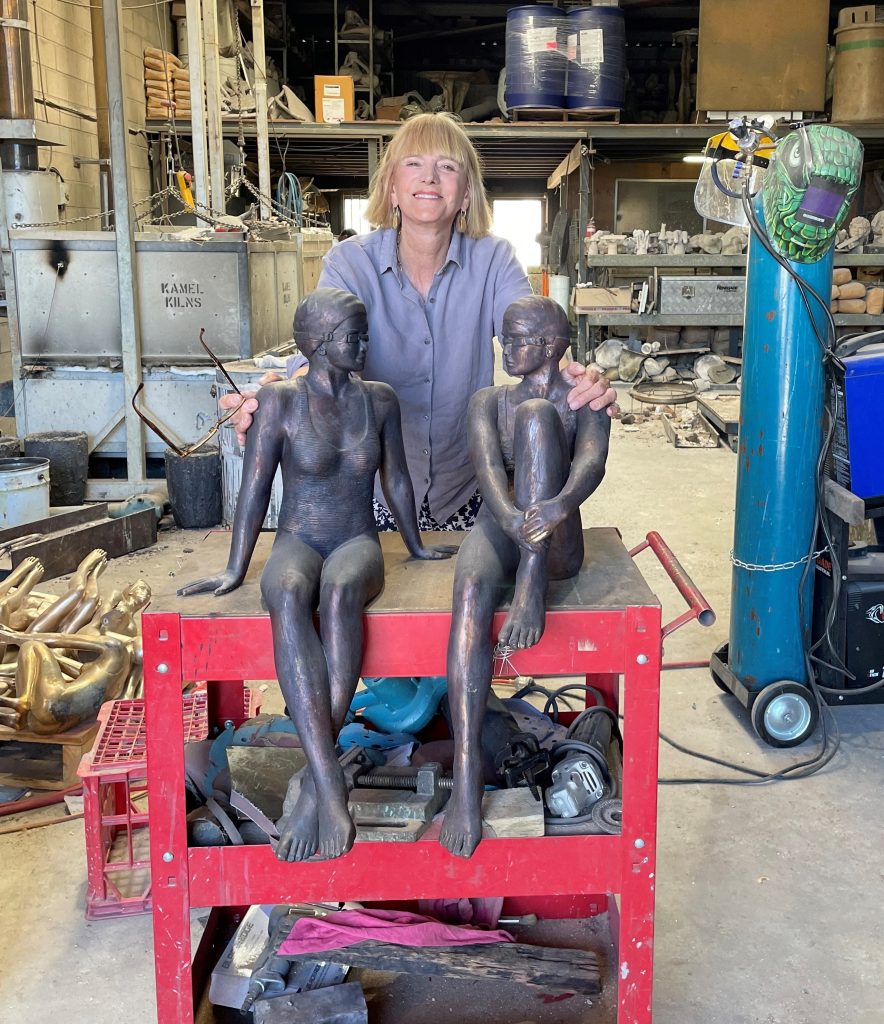
Kindred Spirits at the Foundry before patination
For many years bronze casting was financially demanding, so I continued running my physiotherapy practice while sculpting part time. During this period I also studied marble carving. Marble is a reductive process, removing material to reveal the form within. While I loved the discipline of marble, I ultimately preferred the serenity of modelling in clay. Clay is responsive and immediate. Bronze then transforms that tactile, intimate modelling process into something enduring. The joy lies in both stages. Clay is fluid and forgiving. Bronze is permanent and powerful.
Over time, as gallery representation increased and sales became consistent, I sold my physiotherapy practice and committed fully to sculpture.
Comment on your models and where you find them?
My models are often very close to home. My two athletic daughters and my granddaughters feature frequently, and when they are unavailable I work with friends, children and sometimes grandchildren of friends. Familiarity allows me to capture authenticity rather than simply likeness.
How big and small are your sculptures?
My sculptures range from small works such as Have I Told You Lately, which is 25 cm high, to life sized figures. I often work at two thirds life size, as this scale retains presence and impact while remaining accessible to collectors.
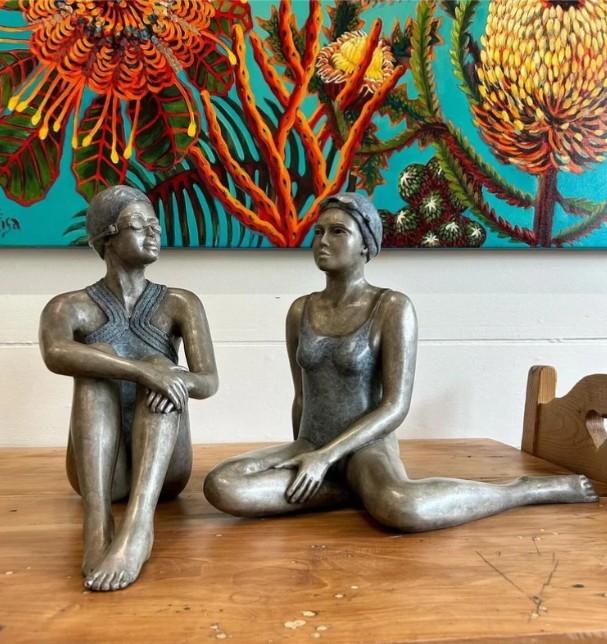
The Conversation H38 W60 D40
Take on of each, big and small and discuss the specific sculptures and why they are these sizes?
As an example, a smaller work like Have I Told You Lately is intentionally intimate. Its scale invites close viewing and suits interior placement on a table or sideboard. In contrast, larger works which can be placed indoors or outdoors, such as All Dressed Up With Nowhere To Go, and Just Paused demand greater scale to convey strength, movement and narrative. The size supports the emotional weight of the subject.
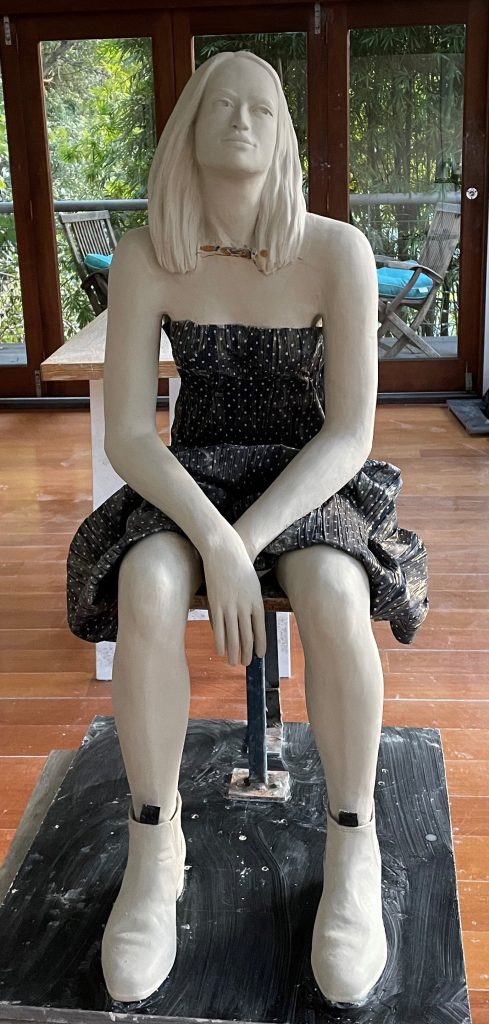
All Dressed Up With Nowhere to Go in clay in the studio
Tell us about your studio…
My studio is located in a purpose built building in our back garden. It is a 40 sq metre space with timber floors, large windows and beautiful natural light. It includes a small kitchen with my beloved Italian coffee machine, a bathroom and a deck overlooking trees on one side and our tennis court on the other. Music is essential. I have a good sound system and rarely sculpt in silence. Light and music are two things I must have. They shape the mood of the space.
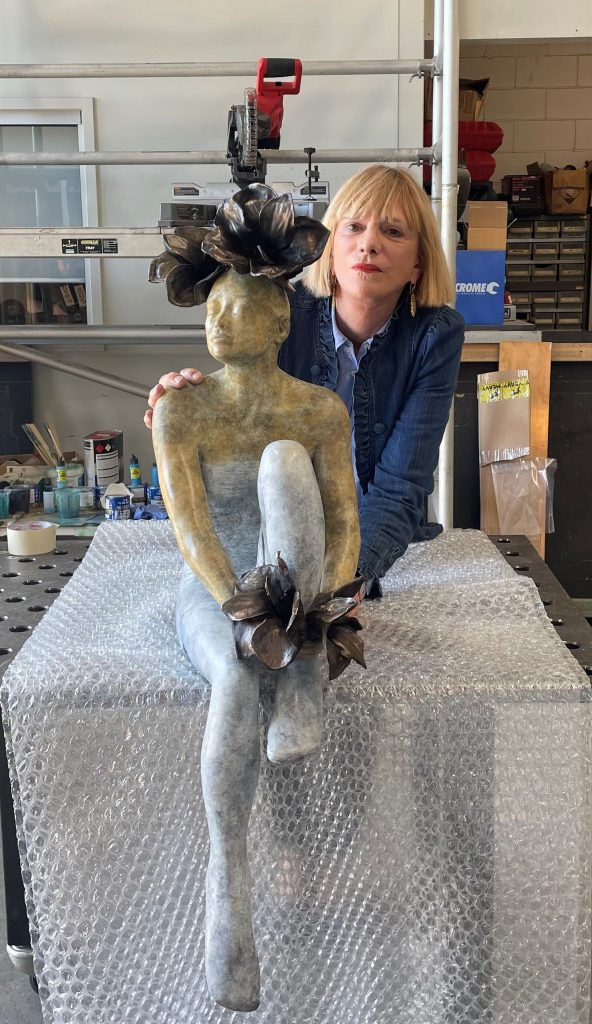
Discuss the importance of the foundry you use.
I work with three foundries, two in Brisbane and one in New South Wales. I originally discovered them through other sculptors and through research when I began casting more regularly. Accessibility matters. Being able to visit the foundry, check waxes and patinas, and discuss finishes face to face is invaluable. The relationships are deeply important to me. All three owners are sculptors themselves, so they understand the precision and finish I require. There is trust built over many years, and that trust allows consistency in output and quality.
Take one Public Work that has influenced you sculpting?
One public work that influenced me greatly was the installation of my sculptures in Maryborough, where twenty four works are permanently installed throughout the CBD. Seeing my figures interact with everyday public life reinforced my belief that sculpture should create connection and joy in shared spaces.
Look at your series ‘Swimmers’
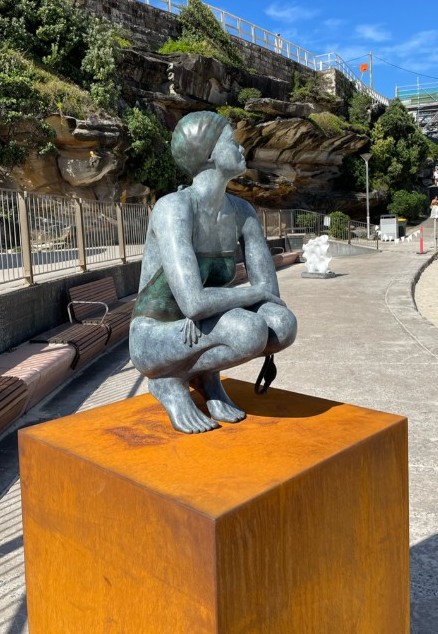
Halcyon Days 70H 38W 40D
The Swimmers series evolved from a request by close friends in Sydney who asked me to sculpt a swimmer for their poolside. Like most Australians, I have swum all my life. Beaches and pools are deeply embedded in our culture. I initially sculpted a broader series of sportswomen including a volleyballer, netballer, golfer and others, but the swimmers resonated most strongly. Almost every Australian has a memory connected to water, so the emotional link is immediate.
Has living in Queensland and Australia influenced the series?
Living in Queensland has certainly influenced this series. The climate encourages outdoor living and an intimacy with water. That relaxed, sun filled environment shapes the posture and mood of the figures.
Take one sculpture you have be especially delighted with where it now lives and why?
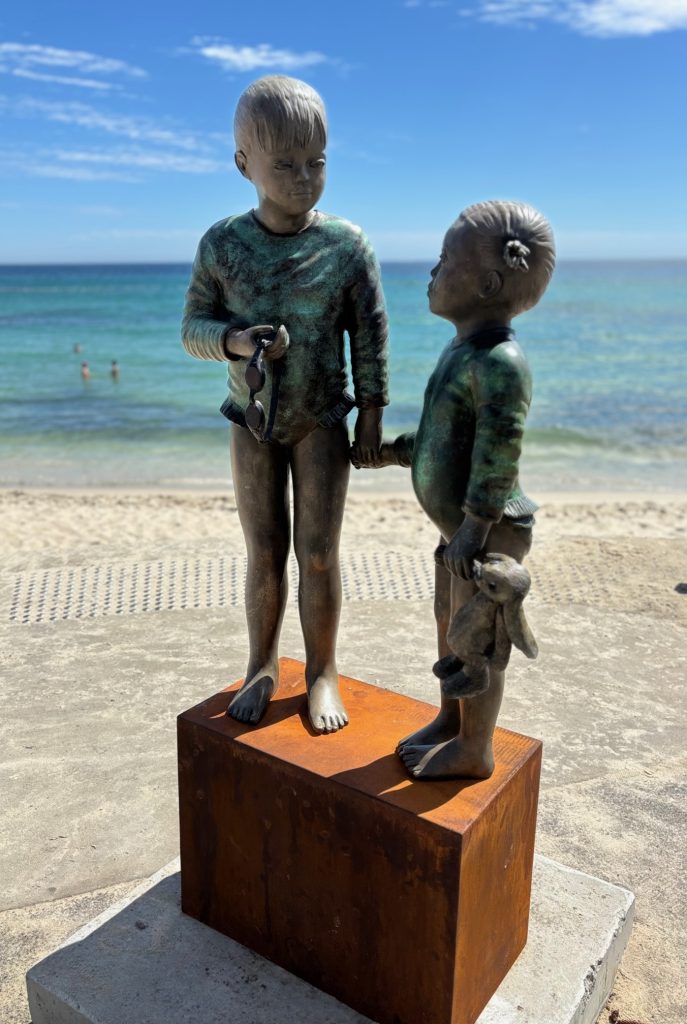
‘My Little Sister’ at Cottesloe Beach WA photo by Deborah Blakeley
One swimmer I am especially delighted with is My Little Sister. The first edition now lives in my daughter’s home at the end of a corridor overlooking the pool. The placement is perfect. The sculpture becomes part of daily family life, reflecting movement, childhood and connection.
Reflect on ‘Lifesaver’
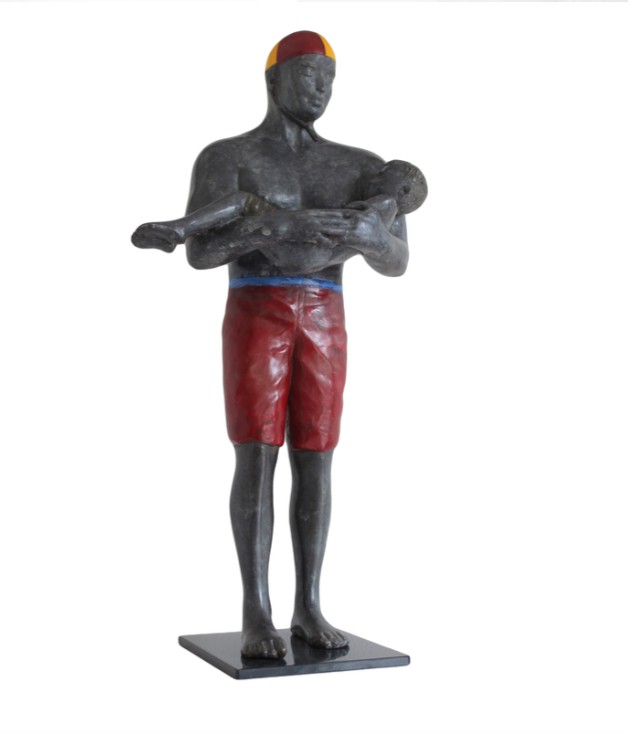
The Lifesaver 48H 10W 7D
Lifesaver emerged after I saw a photograph of a lifesaver carrying a small boy to safety. The image stayed with me. I recreated it first as a smaller work and later as a larger commissioned version. The scale enhances the protective strength of the figure.
Give us some additional background to’ Polka dot Diva.’
Polka Dot Diva represents the quintessential Australian summer moment. The polka dots, the relaxed pose and the sunglasses evoke warmth and confidence. The sunglasses in particular are symbolic. They speak of beach culture, bright light and a certain Australian ease. They also create a subtle barrier between the viewer and the subject, adding intrigue and personality.
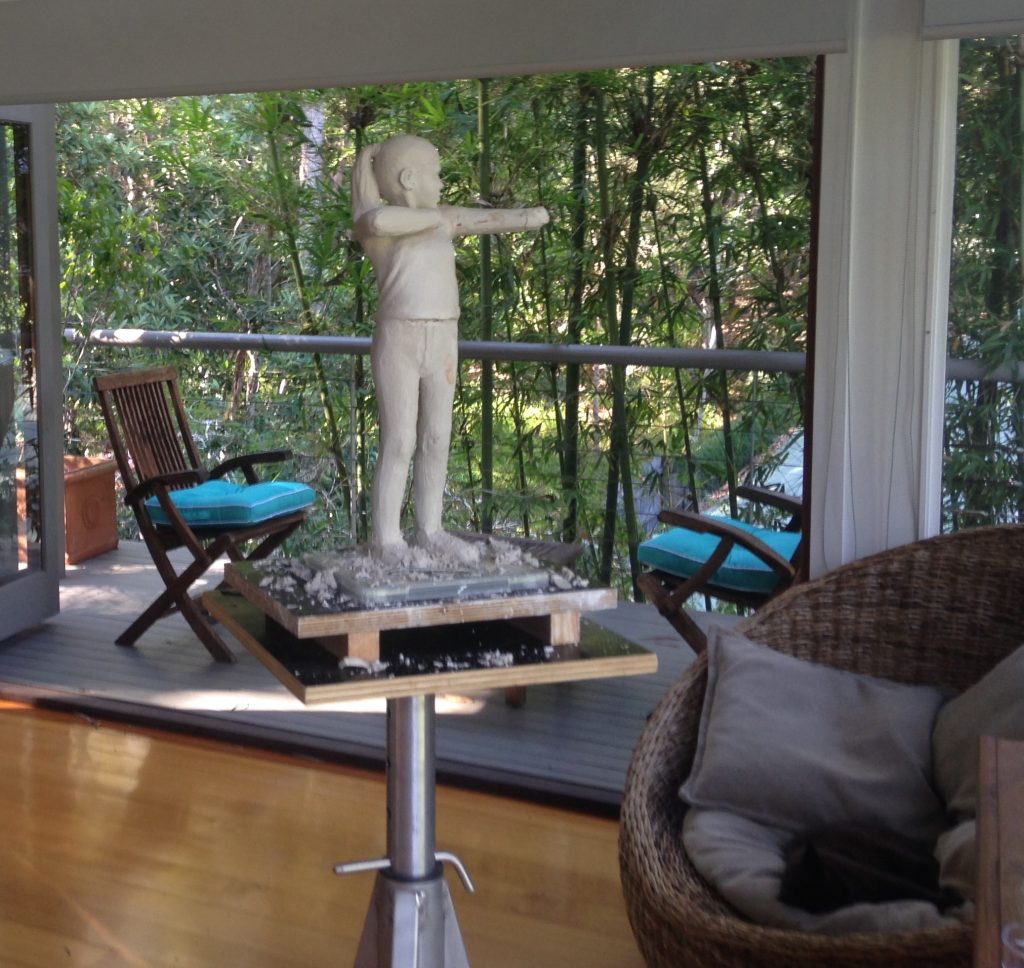
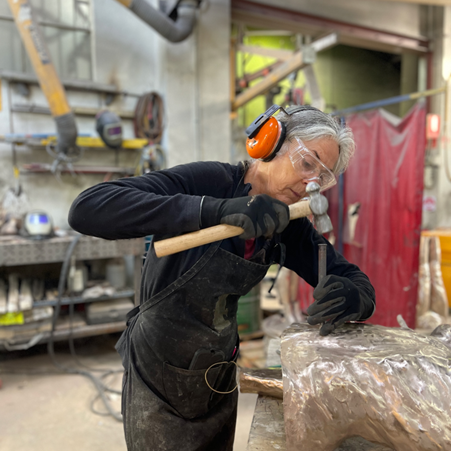
Working on a small sculpture in the studio
Mela Cooke
Contact:
www.melacooke.com
www.instagram.com/melacooke.sculpture/
Deborah Blakeley, Melbourne, Australia
Interview by Deborah Blakeley, April 2026
Images on these pages are all rights reserved by Mela Cooke

Think a colleague or friend could benefit from this interview?
Knowledge is one of the biggest assets in any business. So why not forward this on to your friends and colleagues so they too can start taking advantage of the insightful information the artist has given?
Other artists you may be interested in: